Grey Bur Forget-me-not
Lappula patula · Accepted scientific name
Scientific literature: Very Sparse (2 studies) · ★☆☆☆☆
Grey Bur Forget-me-not, scientifically known as Lappula patula, is a resilient annual herb belonging to the Boraginaceae family. Often recognized by its small, blue flowers and prickly, hitchhiking seeds, this plant is frequently found in disturbed soils. While primarily viewed as a common weed, it holds significant botanical interest.
- Family
- Boraginaceae
- Native range
- Europe
- Parts used
- Not available
- Common names
- Grey Bur Forget-Me-Not
- Scientific synonyms
- Lappula Skorpili · Lappula Subsemiglabra · 20 more
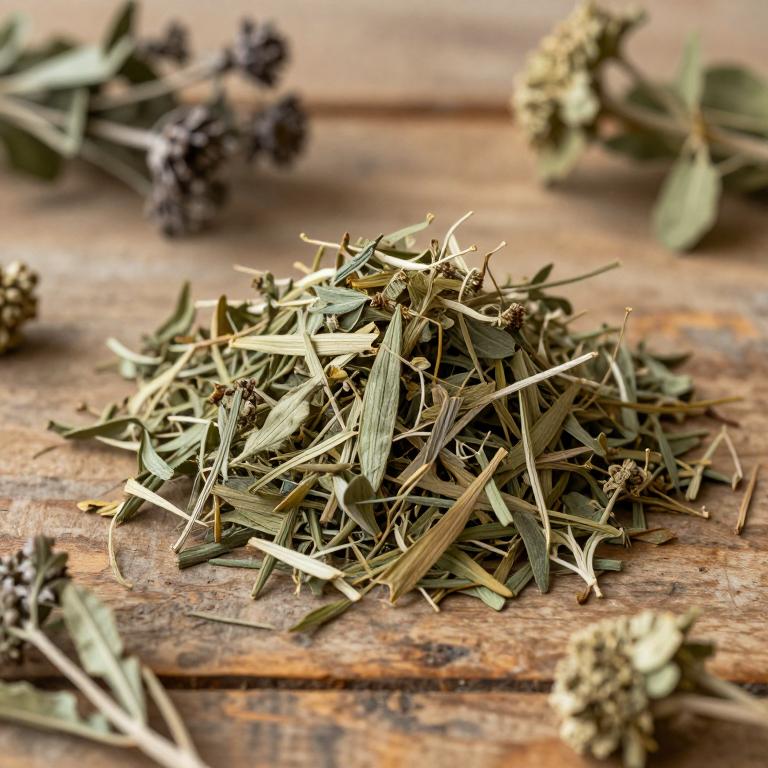
Names and Synonyms
Common Names
- Grey Bur Forget-me-not
Scientific Names
Accepted name
Lappula patulaSynonyms
- Lappula skorpili
- Lappula subsemiglabra
- Rochelia patula
- Lappula redowskii var. patula
- Lappula redowskii var. marginata
- Lappula redowskii subsp. patula
- Lappula marginata subsp. patula
- Echinospermum brachysepalum
- Lappula semiglabra
- Echinospermum caspium
- Echinospermum semiglabrum
- Echinospermum skorpili
- Lithospermum patulum
- Echinospermum patulum
- Lappula caspia
- Lappula redowskyi subsp. patula
- Lappula redowskii subvar. semiglabra
- Hackelia patula
- Cynoglossospermum patulum
- Hackelia semiglabra
- Cynoglossospermum semiglabrum
- Cynoglossum patulum
Regional and Traditional Names
German:
- Abstehender Igelsame
French:
- Bardanette étalée
Sources: Wikidata, Catalogue of Life
Taxonomical Classification
This plant belongs to the kingdom Plantae within the phylum Streptophyta and the class Equisetopsida. Classified under the subclass Magnoliidae and the order Boraginales, it is a member of the family Boraginaceae. Specifically, its taxonomic identity is defined by the genus Lappula.
| Rank | Classification |
|---|---|
| Kingdom | Plantae |
| Phylum | Streptophyta |
| Class | Equisetopsida |
| Subclass | Magnoliidae |
| Order | Boraginales |
| Family | Boraginaceae |
| Genus | Lappula |
Sources: The World Checklist of Vascular Plants (WCVP)
Distribution
This plant exhibits a broad presence across various regions of the European continent. In Middle Europe, its distribution includes territories such as Germany and Hungary. The species can also be found within the borders of Czechia and Slovakia. Moving toward Southwestern Europe, the plant is documented in the country of France. Finally, its geographical range extends further south to include Spain.
| Region | Area |
|---|---|
| Middle Europe | Czechia-Slovakia |
| Middle Europe | Germany |
| Middle Europe | Hungary |
| Southwestern Europe | France |
| Southwestern Europe | Spain |
| Southeastern Europe | Bulgaria |
| Southeastern Europe | Greece |
| Southeastern Europe | Italy |
| Southeastern Europe | Romania |
| Southeastern Europe | Sicilia |
Sources: The World Checklist of Vascular Plants (WCVP)
Botanical Identification
Ecology
The ecology of Lappula patula is characterized by its adaptability to diverse environments and a specific altitudinal distribution. This species thrives across an elevational range spanning from 800 m to 2,900 m AMSL. It is commonly found occupying various habitats, including crop fields, old fields, and ruderal sites, often colonizing disturbed ground. Additionally, it is frequently observed in proximity to rivers and in sandy substrates, demonstrating a preference for open or disturbed landscapes where it can establish itself effectively.
- Elevational range max:
- 2900 m AMSL
- Elevational range min:
- 800 m AMSL
- Habitat :
- crop fields, old fields, rivers, ruderal sites, sand
Life history
The life history of Lappula patula is characterized by an annual lifecycle, meaning the plant completes its entire developmental process from germination to seed production within a single growing season. Functionally, it is classified as a therophyte, a life form where the plant survives unfavorable environmental conditions by producing seeds that remain dormant until favorable conditions return, typically resulting in a plant that dies back completely after flowering. This life strategy allows the species to rapidly colonize disturbed or open habitats, utilizing its ephemeral growth pattern to maximize reproductive output before the onset of seasonal stress.
- Life form :
- therophyte
- Lifecycle :
- annual
Morphology
The morphology of Lappula patula is characterized by its growth form as a non-woody herb, specifically classified as a forb. This plant typically exhibits a terrestrial habitat preference, though it can exist in semiaquatic or aquatic environments. It is a self-supporting, independent organism that does not function as a parasite or an epiphyte. In terms of stature, the plant maintains a relatively low profile with a plant height ranging from a minimum of 0.1 m to a maximum of 0.3 m. Its shoot orientation is predominantly erect, and it lacks the climbing characteristics of a liana or vine, remaining a self-supporting herbaceous species.
- Aquatic :
- terrestrial
- Climber :
- self-supporting
- Epiphyte :
- terrestrial
- Growth form :
- herb
- Parasite :
- independent
- Plant height max:
- 0.3 m
- Plant height min:
- 0.1 m
- Shoot orientation :
- erect
- Woodiness :
- non-woody
Physiology
The physiology of Lappula patula is characterized by a C3 photosynthetic pathway, a mechanism common to most temperate herbaceous plants where carbon fixation occurs directly through the enzyme RuBisCO in the mesophyll cells. This metabolic process involves the initial fixation of atmospheric CO2 into a three-carbon molecule, facilitating the production of carbohydrates necessary for growth and development within its natural habitats. The plant's physiological efficiency is closely tied to its ability to manage transpiration and gas exchange through its stomatal regulation, balancing the intake of carbon dioxide with the prevention of excessive water loss. As a C3 plant, its metabolic rate and carbon assimilation efficiency are highly sensitive to environmental variables such as light intensity, ambient temperature, and water availability, which dictate its overall energy budget and biomass accumulation.
- Photosynthetic pathway :
- C3
Reproduction
The reproduction of Lappula patula is characterized by sexual reproduction via bisexual flowers. The flowering period typically begins in April and extends through June, though the timing can be variable. The inflorescence is quite compact, measuring between 0.02 m and 0.023 m in length. Following pollination, the plant produces small fruits that range in length from a minimum of 0.3 cm to a maximum of 0.4 cm, with an average fruit length of 0.325 cm. The seeds produced are extremely fine, with a mean mass of 0.001055 g, falling within a range of 0.00066 g to a maximum of 0.00145 g.
- Flowering time :
- Apr
- Flowering time :
- Jun
- Fruit length max:
- 0.4 cm
- Fruit length mean:
- 0.325 cm
- Fruit length min:
- 0.3 cm
- Inflorescence length max:
- 0.023 m
- Inflorescence length min:
- 0.02 m
- Reproduction sexual :
- bisexual
- Seed mass max:
- 0.00145 g
- Seed mass mean:
- 0.001055 g
- Seed mass min:
- 0.00066 g
Sources: Global Inventory of Floras and Traits (GIFT)
Activities
Lappula patula has 1 reported activities identified across 0 scientific publications and several other databases. The most consistently reported activities include Cytotoxic.
| Activity | Supporting sources | Consensus |
|---|---|---|
| Cytotoxic | 1 supporting sources | ★☆☆☆☆ |
Cytotoxic
- Pharmaceuticals (Basel, Switzerland)
Conditions
Lappula patula has 1 reported investigations on conditions identified across 0 scientific publications and several other databases. The most consistently reported conditions include cancer.
| Condition | Supporting sources | Consensus |
|---|---|---|
| Cancer | 1 supporting sources | ★☆☆☆☆ |
Cancer
- Pharmaceuticals (Basel, Switzerland)
Preparations
Lappula patula has 1 reported preparations identified across 0 scientific publications and several other databases. The most consistently reported preparations include extracts.
| Preparation | Supporting sources | Consensus |
|---|---|---|
| Extracts | 1 supporting sources | ★☆☆☆☆ |
Extracts
- Pharmaceuticals (Basel, Switzerland)