Tsao-ko Cardamom
Lanxangia tsao-ko · Accepted scientific name
Scientific literature: Sparse (61 studies) · ★★☆☆☆
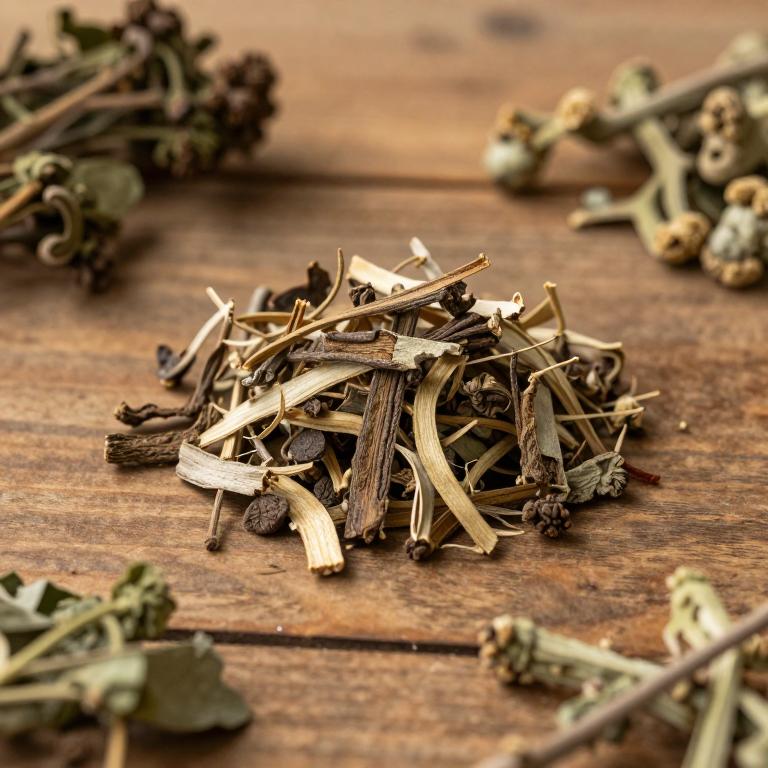
Tsao-ko Cardamom, scientifically known as Lanxangia tsao-ko, is a potent medicinal plant revered in traditional healing practices. Renowned for its aromatic properties, it serves as a powerful digestive aid and anti-inflammatory agent. This versatile botanical is frequently utilized to soothe gastrointestinal discomfort and enhance overall metabolic wellness.
- Family
- Zingiberaceae
- Native range
- Asia-Temperate
- Parts used
- Fruit
- Common names
- Tsao-Ko Cardamom
- Scientific synonyms
- Amomum Tsao-Ko · Amomum Hongtsaoko
Names and Synonyms
Common Names
- Tsao-ko Cardamom
Scientific Names
Accepted name
Lanxangia tsao-koSynonyms
- Amomum tsao-ko
- Amomum hongtsaoko
Sources: Wikidata, Catalogue of Life
Taxonomical Classification
This plant belongs to the kingdom Plantae and the phylum Streptophyta, falling under the class Equisetopsida and subclass Magnoliidae. Within the order Zingiberales, it is classified under the family Zingiberaceae and the genus Lanxaniga.
| Rank | Classification |
|---|---|
| Kingdom | Plantae |
| Phylum | Streptophyta |
| Class | Equisetopsida |
| Subclass | Magnoliidae |
| Order | Zingiberales |
| Family | Zingiberaceae |
| Genus | Lanxangia |
Sources: The World Checklist of Vascular Plants (WCVP)
Distribution
This plant exhibits a specific geographical distribution spanning several regions across East and Southeast Asia. Within China, it can be found growing in the South-Central territories as well as the Southeast regions. Its range extends further into the Indo-China peninsula to reach the country of Laos. Additionally, the species is documented to inhabit various parts of Vietnam. Together, these locations define the natural habitat where Lanxangia tsao-ko is typically located.
| Region | Area |
|---|---|
| China | China South-Central |
| China | China Southeast |
| Indo-China | Laos |
| Indo-China | Vietnam |
Sources: The World Checklist of Vascular Plants (WCVP)
Botanical Identification
Life history
The life history of Lanxangia tsao-ko is characterized by a specialized survival strategy categorized under two distinct life form classifications: it functions as a geophyte and a cryptophyte. As a geophyte, the plant relies on underground storage organs, such as rhizomes or tubers, to endure unfavorable environmental conditions or seasonal Dormancy, allowing it to regenerate when conditions become optimal. Complementing this, its classification as a cryptophyte indicates that its perennating buds are located below the soil surface or at the very base of the substrate, protecting the vital regenerative tissues from desiccation, extreme temperature fluctuations, and herbivory. This dual life form strategy enables the plant to persist in its specific ecological niche by sequestering nutrients and energy underground, ensuring a robust seasonal regrowth cycle.
- Life form :
- geophyte
- Life form :
- cryptophyte
Morphology
The morphology of Lanxiangia tsao-ko is characterized by its growth habit as a self-supporting climber, utilizing its structural form to navigate its environment without the need for external host attachment. It functions as an independent organism, showing no parasitic tendencies, and maintains a terrestrial existence rather than growing as an epiphyte. Structurally, the plant is non-woody, possessing a flexible and herbaceous composition that lacks significant lignification.
- Climber :
- self-supporting
- Epiphyte :
- terrestrial
- Parasite :
- independent
- Woodiness :
- non-woody
Sources: Global Inventory of Floras and Traits (GIFT)
Plant Parts
Lanxangia tsao-ko has 1 reported plant parts identified across 9 scientific publications and several other databases that are studied for medicinal purposes. The most consistently reported plant part include fruit.
| Plant part | Supporting sources | Consensus |
|---|---|---|
| Fruit | 9 supporting sources | ★★★★☆ |
Fruit
- Bioorganic chemistry
- Journal of agricultural and food chemistry
- Phytochemistry
- Food research international (Ottawa, Ont.)
- Spectrochimica acta. Part A, Molecular and biomolecular spectroscopy
View 4 additional sources
- BMC plant biology
- Microbial pathogenesis
- International journal of experimental pathology
- Natural product communications
Chemicals
Lanxangia tsao-ko has 37 reported phytochemicals identified across 9 scientific publications and several other databases. The most consistently reported chemicals include (E)-2-Octenal, 1,8-Cineole, Esters, Eucalyptol, (+)-Nerolidol.
| Chemical | Supporting sources | Consensus |
|---|---|---|
| (E)-2-Octenal | 2 supporting sources | ★☆☆☆☆ |
| 1,8-Cineole | 2 supporting sources | ★☆☆☆☆ |
| Esters | 2 supporting sources | ★☆☆☆☆ |
| Eucalyptol | 2 supporting sources | ★☆☆☆☆ |
| (+)-Nerolidol | 1 supporting sources | ★☆☆☆☆ |
| (E)-2-Decenal | 1 supporting sources | ★☆☆☆☆ |
| (E)-2-HEXENAL | 1 supporting sources | ★☆☆☆☆ |
| (E)-2-dodecenal | 1 supporting sources | ★☆☆☆☆ |
| (E,Z)-2,6-Dodecadienal | 1 supporting sources | ★☆☆☆☆ |
| (Z)-2-Decenal | 1 supporting sources | ★☆☆☆☆ |
(E)-2-Octenal
- Scientific reports
- Frontiers in plant science
1,8-Cineole
- Scientific reports
- Frontiers in plant science
Esters
- BMC plant biology
- ACS omega
Eucalyptol
- Microbial pathogenesis
- Frontiers in plant science
(+)-Nerolidol
- Analytica chimica acta
(E)-2-Decenal
- Scientific reports
(E)-2-HEXENAL
- Scientific reports
(E)-2-dodecenal
- Frontiers in plant science
(E,Z)-2,6-Dodecadienal
- Scientific reports
(Z)-2-Decenal
- Frontiers in plant science
Activities
Lanxangia tsao-ko has 3 reported activities identified across 9 scientific publications and several other databases. The most consistently reported activities include Antidiabetic, Antioxidant, Antibacterial.
| Activity | Supporting sources | Consensus |
|---|---|---|
| Antidiabetic | 2 supporting sources | ★☆☆☆☆ |
| Antioxidant | 2 supporting sources | ★☆☆☆☆ |
| Antibacterial | 1 supporting sources | ★☆☆☆☆ |
Antidiabetic
- Journal of fish biology
- Journal of agricultural and food chemistry
Antioxidant
- Journal of fish biology
- Molecules (Basel, Switzerland)
Antibacterial
- Journal of fish biology
Conditions
Lanxangia tsao-ko has 1 reported investigations on conditions identified across 9 scientific publications and several other databases. The most consistently reported conditions include bovine mastitis.
| Condition | Supporting sources | Consensus |
|---|---|---|
| Bovine mastitis | 1 supporting sources | ★☆☆☆☆ |
Bovine mastitis
- Microbial pathogenesis
Preparations
Lanxangia tsao-ko has 26 reported preparations identified across 9 scientific publications and several other databases. The most consistently reported preparations include dried fruits, essential oils, Essential oils, boiling water for 2 min, boiling water treatment for 5 min.
| Preparation | Supporting sources | Consensus |
|---|---|---|
| Dried fruits | 3 supporting sources | ★★☆☆☆ |
| Essential oils | 2 supporting sources | ★☆☆☆☆ |
| Essential oils | 1 supporting sources | ★☆☆☆☆ |
| Boiling water for 2 min | 1 supporting sources | ★☆☆☆☆ |
| Boiling water treatment for 5 min | 1 supporting sources | ★☆☆☆☆ |
| Common solvent extraction | 1 supporting sources | ★☆☆☆☆ |
| Constant temperature drying at 50 °c | 1 supporting sources | ★☆☆☆☆ |
| Crude extracts | 1 supporting sources | ★☆☆☆☆ |
| Dried a. tsao-ko fruits | 1 supporting sources | ★☆☆☆☆ |
| Essential oil | 1 supporting sources | ★☆☆☆☆ |
Dried fruits
- Bioorganic chemistry
- Journal of agricultural and food chemistry
- Spectrochimica acta. Part A, Molecular and biomolecular spectroscopy
Essential oils
- Molecules (Basel, Switzerland)
- Frontiers in plant science
Essential oils
- Microbial pathogenesis
Boiling water for 2 min
- Frontiers in plant science
Boiling water treatment for 5 min
- Frontiers in plant science
Common solvent extraction
- Zhong yao cai = Zhongyaocai = Journal of Chinese medicinal materials
Constant temperature drying at 50 °c
- Food chemistry
Crude extracts
- Journal of fish biology
Dried a. tsao-ko fruits
- BMC plant biology
Essential oil
- Arabian journal of chemistry