trailing lantana
Lantana montevidensis · Accepted scientific name
Scientific literature: Very Sparse (10 studies) · ★☆☆☆☆
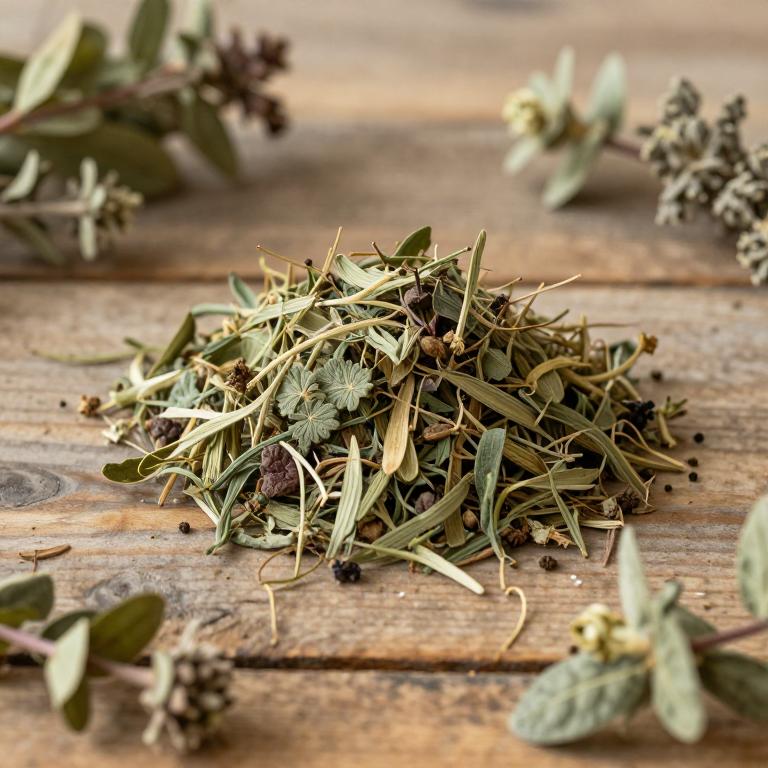
Trailing lantana, scientifically known as Lantana montevidensis, is a resilient, evergreen subshrub prized for its vibrant purple blooms. While primarily used in landscaping for its spreading habit, this plant holds significant ethnobotanical importance. Traditional medicine utilizes its various components to treat ailments ranging from inflammation to digestive issues.
Names and Synonyms
Common Names
- creeping lantana
- purple lantana
- small lantana
- trailing lantana
- weeping lantana
- wild verbena
- Purple Trailing Lantana
Scientific Names
Accepted name
Lantana montevidensisSynonyms
- Lippia montevidensis
- Camara montevidensis
- Camara sellowiana
- Lantana sellowii
- Lantana montevidensis f. albiflora
- Lantana decumbens
- Lantana delicatissima
- Lantana sellowiana
- Lantana sellowiana var. lanceolata
- Lantana sellowiana f. rugosa
Regional and Traditional Names
Spanish:
- salvia del Uruguay
- verbena rastrera
French:
- Lantanier de Montevideo
Sources: Wikidata, Catalogue of Life
Taxonomical Classification
This plant belongs to the kingdom Plantae and the phylum Streptophyta, specifically classified within the class Equisetopsida and subclass Magnoliidae. It is further categorized under the order Lamiales and the family Verbenaceae. Finally, it is identified by its genus, Lantana.
| Rank | Classification |
|---|---|
| Kingdom | Plantae |
| Phylum | Streptophyta |
| Class | Equisetopsida |
| Subclass | Magnoliidae |
| Order | Lamiales |
| Family | Verbenaceae |
| Genus | Lantana |
Sources: The World Checklist of Vascular Plants (WCVP)
Distribution
This plant exhibits a wide geographical distribution across several diverse regions of the world. In Southwestern Europe, it can be found growing within the borders of Spain. Moving toward Southeastern Europe, its presence is also noted in Italy. The species extends to the Macaronesian islands, specifically inhabiting the Azores. Finally, its range reaches the Indian Subcontinent in Bangladesh and extends to New Zealand North in New Zealand.
| Region | Area |
|---|---|
| Southwestern Europe | Spain |
| Southeastern Europe | Italy |
| Macaronesia | Azores |
| Indian Subcontinent | Bangladesh |
| New Zealand | New Zealand North |
| New Zealand | New Zealand South |
| Southwestern Pacific | Fiji |
| Southwestern Pacific | New Caledonia |
| South-Central Pacific | Society Is. |
| Northwestern Pacific | Marianas |
Sources: The World Checklist of Vascular Plants (WCVP)
Botanical Identification
Ecology
The ecology of Lantana montevidensis is characterized by its presence in specific landscape types, primarily thriving within Campo de Altitude and Campo Limpo habitats. This species occupies a broad altitudinal gradient, ranging from sea level up to a maximum elevation of 800 m AMSL. Regarding its subterranean symbiotic relationships, the plant does not form mycorrhizal associations, as indicated by the absence of mycorrhiza in its ecological profile.
- Elevational range max:
- 800 m AMSL
- Elevational range min:
- 0 m AMSL
- Habitat :
- Campo de Altitude, Campo Limpo
- Mycorrhiza :
- no
Life history
The life history of Lantana montevidensis is characterized by its classification as a perennial species, allowing it to persist through multiple growing seasons. In terms of its architectural growth strategy and life form, the plant exhibits characteristics of both phanerophyte and nanophanerophyte, often presenting as a woody shrub with stems held above the ground. Throughout its life cycle, the plant maintains an evergreen deciduousness, retaining its foliage year-round to facilitate continuous metabolic activity and growth.
- Deciduousness :
- evergreen
- Life form :
- nanophanerophyte
- Life form :
- phanerophyte
- Lifecycle :
- perennial
Morphology
The morphology of Lantana montevidensis is characterized by a growth form primarily categorized as a shrub, though it also exhibits characteristics of a self-supporting climber and liana. While it functions as a self-supporting structure, it can display vine-like qualities in its sprawling habit. This plant is strictly terrestrial in its habitat, lacking any aquatic, semiaquatic, or epiphytic tendencies, and it grows as an independent organism rather than a parasite. In terms of structural composition, it is classified as non-woody, and it maintains a relatively low profile with a maximum plant height of approximately 0.2 meters.
- Aquatic :
- terrestrial
- Climber :
- self-supporting
- Epiphyte :
- terrestrial
- Growth form :
- shrub
- Parasite :
- independent
- Plant height max:
- 0.2 m
- Woodiness :
- non-woody
Physiology
The physiology of Lantana montevidebsis is characterized by a C3 photosynthetic pathway, which dictates its carbon fixation processes and metabolic efficiency. Its vegetative morphology is defined by specific leaf dimensions, with leaf lengths ranging from a minimum of 1 cm to a maximum of 3.3 cm, and leaf widths varying between a minimum of 1 cm and a maximum of 2 cm, maintaining a mean width of approximately 1.3 cm. Furthermore, the plant does not function as a nitrogen fixer, relying instead on soil nutrient availability to support its physiological development and growth cycles.
- Leaf length max:
- 3.3 cm
- Leaf length min:
- 1 cm
- Leaf width max:
- 2 cm
- Leaf width mean:
- 1.3 cm
- Leaf width min:
- 1 cm
- Nitrogen fixer :
- no
- Photosynthetic pathway :
- C3
Reproduction
The reproduction of Lantana montevidebsis is characterized by a reliance on specific biological mechanisms for seed distribution and a lack of vegetative propagation. The plant exhibits a zoochorous dispersal syndrome, meaning its seeds are primarily spread by animals. More specifically, this process is categorized as endozoochorous, where seeds are ingested by fauna and subsequently dispersed through their digestive tracts. Regarding its reproductive strategies, asexual reproduction is absent in this species, indicating that its propagation is strictly dependent on sexual processes and seed production.
- Dispersal syndrome :
- zoochorous
- Dispersal syndrome :
- endozoochorous
- Reproduction asexual :
- absent
Sources: Global Inventory of Floras and Traits (GIFT)
Plant Parts
Lantana montevidensis has 1 reported plant parts identified across 1 scientific publications and several other databases that are studied for medicinal purposes. The most consistently reported plant part include leaf.
| Plant part | Supporting sources | Consensus |
|---|---|---|
| Leaf | 1 supporting sources | ★☆☆☆☆ |
Leaf
- Journal of materials chemistry. B
Activities
Lantana montevidensis has 4 reported activities identified across 1 scientific publications and several other databases. The most consistently reported activities include Antipyretic, Antitumor, Carminative, Cytotoxic.
| Activity | Supporting sources | Consensus |
|---|---|---|
| Antipyretic | 1 supporting sources | ★☆☆☆☆ |
| Antitumor | 1 supporting sources | ★☆☆☆☆ |
| Carminative | 1 supporting sources | ★☆☆☆☆ |
| Cytotoxic | 1 supporting sources | ★☆☆☆☆ |
Antipyretic
- Journal of young pharmacists : JYP
Antitumor
- Pharmacognosy magazine
Carminative
- Journal of young pharmacists : JYP
Cytotoxic
- Pharmacognosy magazine
Conditions
Lantana montevidensis has 5 reported investigations on conditions identified across 1 scientific publications and several other databases. The most consistently reported conditions include Escherichia coli, Pseudomonas aeruginosa, antipyretic, cancer, respiratory system infections.
| Condition | Supporting sources | Consensus |
|---|---|---|
| Escherichia coli | 1 supporting sources | ★☆☆☆☆ |
| Pseudomonas aeruginosa | 1 supporting sources | ★☆☆☆☆ |
| Antipyretic | 1 supporting sources | ★☆☆☆☆ |
| Cancer | 1 supporting sources | ★☆☆☆☆ |
| Respiratory system infections | 1 supporting sources | ★☆☆☆☆ |
Escherichia coli
- Pharmacognosy magazine
Pseudomonas aeruginosa
- Pharmacognosy magazine
Antipyretic
- Journal of young pharmacists : JYP
Cancer
- Journal of materials chemistry. B
Respiratory system infections
- Journal of young pharmacists : JYP
Preparations
Lantana montevidensis has 2 reported preparations identified across 1 scientific publications and several other databases. The most consistently reported preparations include aqueous leaf extract, extracts.
| Preparation | Supporting sources | Consensus |
|---|---|---|
| Aqueous leaf extract | 1 supporting sources | ★☆☆☆☆ |
| Extracts | 1 supporting sources | ★☆☆☆☆ |
Aqueous leaf extract
- Journal of materials chemistry. B
Extracts
- Pharmacognosy magazine