Lantana fucata
Lantana fucata · Accepted scientific name
Scientific literature: Very Sparse (6 studies) · ★☆☆☆☆
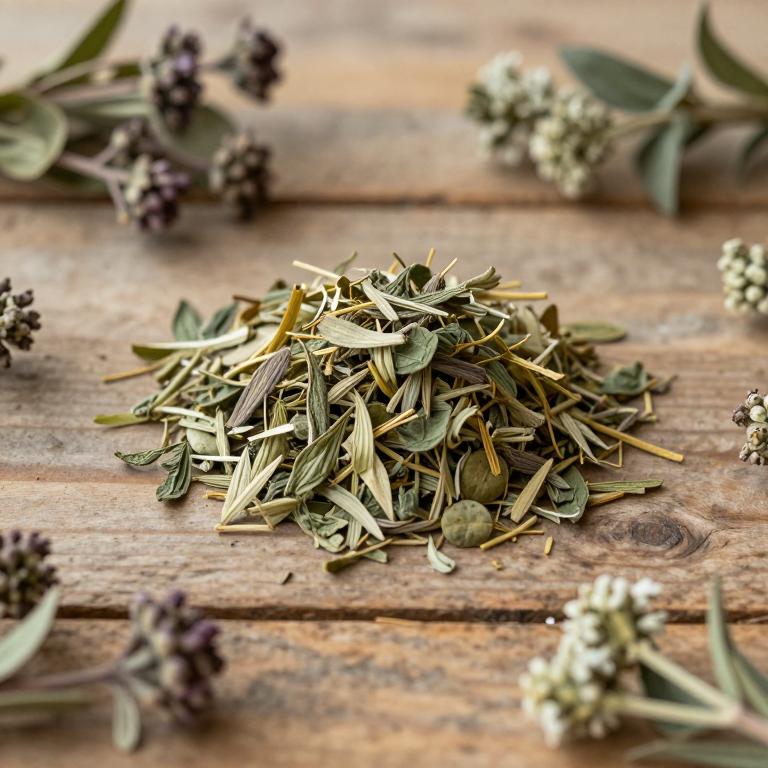
Lantana fucata, scientifically known as Lantana fucata, is a resilient medicinal shrub valued in traditional healing practices. Native to tropical regions, this plant is celebrated for its diverse therapeutic properties, including anti-inflammatory and antimicrobial effects. Exploring its phytochemical composition reveals significant potential for developing modern pharmacological treatments.
- Family
- Verbenaceae
- Native range
- Northern America
- Parts used
- Leaf
- Common names
- Not available
- Scientific synonyms
- Camara Lilacina Var. Parvifolia · Camara Lilacina F. Albiflora · 14 more
Names and Synonyms
Scientific Names
Accepted name
Lantana fucataSynonyms
- Camara lilacina var. parvifolia
- Camara lilacina f. albiflora
- Camara lilacina var. grandifolia
- Camara lilacina var. media
- Camara lilacina
- Lantana fucata f. albiflora
- Lantana fucata var. antillana
- Lantana fucata var. longipes
- Lantana fuscata
- Camara salviifolia
- Lantana czermakii
- Lantana lilacina
- Lantana lilacina var. media
- Lantana lilacina var. mollis
- Lantana lilacina var. parvifolia
- Lantana inconspicua
Regional and Traditional Names
Spanish:
- Pronto alivio
Sources: Wikidata, Catalogue of Life
Taxonomical Classification
This plant, Lantana fucata, belongs to the kingdom Plantae and the phylum Streptophyta. Within the class Equisetopsida and subclass Magnoliidae, it is categorized under the order Lamiales and the family Verbenaceae. Finally, it is classified under the genus Lantana.
| Rank | Classification |
|---|---|
| Kingdom | Plantae |
| Phylum | Streptophyta |
| Class | Equisetopsida |
| Subclass | Magnoliidae |
| Order | Lamiales |
| Family | Verbenaceae |
| Genus | Lantana |
Sources: The World Checklist of Vascular Plants (WCVP)
Distribution
This plant exhibits a wide geographical range spanning several regions across the Americas. In North America, its presence is noted specifically within Southeast Mexico. The species also extends into the Caribbean, where it can be found in Jamaica and throughout the Venezuelan Antilles. Moving into the mainland, it inhabits Northern South America, particularly within Venezuela. Finally, its distribution reaches into Western South America, where it is recorded in Bolivia.
| Region | Area |
|---|---|
| Mexico | Mexico Southeast |
| Caribbean | Jamaica |
| Caribbean | Venezuelan Antilles |
| Northern South America | Venezuela |
| Western South America | Bolivia |
| Western South America | Colombia |
| Western South America | Ecuador |
| Western South America | Peru |
| Brazil | Brazil West-Central |
| Brazil | Brazil Northeast |
Sources: The World Checklist of Vascular Plants (WCVP)
Botanical Identification
Ecology
The ecology of Lantana fucata is characterized by its remarkable adaptability to diverse ecosystems and a broad altitudinal distribution. It thrives across a wide variety of habitats, ranging from anthropized areas (Área Antrópica) and coastal restingas to complex biomes such as the Caatinga (strictu sensu), Cerrado (lato sensu), and Carrasco. The species also colonizes various forest types, including seasonal semi-deciduous forests (Floresta Estacional Semi-decidual), gallery forests (Floresta Ciliar ou Galeria), and ombrophilous forests, both ombrophilous dense forests (Floresta Ombrófila) and mixed ombrophilous forests (Floresta Ombrófila Mista). Additionally, it is found in specialized high-altitude environments like altitude fields (Campo de Altitude) and rupestrian grasslands (Campo Rupestre). This ecological plasticity is reflected in its extensive elevational range, which extends from sea level (0 m AMSL) to a maximum altitude of 2,824 m AMSL, maintaining a mean elevation of approximately 1,400 m AMSL.
- Elevational range max:
- 2824 m AMSL
- Elevational range mean:
- 1400 m AMSL
- Elevational range min:
- 0 m AMSL
- Habitat :
- Área Antrópica, Caatinga (stricto sensu), Campo de Altitude, Campo Rupestre, Carrasco, Cerrado (lato sensu), Floresta Ciliar ou Galeria, Floresta Estacional Semidecidual, Floresta Ombrófila (= Floresta Pluvial), Floresta Ombrófila Mista, Restinga
Life history
The life history of Lantana fucata is characterized by a perennial lifecycle, allowing the plant to persist through multiple growing seasons. In terms of its growth habit and structural classification, it exhibits a complex life form that can be categorized as both a phanerophyte and a chamaephyte, reflecting its ability to maintain aerial parts above the ground through varying environmental conditions.
- Life form :
- chamaephyte
- Life form :
- phanerophyte
- Lifecycle :
- perennial
Morphology
The morphology of Lantana fucata is characterized by a growth form primarily classified as a shrub, exhibiting a non-woody structure. Although it possesses certain climbing tendencies, it functions as a self-supporting organism rather than an obligatory vine or liana, and it does not require external support to maintain its posture. This plant is strictly terrestrial in its habitat, lacking aquatic or semiaquatic adaptations, and it does not function as an epiphyte in any capacity, whether as a holoepiphyte or hemiepiphyte. Furthermore, Lantana fucata is an independent species, showing no parasitic tendencies toward other plants, and maintains a stable, self-contained growth habit within its terrestrial environment.
- Aquatic :
- terrestrial
- Climber :
- self-supporting
- Epiphyte :
- terrestrial
- Growth form :
- shrub
- Parasite :
- independent
- Woodiness :
- non-woody
Sources: Global Inventory of Floras and Traits (GIFT)
Plant Parts
Lantana fucata has 1 reported plant parts identified across 2 scientific publications and several other databases that are studied for medicinal purposes. The most consistently reported plant part include leaf.
| Plant part | Supporting sources | Consensus |
|---|---|---|
| Leaf | 2 supporting sources | ★☆☆☆☆ |
Leaf
- Journal of natural medicines
- Journal of natural products
Chemicals
Lantana fucata has 2 reported phytochemicals identified across 2 scientific publications and several other databases. The most consistently reported chemicals include FUCATOSIDE C, PARVIFLOROSIDE A.
| Chemical | Supporting sources | Consensus |
|---|---|---|
| FUCATOSIDE C | 1 supporting sources | ★☆☆☆☆ |
| PARVIFLOROSIDE A | 1 supporting sources | ★☆☆☆☆ |
FUCATOSIDE C
- Journal of natural products
PARVIFLOROSIDE A
- Journal of natural products
Activities
Lantana fucata has 1 reported activities identified across 2 scientific publications and several other databases. The most consistently reported activities include Anticancer.
| Activity | Supporting sources | Consensus |
|---|---|---|
| Anticancer | 1 supporting sources | ★☆☆☆☆ |
Anticancer
- Journal of natural medicines
Conditions
Lantana fucata has 1 reported investigations on conditions identified across 2 scientific publications and several other databases. The most consistently reported conditions include diseases.
| Condition | Supporting sources | Consensus |
|---|---|---|
| Diseases | 1 supporting sources | ★☆☆☆☆ |
Diseases
- Journal of ethnopharmacology
Preparations
Lantana fucata has 3 reported preparations identified across 2 scientific publications and several other databases. The most consistently reported preparations include Methanol extracts from leaves, alcoholic extract, dried leaves.
| Preparation | Supporting sources | Consensus |
|---|---|---|
| Methanol extracts from leaves | 1 supporting sources | ★☆☆☆☆ |
| Alcoholic extract | 1 supporting sources | ★☆☆☆☆ |
| Dried leaves | 1 supporting sources | ★☆☆☆☆ |
Methanol extracts from leaves
- Journal of natural medicines
Alcoholic extract
- Journal of natural products
Dried leaves
- Journal of natural products