Lannea edulis
Lannea edulis · Accepted scientific name
Scientific literature: Very Sparse (7 studies) · ★☆☆☆☆
Lannea eduilis, scientifically known as Lannea eduilis, is a versatile climbing shrub native to the tropical forests of Africa. Renowned for its nutritional and medicinal properties, this plant is widely used in traditional medicine to treat various ailments, offering significant potential for pharmacological research and enhancing dietary wellness.
- Family
- Not available
- Native range
- Africa
- Parts used
- Root
- Common names
- Not available
- Scientific synonyms
- Not available
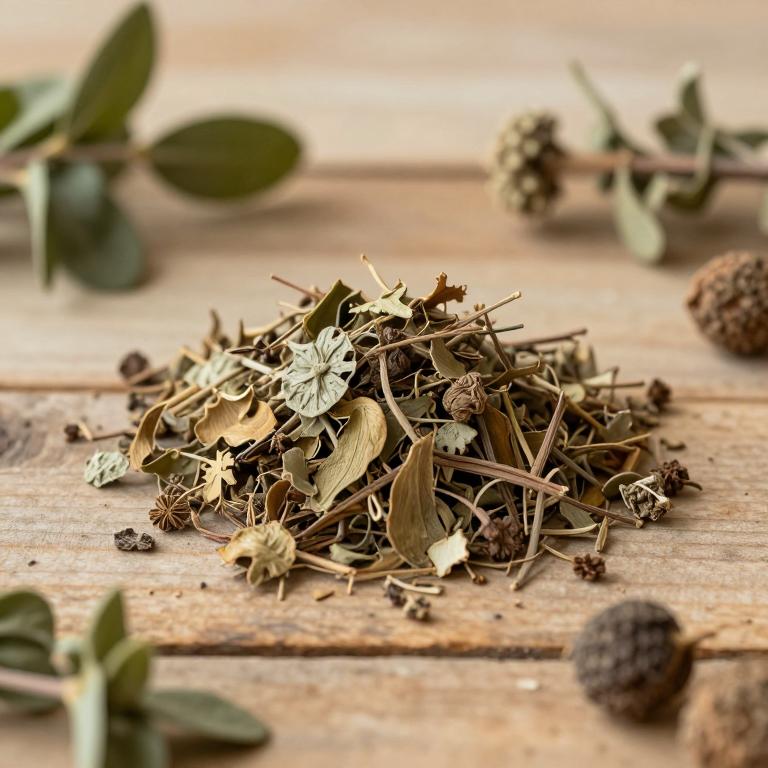
Names and Synonyms
Scientific Names
Accepted name
Lannea edulisSources: Wikidata
Distribution
This plant exhibits a wide geographical distribution across several distinct regions of the African continent. In West Tropical Africa, its presence is specifically noted in the Ivory Coast. Moving into West-Central Tropical Africa, the species can be found in Burundi, Rwanda, and the Democratic Republic of the Congo. Additionally, the plant extends its reach into Northeast Tropical Africa, where it inhabits Ethiopia. Collectively, these locations highlight the diverse environmental range that Lannea edulis occupies.
| Region | Area |
|---|---|
| West Tropical Africa | Ivory Coast |
| West-Central Tropical Africa | Burundi |
| West-Central Tropical Africa | Rwanda |
| West-Central Tropical Africa | DR Congo |
| Northeast Tropical Africa | Ethiopia |
| East Tropical Africa | Kenya |
| East Tropical Africa | Tanzania |
| East Tropical Africa | Uganda |
| South Tropical Africa | Angola |
| South Tropical Africa | Malawi |
Sources: The World Checklist of Vascular Plants (WCVP)
Botanical Identification
Ecology
The ecology of Lannea edulis is defined by its ability to inhabit diverse topographical gradients, occupying a broad altitudinal spectrum within its native habitat. This species is typically found across a varying landscape, with its distribution ranging from low-lying areas at an elevation of 245 m AMSL to higher montane reaches reaching a maximum of 1625 m AMSL. This wide elevational range suggests a high degree of ecological plasticity, allowing the plant to persist in various microclimates and environmental conditions found between these two distinct altitude thresholds.
- Elevational range max:
- 1625 m AMSL
- Elevational range min:
- 245 m AMSL
Life history
The life history of Lannea edulis is characterized by its status as a perennial plant, ensuring its long-term presence within its ecological niche. As a phanerophyte, it maintains its photosynthetic organs on elevated structures, specifically categorized under the life forms of both phanerophyte and nanophanerophyte depending on its growth stage and environmental context. The plant exhibits a deciduous nature, shedding its foliage in response to seasonal shifts, which plays a critical role in its survival strategy and resource management throughout its extended life cycle.
- Deciduousness :
- deciduous
- Life form :
- phanerophyte
- Lifecycle :
- perennial
Morphology
The morphology of Lannea edulis is characterized by a woody, subshrub growth form that functions as a self-supporting plant rather than a climbing liana or vine. As a terrestrial species, it does not exhibit aquatic or epiphytic habits and grows independently without parasitic tendencies. The plant typically maintains a relatively low profile, with heights ranging from a minimum of 0.1 m to a maximum of 0.6 m, maintaining an average plant height of approximately 0.3 m.
- Aquatic :
- terrestrial
- Climber :
- self-supporting
- Epiphyte :
- terrestrial
- Growth form :
- shrub
- Growth form :
- subshrub
- Parasite :
- independent
- Plant height max:
- 0.6 m
- Plant height mean:
- 0.3 m
- Plant height min:
- 0.1 m
- Woodiness :
- woody
Physiology
The physiology of Lannea edulis is characterized by a C3 photosynthetic pathway, utilizing the standard Calvin cycle to fix atmospheric carbon dioxide during the light-independent reactions. In terms of nutrient acquisition and symbiotic relationships, the plant does not function as a nitrogen fixer, meaning it lacks the specialized root nodules or symbiotic associations with diazotrophic bacteria required to convert atmospheric nitrogen into bioavailable forms.
- Nitrogen fixer :
- no
- Photosynthetic pathway :
- C3
Reproduction
The reproduction of Lannea edulis is characterized by specific seed morphology and specialized dispersal mechanisms. The seeds produced by this species are uniform in size, with a recorded mean, minimum, and maximum seed mass of 0.15128 g. Regarding its dispersal strategy, the plant exhibits a zoochorous syndrome, specifically utilizing endozoochory, where seeds are dispersed through the internal passage of animals. This specialized method of movement relies on biotic agents to facilitate the spread of the species across its habitat.
- Dispersal syndrome :
- zoochorous
- Dispersal syndrome :
- endozoochorous
- Seed mass mean:
- 0.15128 g
Sources: Global Inventory of Floras and Traits (GIFT)
Plant Parts
Lannea edulis has 1 reported plant parts identified across 1 scientific publications and several other databases that are studied for medicinal purposes. The most consistently reported plant part include root.
| Plant part | Supporting sources | Consensus |
|---|---|---|
| Root | 1 supporting sources | ★☆☆☆☆ |
Root
- Journal of natural products
Conditions
Lannea edulis has 6 reported investigations on conditions identified across 1 scientific publications and several other databases. The most consistently reported conditions include Diabetes mellitus, HIV, antihyperglycemic, antihyperlipidemic, blood glucose.
| Condition | Supporting sources | Consensus |
|---|---|---|
| Diabetes mellitus | 1 supporting sources | ★☆☆☆☆ |
| Hiv | 1 supporting sources | ★☆☆☆☆ |
| Antihyperglycemic | 1 supporting sources | ★☆☆☆☆ |
| Antihyperlipidemic | 1 supporting sources | ★☆☆☆☆ |
| Blood glucose | 1 supporting sources | ★☆☆☆☆ |
| Blood sugar | 1 supporting sources | ★☆☆☆☆ |
Diabetes mellitus
- Frontiers in pharmacology
Hiv
- Journal of ethnopharmacology
Antihyperglycemic
- Frontiers in pharmacology
Antihyperlipidemic
- Frontiers in pharmacology
Blood glucose
- Frontiers in pharmacology
Blood sugar
- Frontiers in pharmacology