crepe myrtles
Lagerstroemia · Accepted scientific name
Scientific literature: Very Sparse (14 studies) · ★☆☆☆☆
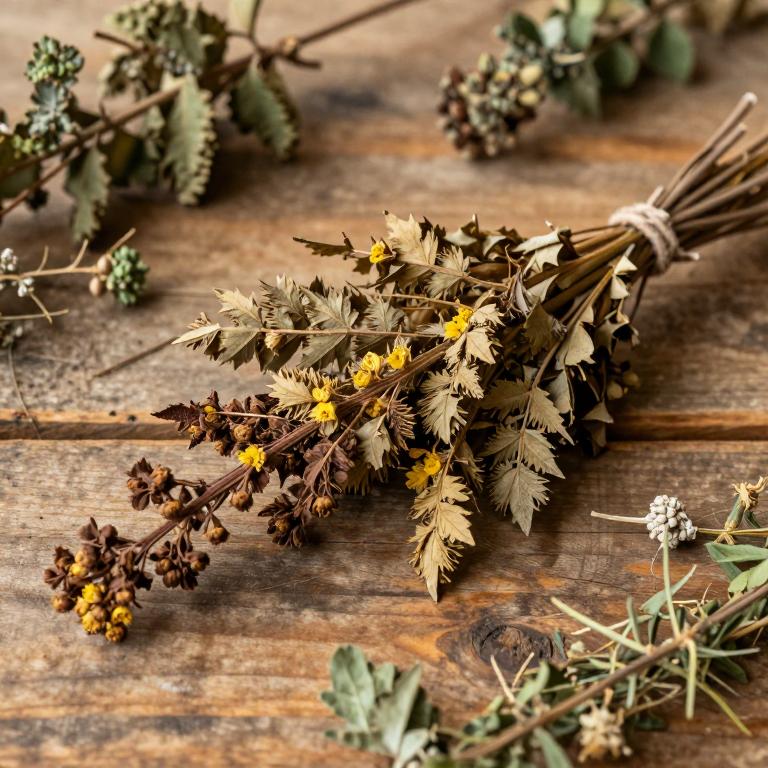
Crepe myrtles, scientifically known as Lagerstroemia, is a diverse genus of flowering shrubs and trees celebrated for their stunning, crinkled blooms. Beyond their ornamental beauty, various species offer medicinal potential, traditionally used in herbal practices to treat inflammation, digestive issues, and skin ailments through their bioactive phytochemical properties.
Names and Synonyms
Common Names
- crape-myrtle
- Crepe myrtles
- crape-myrtles
- Crepe Myrtle
Scientific Names
Accepted name
LagerstroemiaSynonyms
- Orias
- Pterocalymma
- Munchausia
- Fatioa
- Catu-adamboe
- Sotularia
- Adambea
Regional and Traditional Names
Spanish:
- Árboles asiáticos de Júpiter
German:
- Lagerströmien
- Kräuselmyrten
- Lagerströmien
Sources: Wikidata, Catalogue of Life
Taxonomical Classification
This plant belongs to the kingdom Plantae and the phylum Streptophyta within the class Equisetopsida. It is further classified under the subclass Magnoliidae and the order Myrtales, falling into the family Lythraceae. Ultimately, it is identified by the genus Lagerstroemia.
| Rank | Classification |
|---|---|
| Kingdom | Plantae |
| Phylum | Streptophyta |
| Class | Equisetopsida |
| Subclass | Magnoliidae |
| Order | Myrtales |
| Family | Lythraceae |
| Genus | Lagerstroemia |
Sources: The World Checklist of Vascular Plants (WCVP)
Distribution
This plant exhibits a diverse geographical distribution spanning several distinct regions. In the Western Indian Ocean, it can be found specifically within the Comoros. Its range extends into Central Asia, where it is located in Turkmenistan, Tajikistan, and Uzbekistan. Additionally, the species is present in China, specifically throughout the South-Central region. These varied locations highlight the wide environmental adaptability of the Lagerstroemia genus.
| Region | Area |
|---|---|
| Western Indian Ocean | Comoros |
| Central Asia | Turkmenistan |
| Central Asia | Tadzhikistan |
| Central Asia | Uzbekistan |
| China | China South-Central |
| China | Hainan |
| China | China North-Central |
| China | Qinghai |
| China | China Southeast |
| Eastern Asia | Japan |
Sources: The World Checklist of Vascular Plants (WCVP)
Chemicals
Lagerstroemia has 2 reported phytochemicals identified across 0 scientific publications and several other databases. The most consistently reported chemicals include Flavonoids, Terpenes.
| Chemical | Supporting sources | Consensus |
|---|---|---|
| Flavonoids | 1 supporting sources | ★☆☆☆☆ |
| Terpenes | 1 supporting sources | ★☆☆☆☆ |
Flavonoids
- Plants (Basel, Switzerland)
Terpenes
- Plants (Basel, Switzerland)
Activities
Lagerstroemia has 7 reported activities identified across 0 scientific publications and several other databases. The most consistently reported activities include Analgesic, Antidiabetic, Antimicrobial, Antioxidant, Antitumor.
| Activity | Supporting sources | Consensus |
|---|---|---|
| Analgesic | 1 supporting sources | ★☆☆☆☆ |
| Antidiabetic | 1 supporting sources | ★☆☆☆☆ |
| Antimicrobial | 1 supporting sources | ★☆☆☆☆ |
| Antioxidant | 1 supporting sources | ★☆☆☆☆ |
| Antitumor | 1 supporting sources | ★☆☆☆☆ |
| Hepatoprotective | 1 supporting sources | ★☆☆☆☆ |
| Hypoglycemic | 1 supporting sources | ★☆☆☆☆ |
Analgesic
- Plants (Basel, Switzerland)
Antidiabetic
- Plants (Basel, Switzerland)
Antimicrobial
- Plants (Basel, Switzerland)
Antioxidant
- Plants (Basel, Switzerland)
Antitumor
- Plants (Basel, Switzerland)
Hepatoprotective
- Plants (Basel, Switzerland)
Hypoglycemic
- Plants (Basel, Switzerland)
Conditions
Lagerstroemia has 5 reported investigations on conditions identified across 0 scientific publications and several other databases. The most consistently reported conditions include anesthesia, coughs, fevers, inflammation, pain.
| Condition | Supporting sources | Consensus |
|---|---|---|
| Anesthesia | 1 supporting sources | ★☆☆☆☆ |
| Coughs | 1 supporting sources | ★☆☆☆☆ |
| Fevers | 1 supporting sources | ★☆☆☆☆ |
| Inflammation | 1 supporting sources | ★☆☆☆☆ |
| Pain | 1 supporting sources | ★☆☆☆☆ |
Anesthesia
- Plants (Basel, Switzerland)
Coughs
- Plants (Basel, Switzerland)
Fevers
- Plants (Basel, Switzerland)
Inflammation
- Plants (Basel, Switzerland)
Pain
- Plants (Basel, Switzerland)