mangava-brava
Lafoensia pacari · Accepted scientific name
Scientific literature: Very Sparse (30 studies) · ★☆☆☆☆
Mangava-brava, scientifically known as Lafoensia pacari, is a remarkable medicinal plant native to the Brazilian Cerrado. Renowned for its potent therapeutic properties, it is traditionally used to treat inflammation and infections. This resilient shrub offers significant pharmacological potential, making it a subject of growing interest in ethnobotanical research.
- Family
- Lythraceae
- Native range
- Southern America
- Parts used
- Leaf · Stem
- Common names
- Mangava-Brava
- Scientific synonyms
- Lafoensia Lucida · Lafoensia Petiolata · 9 more
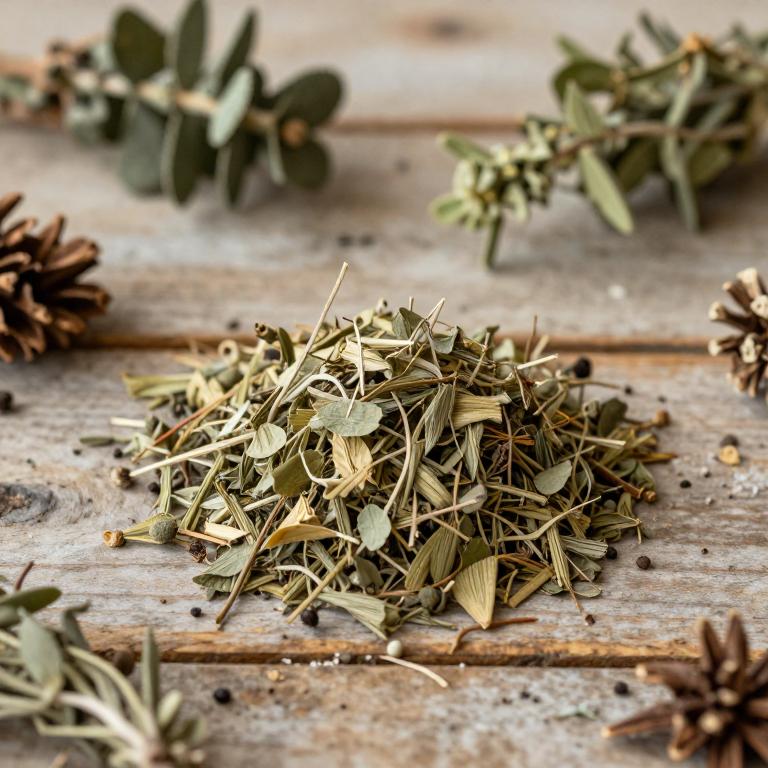
Names and Synonyms
Common Names
- mangava-brava
Scientific Names
Accepted name
Lafoensia pacariSynonyms
- Lafoensia lucida
- Lafoensia petiolata
- Lafoensia sessilifolia
- Lafoensia sellowiana
- Lafoensia pacari f. alata
- Lafoensia pacari f. exalata
- Lafoensia pacari f. aptera
- Lafoensia pacari f. pseudopacari
- Lafoensia pacari f. lucida
- Lafoensia pacari subsp. cuneifolia
- Lafoensia pacari var. hemisphaerica
Sources: Wikidata, Catalogue of Life
Taxonomical Classification
This plant belongs to the kingdom Plantae and the phylum Streptophyta, falling under the class Equisetopsida and subclass Magnoliidae. Within the order Myrtales, it is classified under the family Lythraceae. Its specific taxonomic placement is within the genus Lafoensia, identifying it as Lafoensia pacari.
| Rank | Classification |
|---|---|
| Kingdom | Plantae |
| Phylum | Streptophyta |
| Class | Equisetopsida |
| Subclass | Magnoliidae |
| Order | Myrtales |
| Family | Lythraceae |
| Genus | Lafoensia |
Sources: The World Checklist of Vascular Plants (WCVP)
Distribution
This plant exhibits a widespread presence across the diverse landscapes of Brazil. Its geographical range extends significantly into the Brazil West-Central region. Furthermore, it can be found growing within the Brazil Northeast area. The distribution also encompasses the Brazil Southeast and Brazil North territories. Finally, its occurrence reaches as far as the Brazil South region.
| Region | Area |
|---|---|
| Brazil | Brazil West-Central |
| Brazil | Brazil Northeast |
| Brazil | Brazil Southeast |
| Brazil | Brazil North |
| Brazil | Brazil South |
Sources: The World Checklist of Vascular Plants (WCVP)
Botanical Identification
Ecology
The ecology of Lafoensia pacari is characterized by its adaptation to diverse Brazilian biomes, where it primarily establishes itself within the Cerrado (latu sensu) ecosystems. This species exhibits significant ecological plasticity, allowing it to occupy varied niches ranging from the open, shrubby landscapes of the Cerrado to the more densely vegetated environments of the Atlantic Forest (Mata Atlântica). Furthermore, it is frequently found in riparian zones, specifically within Gallery Forests (Floresta de Galeria), where it benefits from the increased moisture availability and specialized microclimates provided by the proximity to watercourses.
- Habitat :
- Cerrado (lato sensu), Floresta Ciliar ou Galeria
Life history
The life history of Lafoensia pacari is characterized by a perennial lifecycle, allowing the individual to persist through multiple growing seasons. As a phanerophyte, its regenerative buds are elevated above the ground, a structural trait that defines its primary life form. Furthermore, this species exhibits a deciduous nature, shedding its foliage as part of its seasonal biological cycle.
- Deciduousness :
- deciduous
- Life form :
- phanerophyte
- Lifecycle :
- perennial
Morphology
The morphology of Lafoensia pacari is characterized by a robust, woody growth form, specifically categorized as a tree. It is a terrestrial species that functions as an independent organism, neither acting as a parasite nor as an epiphyte. In terms of its structural habit, the plant is self-supporting, lacking the climbing tendencies of lianas or vines. The physical stature of the plant is significant, with recorded heights ranging from a maximum of 11 meters to a mean height of approximately 14 meters.
- Aquatic :
- terrestrial
- Climber :
- self-supporting
- Epiphyte :
- terrestrial
- Growth form :
- tree
- Parasite :
- independent
- Plant height max:
- 11 m
- Plant height mean:
- 14 m
- Woodiness :
- woody
Physiology
The physiology of Lafoensia pacari is characterized by a C3 photosynthetic pathway, a metabolic strategy typical of many temperate and high-altitude species that prioritizes efficiency under moderate light and temperature conditions. The plant's leaf morphology and resource allocation are reflected in its Specific Leaf Area (SLA), which maintains a highly consistent value across its range, with a minimum, mean, and maximum all measured at 99 cm²/g. This uniformity in SLA suggests a stable leaf thickness and density profile, likely adapted to specific environmental constraints within its habitat. Furthermore, Lafoensia pacari does not function as a nitrogen fixer, meaning it relies on the uptake of available soil nitrogen rather than symbiotic nitrogen fixation to meet its nutritional requirements.
- Nitrogen fixer :
- no
- Photosynthetic pathway :
- C3
- Specific Leaf Area (SLA) min:
- 99 cm²/g
Sources: Global Inventory of Floras and Traits (GIFT)
Plant Parts
Lafoensia pacari has 2 reported plant parts identified across 4 scientific publications and several other databases that are studied for medicinal purposes. The most consistently reported plant part include leaf, stem.
| Plant part | Supporting sources | Consensus |
|---|---|---|
| Leaf | 3 supporting sources | ★★☆☆☆ |
| Stem | 1 supporting sources | ★☆☆☆☆ |
Leaf
- Journal of ethnopharmacology
- Protein and peptide letters
- Toxicology and applied pharmacology
Stem
- Journal of ethnopharmacology
Chemicals
Lafoensia pacari has 8 reported phytochemicals identified across 4 scientific publications and several other databases. The most consistently reported chemicals include Lupeol, Punicalagin, STIGMASTEROL, Saponins, Steroids.
| Chemical | Supporting sources | Consensus |
|---|---|---|
| Lupeol | 1 supporting sources | ★☆☆☆☆ |
| Punicalagin | 1 supporting sources | ★☆☆☆☆ |
| STIGMASTEROL | 1 supporting sources | ★☆☆☆☆ |
| Saponins | 1 supporting sources | ★☆☆☆☆ |
| Steroids | 1 supporting sources | ★☆☆☆☆ |
| Tannins | 1 supporting sources | ★☆☆☆☆ |
| ellagic acid | 1 supporting sources | ★☆☆☆☆ |
| triterpene | 1 supporting sources | ★☆☆☆☆ |
Lupeol
- Journal of ethnopharmacology
Punicalagin
- Toxicology and applied pharmacology
STIGMASTEROL
- Journal of ethnopharmacology
Saponins
- Journal of ethnopharmacology
Steroids
- Journal of ethnopharmacology
Tannins
- Journal of ethnopharmacology
ellagic acid
- Journal of ethnopharmacology
triterpene
- Journal of ethnopharmacology
Conditions
Lafoensia pacari has 11 reported investigations on conditions identified across 4 scientific publications and several other databases. The most consistently reported conditions include Staphylococcus aureus, allergy, asthma, cancer, dental caries.
| Condition | Supporting sources | Consensus |
|---|---|---|
| Staphylococcus aureus | 1 supporting sources | ★☆☆☆☆ |
| Allergy | 1 supporting sources | ★☆☆☆☆ |
| Asthma | 1 supporting sources | ★☆☆☆☆ |
| Cancer | 1 supporting sources | ★☆☆☆☆ |
| Dental caries | 1 supporting sources | ★☆☆☆☆ |
| Denture stomatitis | 1 supporting sources | ★☆☆☆☆ |
| Eosinophilia | 1 supporting sources | ★☆☆☆☆ |
| Inflammation | 1 supporting sources | ★☆☆☆☆ |
| Obesity | 1 supporting sources | ★☆☆☆☆ |
| Peptic ulcer | 1 supporting sources | ★☆☆☆☆ |
Staphylococcus aureus
- Journal of ethnopharmacology
Allergy
- Pharmacological research
Asthma
- Pharmacological research
Cancer
- Journal of ethnopharmacology
Dental caries
- Planta medica
Denture stomatitis
- Planta medica
Eosinophilia
- Pharmacological research
Inflammation
- Journal of ethnopharmacology
Obesity
- Protein and peptide letters
Peptic ulcer
- Toxicology and applied pharmacology
Preparations
Lafoensia pacari has 5 reported preparations identified across 4 scientific publications and several other databases. The most consistently reported preparations include ethanolic extracts from the stem bark and leaves, extract, hydroethanolic extract, methanolic extract of the stem bark, plant extracts.
| Preparation | Supporting sources | Consensus |
|---|---|---|
| Ethanolic extracts from the stem bark and leaves | 1 supporting sources | ★☆☆☆☆ |
| Extract | 1 supporting sources | ★☆☆☆☆ |
| Hydroethanolic extract | 1 supporting sources | ★☆☆☆☆ |
| Methanolic extract of the stem bark | 1 supporting sources | ★☆☆☆☆ |
| Plant extracts | 1 supporting sources | ★☆☆☆☆ |
Ethanolic extracts from the stem bark and leaves
- Journal of ethnopharmacology
Extract
- Protein and peptide letters
Hydroethanolic extract
- Protein and peptide letters
Methanolic extract of the stem bark
- Journal of ethnopharmacology
Plant extracts
- Pharmacological research