least lettuce
Lactuca saligna · Accepted scientific name
Scientific literature: Very Sparse (9 studies) · ★☆☆☆☆
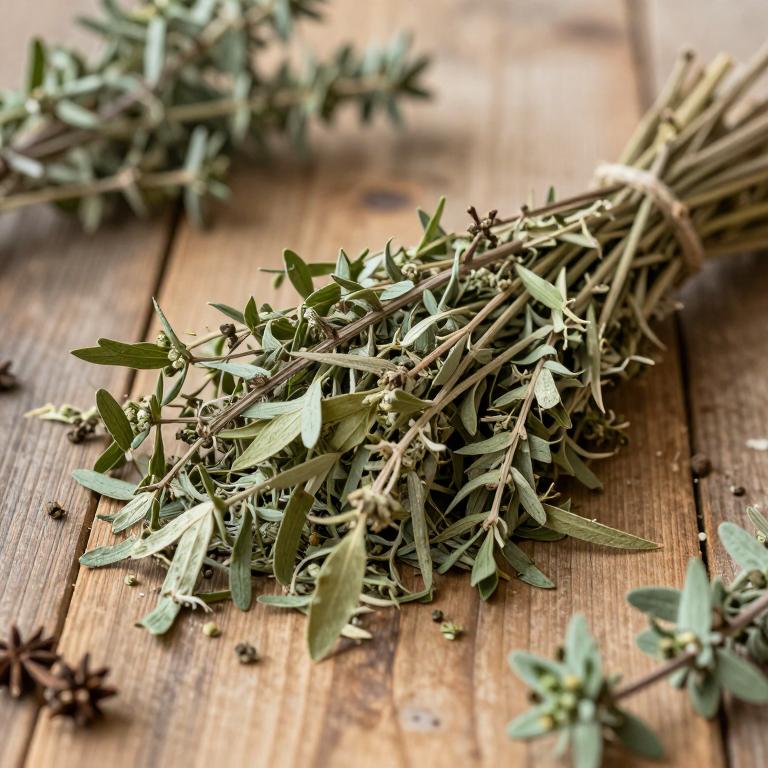
Least lettuce, scientifically known as Lactuca saligna, is a distinctive wild species belonging to the Asteraceae family. Primarily found in arid regions, this resilient herb is valued in traditional medicine for its therapeutic properties. It is often utilized to treat digestive ailments, inflammation, and various inflammatory conditions naturally.
Names and Synonyms
Common Names
- least lettuce
- willow lettuce
- willow-leaved lettuce
- narrow-leaf lettuce
- wild lettuce
- willow-leaf lettuce
- Willow Leaf Lettuce
Scientific Names
Accepted name
Lactuca salignaSynonyms
- Lactuca cyanea
- Lactuca saligna var. wallrothiana
- Lactuca saligna var. runcinata
- Lactuca saligna minor
- Lactuca cracoviensis
- Lactuca salicifolia
- Lactuca spiciformis
- Lactuca tommasiniana
- Lactuca wallrothii
- Lactuca caucasica
- Hieracium salignum
- Lactuca adulteriana
- Lactuca vanensis
- Lactuca saligna var. ruppiana
Regional and Traditional Names
German:
- Weiden-Lattich
- Weidenblättriger Lattich
- Weidenlattich
- weidenblättriger Lattich
- Weiden-Lattich
French:
- laitue à feuilles de saule
- laitue à feuilles de saule
- Laitue a feuilles de saule
Sources: Wikidata, Catalogue of Life
Taxonomical Classification
This plant belongs to the kingdom Plantae and the phylum Streptophyta, specifically falling under the class Equisetopsida and subclass Magnoliidae. Within the order Asterales, it is classified under the family Asteraceae and the genus Lactuca.
| Rank | Classification |
|---|---|
| Kingdom | Plantae |
| Phylum | Streptophyta |
| Class | Equisetopsida |
| Subclass | Magnoliidae |
| Order | Asterales |
| Family | Asteraceae |
| Genus | Lactuca |
Sources: The World Checklist of Vascular Plants (WCVP)
Distribution
This plant exhibits a specific distribution pattern across several regions of the European continent. In Northern Europe, its presence is recorded within the borders of Great Britain. Moving toward Middle Europe, the species can be found growing in Austria and Belgium. It also occupies significant territories within the Czech-Slovak region. Finally, its geographical range extends through the central landscapes of Germany.
| Region | Area |
|---|---|
| Northern Europe | Great Britain |
| Middle Europe | Austria |
| Middle Europe | Belgium |
| Middle Europe | Czechia-Slovakia |
| Middle Europe | Germany |
| Middle Europe | Hungary |
| Middle Europe | Netherlands |
| Middle Europe | Poland |
| Middle Europe | Switzerland |
| Southwestern Europe | Baleares |
Sources: The World Checklist of Vascular Plants (WCVP)
Botanical Identification
Ecology
The ecology of Lactuca saligna is characterized by its ability to thrive across a diverse range of moisture and soil conditions, occupying habitats such as canals, lakes, rivers, saline places, semideserts, steppes, and stony places. This adaptability allows the species to colonize both aquatic margins and more arid, open landscapes. In terms of vertical distribution, the plant is found across a broad altitudinal gradient, ranging from sea level (0 m AMSL) up to a maximum elevation of 1000 m AMSL.
- Elevational range max:
- 1000 m AMSL
- Elevational range min:
- 0 m AMSL
- Habitat :
- canals, lakes, rivers, saline places, semidesert, steppe, stony places
Life history
The life history of Lactuca saligna is characterized by an annual lifecycle, meaning the plant completes its entire developmental process—from germination to seed production—within a single growing season. As a therophyte, it survives unfavorable environmental conditions by existing in the form of resistant seeds, which remain dormant in the soil until conditions become favorable for rapid growth and reproduction. Furthermore, the species exhibits a deciduous nature, shedding its vegetative structures as it completes its seasonal cycle, ensuring that resources are conserved and the plant transitions effectively into its reproductive stage before the end of its life.
- Deciduousness :
- deciduous
- Life form :
- therophyte
- Lifecycle :
- annual
Morphology
The morphology of Lactuca saligna is characterized by its growth form as a non-woody herb and forb. The plant is a self-supporting species that does not function as a climber or a liana, and it exists as an independent organism rather than a parasite or an epiphyte. It is strictly a terrestrial plant, lacking aquatic or semiaquatic tendencies. In terms of stature, it exhibits significant variability in plant height, ranging from a minimum of 0.03 m to a maximum of 1 m, with an average height of approximately 0.4 m.
- Aquatic :
- terrestrial
- Climber :
- self-supporting
- Epiphyte :
- terrestrial
- Growth form :
- herb
- Growth form :
- forb
- Parasite :
- independent
- Plant height max:
- 1 m
- Plant height mean:
- 0.4 m
- Plant height min:
- 0.03 m
- Woodiness :
- non-woody
Physiology
The physiology of Lactuca saligna is characterized by a C3 photosynthetic pathway, indicating its reliance on the standard carbon fixation process common to many temperate plant species. As a non-carnivorous organism, it derives all necessary nutrients from the soil rather than through the capture of prey. The morphology of its foliage plays a significant role in its metabolic processes, with leaf dimensions showing considerable variability; individual leaves typically range in length from a minimum of 8 cm to a maximum of 20 cm. Correspondingly, the leaf width fluctuates between a minimum of 0.5 cm and a maximum of 5 cm, with a recorded mean width of 1.5 cm, reflecting a structural adaptation that supports its photosynthetic efficiency and resource management.
- Carnivory :
- non-carnivorous
- Leaf length max:
- 20 cm
- Leaf length min:
- 8 cm
- Leaf width max:
- 5 cm
- Leaf width mean:
- 1.5 cm
- Leaf width min:
- 0.5 cm
- Photosynthetic pathway :
- C3
Reproduction
The reproduction of Lactuca saliigna is characterized by a sexual reproductive cycle, as asexual reproduction is absent. This monoecarpous species undergoes a specific flowering period that begins in July and concludes in August. The pollination process is driven by biotic mechanisms, specifically utilizing an insect pollination syndrome to facilitate fertilization, although the plant is also capable of self-fertilization. The resulting fruit is classified as an achene, which is indehiscent. The seeds produced are quite small, with a minimum mass of 0.00042 g, a mean mass of 0.000615 g, and a maximum mass of 0.00075 g. Following maturation, the plant employs an anemochorous dispersal syndrome, relying on wind to distribute its seeds.
- Dehiscence :
- indehiscent
- Dispersal syndrome :
- anemochorous
- Flowering time :
- Jul
- Flowering time :
- Aug
- Fruit type :
- achene
- Monocarpy :
- monocarp
- Pollination syndrome :
- insect
- Pollination syndrome :
- biotic
- Reproduction asexual :
- absent
- Seed mass max:
- 0.00075 g
- Seed mass mean:
- 0.000615 g
- Seed mass min:
- 0.00042 g
- Self fertilization :
- present
Sources: Global Inventory of Floras and Traits (GIFT)
Chemicals
Lactuca saligna has 6 reported phytochemicals identified across 0 scientific publications and several other databases. The most consistently reported chemicals include 3,5-Di-O-caffeoylquinic acid, 3-p-coumaroylquinic acid, 5-Caffeoylquinic acid, Apigenin 7-O-glucuronide, dicaffeoyltartaric acid.
| Chemical | Supporting sources | Consensus |
|---|---|---|
| 3,5-Di-O-caffeoylquinic acid | 1 supporting sources | ★☆☆☆☆ |
| 3-p-coumaroylquinic acid | 1 supporting sources | ★☆☆☆☆ |
| 5-Caffeoylquinic acid | 1 supporting sources | ★☆☆☆☆ |
| Apigenin 7-O-glucuronide | 1 supporting sources | ★☆☆☆☆ |
| dicaffeoyltartaric acid | 1 supporting sources | ★☆☆☆☆ |
| quercetin 3-O-glucuronide | 1 supporting sources | ★☆☆☆☆ |
3,5-Di-O-caffeoylquinic acid
- Molecules (Basel, Switzerland)
3-p-coumaroylquinic acid
- Molecules (Basel, Switzerland)
5-Caffeoylquinic acid
- Molecules (Basel, Switzerland)
Apigenin 7-O-glucuronide
- Molecules (Basel, Switzerland)
dicaffeoyltartaric acid
- Molecules (Basel, Switzerland)
quercetin 3-O-glucuronide
- Molecules (Basel, Switzerland)
Activities
Lactuca saligna has 2 reported activities identified across 0 scientific publications and several other databases. The most consistently reported activities include Antibacterial, Antioxidant.
| Activity | Supporting sources | Consensus |
|---|---|---|
| Antibacterial | 1 supporting sources | ★☆☆☆☆ |
| Antioxidant | 1 supporting sources | ★☆☆☆☆ |
Antibacterial
- Molecules (Basel, Switzerland)
Antioxidant
- Molecules (Basel, Switzerland)
Preparations
Lactuca saligna has 1 reported preparations identified across 0 scientific publications and several other databases. The most consistently reported preparations include hydro-methanolic extracts.
| Preparation | Supporting sources | Consensus |
|---|---|---|
| Hydro-methanolic extracts | 1 supporting sources | ★☆☆☆☆ |
Hydro-methanolic extracts
- Molecules (Basel, Switzerland)