Lacistema pubescens
Lacistema pubescens · Accepted scientific name
Scientific literature: Very Sparse (4 studies) · ★☆☆☆☆
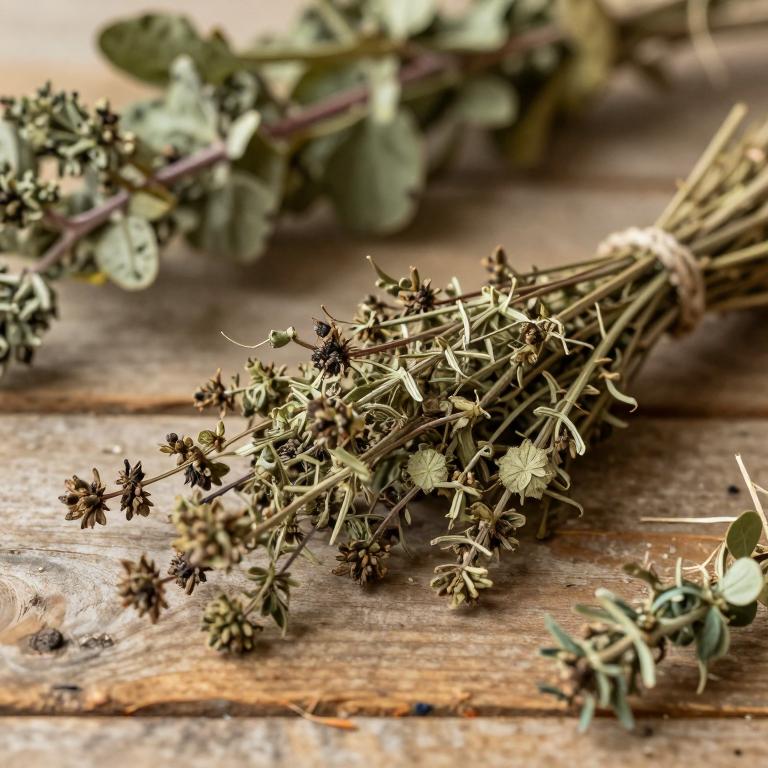
, scientifically known as Lacistema pubescens, is a versatile medicinal shrub native to the Americas. Often called "purgative herb," it is traditionally valued in folk medicine for its potent purgative and emetic properties. While used to treat various ailments, its high toxicity requires careful handling and expert medicinal guidance.
- Family
- Lacistemataceae
- Native range
- Southern America
- Parts used
- Not available
- Common names
- Not available
- Scientific synonyms
- Lacistema Ellipticum
Names and Synonyms
Scientific Names
Accepted name
Lacistema pubescensSynonyms
- Lacistema ellipticum
Sources: Wikidata
Taxonomical Classification
This plant belongs to the kingdom Plantae and is classified under the phylum Streptophyta and class Equisetopsida. Within the subclass Magnoliidae, it is further categorized under the order Malpighiales and the family Lacistemataceae. Its specific taxonomic identity is defined by the genus Lacistema, of which Lacistema pubescens is a member.
| Rank | Classification |
|---|---|
| Kingdom | Plantae |
| Phylum | Streptophyta |
| Class | Equisetopsida |
| Subclass | Magnoliidae |
| Order | Malpighiales |
| Family | Lacistemataceae |
| Genus | Lacistema |
Sources: The World Checklist of Vascular Plants (WCVP)
Distribution
This plant exhibits a diverse geographical range across several key regions of South America. In the northern part of the continent, it can be found growing within French Guiana. Its presence is also significant throughout Brazil, spanning multiple distinct territories. Specifically, it is distributed across the Northeast, Southeast, and North regions of the country. This wide distribution highlights the plant's ability to thrive in various Brazilian landscapes.
| Region | Area |
|---|---|
| Northern South America | French Guiana |
| Brazil | Brazil Northeast |
| Brazil | Brazil Southeast |
| Brazil | Brazil North |
Sources: The World Checklist of Vascular Plants (WCVP)
Botanical Identification
Ecology
The ecology of Lacistema pubescens is characterized by its presence in highly specific and moisture-dependent environments, primarily inhabiting Ombrophilous Forests (Rainforests) and Restinga ecosystems. Within these habitats, the species thrives in areas defined by high humidity and significant rainfall, which are typical of tropical rainforest settings. Its occurrence in Restinga—a coastal ecosystem characterized by sandy soils and specialized vegetation—indicates an ability to adapt to the unique hydrological and nutrient conditions found in these transitional zones between forest and sea. The plant's distribution is closely tied to these high-moisture niches, where the interplay of shade, humidity, and soil composition within the rainforest canopy and the coastal scrub provides the necessary ecological stability for its growth and survival.
- Habitat :
- Floresta Ombrófila (= Floresta Pluvial), Restinga
Morphology
The morphology of Lacistema pubescens is characterized by a woody growth form, specifically categorized as a tree that can reach a maximum plant height of approximately 20 m. As a terrestrial species, it does not exhibit aquatic, semiaquatic, or epiphytic lifestyles, functioning as a terrestrial plant rather than a holoepiphyte, hemiepiphyte, or facultative epiphyte. The plant is independent in its nutritional requirements, meaning it is not an obligatory or facultative parasite. Furthermore, its structural development is that of a self-supporting organism, lacking the climbing mechanisms of a liana, vine, obligatory climber, or facultative climber.
- Aquatic :
- terrestrial
- Climber :
- self-supporting
- Epiphyte :
- terrestrial
- Growth form :
- tree
- Parasite :
- independent
- Plant height max:
- 20 m
- Woodiness :
- woody
Physiology
The physiology of Lacistema pubescens is characterized by its metabolic processes, most notably its use of the C3 photosynthetic pathway. In this pathway, the initial fixation of atmospheric carbon dioxide is mediated by the enzyme Rubisco, resulting in the formation of a three-carbon compound, 3-phosphoglycerate. This biochemical mechanism governs the plant's carbon assimilation efficiency and its water-use strategy, influencing how the species manages gas exchange and energy production within its tissues. Through this C3 metabolism, the plant regulates its growth and development by converting light energy into chemical energy, maintaining the physiological balance necessary for its survival in its native ecological niches.
- Photosynthetic pathway :
- C3
Sources: Global Inventory of Floras and Traits (GIFT)
Activities
Lacistema pubescens has 2 reported activities identified across 0 scientific publications and several other databases. The most consistently reported activities include Antibacterial, Antiproliferative.
| Activity | Supporting sources | Consensus |
|---|---|---|
| Antibacterial | 1 supporting sources | ★☆☆☆☆ |
| Antiproliferative | 1 supporting sources | ★☆☆☆☆ |
Antibacterial
- BioMed research international
Antiproliferative
- BioMed research international
Conditions
Lacistema pubescens has 1 reported investigations on conditions identified across 0 scientific publications and several other databases. The most consistently reported conditions include Jurkat cells.
| Condition | Supporting sources | Consensus |
|---|---|---|
| Jurkat cells | 1 supporting sources | ★☆☆☆☆ |
Jurkat cells
- BioMed research international
Preparations
Lacistema pubescens has 3 reported preparations identified across 0 scientific publications and several other databases. The most consistently reported preparations include hexane fraction, methanolic crude extract, methanolic extract.
| Preparation | Supporting sources | Consensus |
|---|---|---|
| Hexane fraction | 1 supporting sources | ★☆☆☆☆ |
| Methanolic crude extract | 1 supporting sources | ★☆☆☆☆ |
| Methanolic extract | 1 supporting sources | ★☆☆☆☆ |
Hexane fraction
- BioMed research international
Methanolic crude extract
- BioMed research international
Methanolic extract
- BioMed research international