Common Laburnum
Laburnum anagyroides · Accepted scientific name
Scientific literature: Sparse (86 studies) · ★★☆☆☆
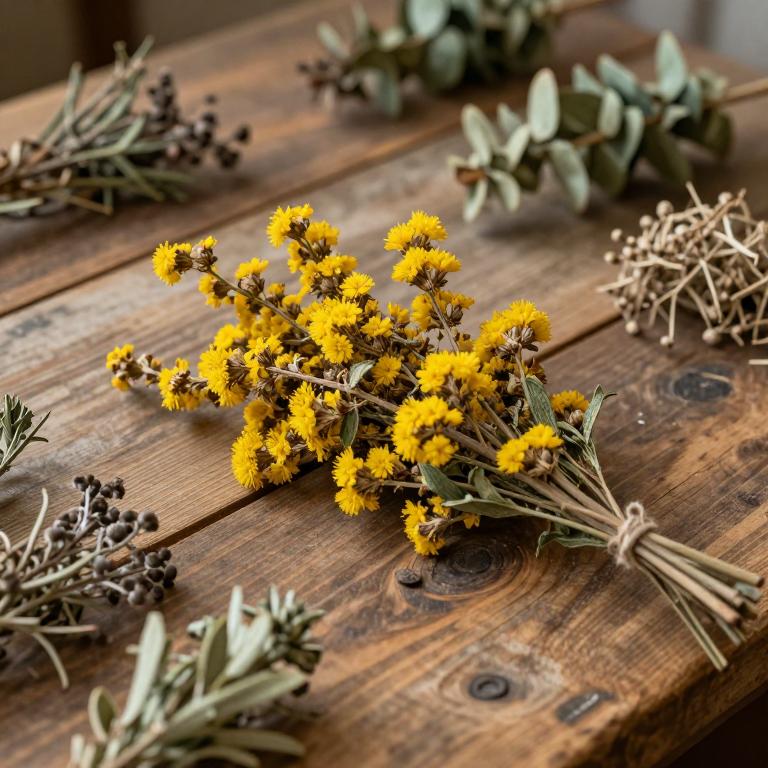
Common Laburnum, scientifically known as Laburnum anagyroides, is a striking deciduous shrub renowned for its cascading golden blooms. While celebrated for its ornamental beauty, this plant holds significant traditional medicinal value. Careful study of its unique chemical properties reveals its potential role in various historical and modern therapeutic applications.
Names and Synonyms
Common Names
- golden-chain tree
- laburnum
- Golden Rain
- Laburnham
- Common Laburnum
- Golden chain tree
- Golden rain tree
- golden-chain
- peatree
- Golden Chain
- golden chain-tree
Scientific Names
Accepted name
Laburnum anagyroidesSynonyms
- Laburnum linneanum
- Laburnum jacquinianum
- Laburnum alschingeri
- Laburnum anagyroides var. jacquinianum
- Laburnum vulgare
- Laburnum tardiflorum
- Laburnum praecox
- Cytisus laburnum f. aureum
- Spartium laburnum
- Genista laburnum
- Cytisus alschingeri
- Cytisus insubricus
- Cytisus laburnum subsp. jacquinianus
- Cytisus jacquinianus
- Cytisus laburnum
- Cytisus penduliflorus
- Cytisus linneanus
- Laburnum anagyroides f. aureum
- Cytisus weissmannii
- Laburnum vulgare f. chrysophyllum
- Laburnum vulgare var. aureum
- Laburnum anagyroides f. chrysophyllum
- Cytisus laburnum var. bullatum
- Laburnum anagyroides f. bullatum
- Cytisus laburnum var. quercifolium
- Laburnum anagyroides f. quercifolium
- Laburnum vulgare var. quercifolium
- Cytisus laburnum var. sessilifolium
- Laburnum anagyroides f. sessilifolium
- Cytisus laburnum var. pendulus
- Laburnum anagyroides f. pendulum
- Laburnum vulgare f. pendulum
- Laburnum anagyroides var. pendulum
- Cytisus laburnum var. serotinus
- Laburnum anagyroides f. serotinum
- Laburnum vulgare var. autumnale
- Laburnum anagyroides var. alschingeri
- Laburnum vulgare var. carlieri
- Laburnum anagyroides var. carlieri
- Laburnum anagyroides subsp. jacquinianum
- Cytisus laburnum subsp. linnaeanus
- Laburnum anagyroides subsp. alschingeri
- Cytisus laburnum subsp. alschingeri
- Laburnum anagyroides f. jacquinianum
- Laburnum anagyroides f. linnaeanum
Regional and Traditional Names
Spanish:
- Falso-ebano
- Cytisus laburnum
- Cytisus laburnum subsp. linnaeanus
- Genista laburnum
- Cytisus penduliniformis
- Falso ebano
- Ébano de Europa
- Laburno
- Ebano de Europa
- Laburnum vulgare
- Falso-ébano
- Citiso
- Falso ébano
- Cytisus alschingeri
- luvia de oro
- borne
- codeso de los Alpes
- Lluvia de oro
- Falso-ébano
- borne
- citiso
- codeso de los Alpes
- ebano de Europa
- falso ebano
- falso ébano
- falso-ebano
- laburno
- luvia de oro
- ébano de Europa
German:
- Gemeiner Goldregen
- Cytisus laburnum
- Gewöhnlicher Goldregen
- gewöhnlicher Goldregen
- Gemeiner Goldregen
French:
- Cytise aubour
- Cytise faux ébénier
- aubour
- aubours faux anagyris
- cytise faux-ébénier
- faux ébénier
- cytise faux ébénier
- Aubour commun
- Cytise aubour
Sources: Wikidata, Catalogue of Life
Taxonomical Classification
This plant belongs to the kingdom Plantae and the phylum Streptophyta, falling within the class Equisetopsida and subclass Magnoliidae. It is classified under the order Fabales and the family Fabaceae, specifically within the genus Laburnum. Consequently, its scientific identity is established as Laburnum anagyroides.
| Rank | Classification |
|---|---|
| Kingdom | Plantae |
| Phylum | Streptophyta |
| Class | Equisetopsida |
| Subclass | Magnoliidae |
| Order | Fabales |
| Family | Fabaceae |
| Genus | Laburnum |
Sources: The World Checklist of Vascular Plants (WCVP)
Distribution
This plant exhibits a specific distribution pattern across several regions of Europe. In Northern Europe, it can be found growing in both Great Britain and Ireland. Moving into Middle Europe, the species is also present within the borders of Belgium. Its range extends further east to include the territories of Austria. Finally, the geographical reach of this plant encompasses the Czechia-Slovakia region.
| Region | Area |
|---|---|
| Northern Europe | Great Britain |
| Northern Europe | Ireland |
| Middle Europe | Austria |
| Middle Europe | Belgium |
| Middle Europe | Czechia-Slovakia |
| Middle Europe | Germany |
| Middle Europe | Hungary |
| Middle Europe | Poland |
| Middle Europe | Switzerland |
| Southwestern Europe | Corse |
Sources: The World Checklist of Vascular Plants (WCVP)
Botanical Identification
Ecology
The ecology of Laburnum anagyroides is characterized by its specific adaptation to coastal habitats, where it thrives within maritime environments and stabilized sand dune systems. Within these ecosystems, the species maintains a complex subterranean relationship through the presence of mycorrhiza, forming essential symbiotic associations with soil fungi that facilitate nutrient uptake and enhance resilience against environmental stressors. This fungal partnership is a critical component of its survival strategy, allowing the plant to navigate the unique chemical and structural challenges posed by its coastal niche.
- Habitat :
- Coastal
- Mycorrhiza :
- yes
Life history
The life history of Laburnum anagyroides is characterized by its status as a perennial plant, ensuring its presence in the ecosystem over many growing seasons. As a phanerophyte, it maintains its photosynthetic organs on elevated woody stems, a structural strategy that allows it to dominate its habitat. The species follows a deciduous growth pattern, shedding its foliage annually in response to seasonal changes, which dictates its rhythmic cycle of growth, flowering, and dormancy.
- Deciduousness :
- deciduous
- Life form :
- phanerophyte
- Lifecycle :
- perennial
Morphology
The morphology of Laburnum anagyroides is characterized by its growth form as a woody tree that functions as a self-supporting structure rather than a climber or vine. As an independent organism, it does not exhibit parasitic or epiphytic behavior, maintaining a strictly terrestrial existence. The plant's stature varies significantly depending on environmental conditions, with heights ranging from a minimum of 0.7 m to a maximum of 7 m, resulting in a mean plant height of approximately 5.25 m.
- Aquatic :
- terrestrial
- Climber :
- self-supporting
- Epiphyte :
- terrestrial
- Growth form :
- tree
- Parasite :
- independent
- Plant height max:
- 7 m
- Plant height mean:
- 5.25 m
- Plant height min:
- 0.7 m
- Woodiness :
- woody
Physiology
The physiology of Laburnum anagyroides is characterized by a C3 photosynthetic pathway, a common metabolic strategy for efficient carbon fixation in temperate environments. As a non-carnivorous species, it relies on traditional nutrient uptake from the soil rather than the capture of prey. The plant demonstrates a specialized ability for nutrient acquisition through nitrogen fixation, indicated by its capacity to convert atmospheric nitrogen into usable forms. Its foliage is defined by a mean leaf size of approximately 10.01167 cm², with individual leaves reaching a maximum length of 5 cm. Furthermore, the plant exhibits a mean Specific Leaf Area (SLA) of 178.33 cm²/g, a physiological metric that reflects the relationship between its leaf area and dry mass, influencing its resource allocation and light-harvesting efficiency.
- Carnivory :
- non-carnivorous
- Leaf length max:
- 5 cm
- Leaf size mean:
- 10.01167 cm²
- Nitrogen fixer :
- yes
- Photosynthetic pathway :
- C3
- Specific Leaf Area (SLA) mean:
- 178.33 cm²/g
Reproduction
The reproduction of Laburnum anagyroides is characterized by a sexual process, as asexual reproduction is absent. The flowering period typically begins in April and extends through June. This reproductive cycle relies on biotic pollination, specifically utilizing an insect pollination syndrome with bees serving as primary pollinators. The plant does not exhibit self-fertilization, necessitating these insect interactions for successful fertilization. Following pollination, the plant produces fruit in the form of a capsule, which reaches an average length of 5 cm and is characterized by a dehiscent nature. The seeds produced have a highly consistent length, averaging 5 mm (with minimum and maximum values both recorded at 5 mm), and a mean mass of approximately 0.0323695 g, ranging from a minimum of 0.02668 g to a maximum of 0.0588 g. Dispersal of the seeds is achieved through both anemochorous (wind) and autochorous (self-dispersing) syndromes.
- Dehiscence :
- dehiscent
- Dispersal syndrome :
- anemochorous
- Dispersal syndrome :
- autochorous
- Flowering time :
- Apr
- Flowering time :
- Jun
- Fruit length mean:
- 5 cm
- Fruit type :
- capsule
- Pollination syndrome :
- insect
- Pollination syndrome :
- bee
- Pollination syndrome :
- biotic
- Reproduction asexual :
- absent
- Seed length mean:
- 5 mm
- Seed mass max:
- 0.0588 g
- Seed mass mean:
- 0.0323695 g
- Seed mass min:
- 0.02668 g
- Self fertilization :
- absent
Sources: Global Inventory of Floras and Traits (GIFT)
Chemicals
Laburnum anagyroides has 4 reported phytochemicals identified across 0 scientific publications and several other databases. The most consistently reported chemicals include CYTISINE, 2'-Hydroxygenistein, N-Methylcytisine, genistein.
| Chemical | Supporting sources | Consensus |
|---|---|---|
| CYTISINE | 2 supporting sources | ★☆☆☆☆ |
| 2'-Hydroxygenistein | 1 supporting sources | ★☆☆☆☆ |
| N-Methylcytisine | 1 supporting sources | ★☆☆☆☆ |
| genistein | 1 supporting sources | ★☆☆☆☆ |
CYTISINE
- Dr. Duke
- Toxins
2'-Hydroxygenistein
- Dr. Duke
N-Methylcytisine
- Toxins
genistein
- Dr. Duke
Activities
Laburnum anagyroides has 80 reported activities identified across 0 scientific publications and several other databases. The most consistently reported activities include Abortifacient, Aldose-Reductase-Inhibitor, Alpha-Reductase-Inhibitor, Antiaggregant, Antiangiogenic.
| Activity | Supporting sources | Consensus |
|---|---|---|
| Abortifacient | 1 supporting sources | ★☆☆☆☆ |
| Aldose-Reductase-Inhibitor | 1 supporting sources | ★☆☆☆☆ |
| Alpha-Reductase-Inhibitor | 1 supporting sources | ★☆☆☆☆ |
| Antiaggregant | 1 supporting sources | ★☆☆☆☆ |
| Antiangiogenic | 1 supporting sources | ★☆☆☆☆ |
| Antiatherosclerotic | 1 supporting sources | ★☆☆☆☆ |
| Anticancer (Breast) | 1 supporting sources | ★☆☆☆☆ |
| Anticarcinomic (Breast) | 1 supporting sources | ★☆☆☆☆ |
| Anticlimacteric | 1 supporting sources | ★☆☆☆☆ |
| Antiendoccytotic | 1 supporting sources | ★☆☆☆☆ |
Abortifacient
- Dr. Duke
Aldose-Reductase-Inhibitor
- Dr. Duke
Alpha-Reductase-Inhibitor
- Dr. Duke
Antiaggregant
- Dr. Duke
Antiangiogenic
- Dr. Duke
Antiatherosclerotic
- Dr. Duke
Anticancer (Breast)
- Dr. Duke
Anticarcinomic (Breast)
- Dr. Duke
Anticlimacteric
- Dr. Duke
Antiendoccytotic
- Dr. Duke