Labisia pumila
Labisia pumila · Accepted scientific name
Scientific literature: Very Sparse (24 studies) · ★☆☆☆☆
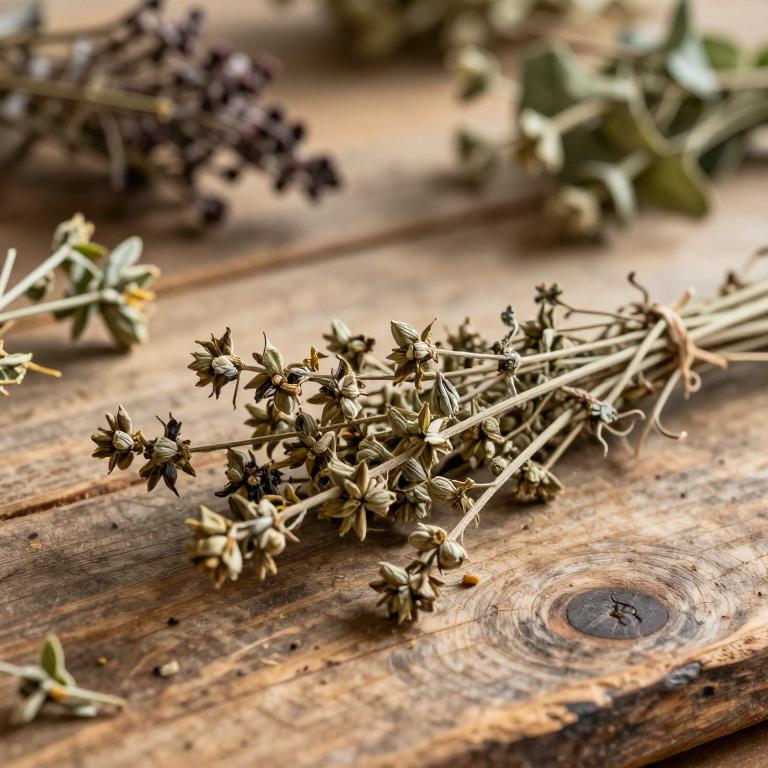
Labisia pumila, scientifically known as Labisia pumila, is a creeping herb native to the tropical rainforests of Southeast Asia. Often referred to as "Kacip Fatimah," this medicinal plant is highly revered in traditional medicine for its potent phytoestrogens, widely used to support female reproductive health and hormonal balance.
- Family
- Primulaceae
- Native range
- Asia-Tropical
- Parts used
- Leaf
- Common names
- Not available
- Scientific synonyms
- Ardisia Pumila · Marantoides Pumila
Names and Synonyms
Scientific Names
Accepted name
Labisia pumilaSynonyms
- Ardisia pumila
- Marantoides pumila
Sources: Wikidata
Taxonomical Classification
This plant belongs to the kingdom Plantae and is classified under the phylum Streptophyta and class Equisetopsida. Within the subclass Magnoliidae and order Ericales, it is placed in the family Primulaceae. Finally, its specific taxonomic identity is established within the genus Labisia.
| Rank | Classification |
|---|---|
| Kingdom | Plantae |
| Phylum | Streptophyta |
| Class | Equisetopsida |
| Subclass | Magnoliidae |
| Order | Ericales |
| Family | Primulaceae |
| Genus | Labisia |
Sources: The World Checklist of Vascular Plants (WCVP)
Distribution
This plant exhibits a wide geographical distribution across several key regions of Southeast Asia. Within the Indo-China region, it can be found growing in both Cambodia and Thailand. Its presence extends significantly into the Malesia zone, where it inhabits the island of Borneo. Additionally, the species is distributed throughout the islands of Jawa and the Malay Peninsula. These diverse locations highlight the plant's ability to thrive in various tropical environments across the region.
| Region | Area |
|---|---|
| Indo-China | Cambodia |
| Indo-China | Thailand |
| Malesia | Borneo |
| Malesia | Jawa |
| Malesia | Malaya |
| Malesia | Maluku |
| Malesia | Sulawesi |
| Malesia | Sumatera |
| Papuasia | New Guinea |
Sources: The World Checklist of Vascular Plants (WCVP)
Botanical Identification
Morphology
The morphology of Labisia pumila is characterized by its growth form as a non-woody herb. Although some classifications may consider its structural complexity, it functions primarily as a terrestrial plant rather than an epiphyte. In terms of its climbing habit, the plant is identified as self-supporting, lacking the obligatory or facultative traits of a liana or vine. While some morphological assessments may contrast various life forms, this species specifically presents as a non-woody herb, distinguishing it from shrubs, trees, or graminoids.
- Climber :
- self-supporting
- Epiphyte :
- terrestrial
- Growth form :
- herb
- Growth form :
- tree
- Woodiness :
- non-woody
Reproduction
The reproduction of Labisia pumila is characterized by the development of distinct fruiting structures that transition through specific textures, typically categorized as being both dry and fleshy in nature. The seeds produced during this reproductive cycle exhibit high morphological consistency, with a measured seed volume that remains constant at a mean, minimum, and maximum value of 36 mm³. This uniformity in seed volume suggests a highly stabilized reproductive mechanism within the species, ensuring that each seed carries a consistent biological investment to facilitate successful germination and propagation.
- Fruit dryness :
- fleshy
- Seed volume max:
- 36 mm³
Sources: Global Inventory of Floras and Traits (GIFT)
Plant Parts
Labisia pumila has 1 reported plant parts identified across 1 scientific publications and several other databases that are studied for medicinal purposes. The most consistently reported plant part include leaf.
| Plant part | Supporting sources | Consensus |
|---|---|---|
| Leaf | 1 supporting sources | ★☆☆☆☆ |
Leaf
- Plants (Basel, Switzerland)
Chemicals
Labisia pumila has 10 reported phytochemicals identified across 1 scientific publications and several other databases. The most consistently reported chemicals include Flavonoids, CHLOROPHYLL, Flavonoid, Malondialdehyde, STARCH.
| Chemical | Supporting sources | Consensus |
|---|---|---|
| Flavonoids | 2 supporting sources | ★☆☆☆☆ |
| CHLOROPHYLL | 1 supporting sources | ★☆☆☆☆ |
| Flavonoid | 1 supporting sources | ★☆☆☆☆ |
| Malondialdehyde | 1 supporting sources | ★☆☆☆☆ |
| STARCH | 1 supporting sources | ★☆☆☆☆ |
| Saponins | 1 supporting sources | ★☆☆☆☆ |
| TF | 1 supporting sources | ★☆☆☆☆ |
| TP | 1 supporting sources | ★☆☆☆☆ |
| sucrose | 1 supporting sources | ★☆☆☆☆ |
| sugar | 1 supporting sources | ★☆☆☆☆ |
Flavonoids
- Journal of ethnopharmacology
- Molecules (Basel, Switzerland)
CHLOROPHYLL
- TheScientificWorldJournal
Flavonoid
- Molecules (Basel, Switzerland)
Malondialdehyde
- TheScientificWorldJournal
STARCH
- Molecules (Basel, Switzerland)
Saponins
- Journal of ethnopharmacology
TF
- Molecules (Basel, Switzerland)
TP
- Molecules (Basel, Switzerland)
sucrose
- Molecules (Basel, Switzerland)
sugar
- TheScientificWorldJournal
Activities
Labisia pumila has 3 reported activities identified across 1 scientific publications and several other databases. The most consistently reported activities include Antimicrobial, Antioxidant, Phytoestrogenic.
| Activity | Supporting sources | Consensus |
|---|---|---|
| Antimicrobial | 1 supporting sources | ★☆☆☆☆ |
| Antioxidant | 1 supporting sources | ★☆☆☆☆ |
| Phytoestrogenic | 1 supporting sources | ★☆☆☆☆ |
Antimicrobial
- Journal of ethnopharmacology
Antioxidant
- Journal of ethnopharmacology
Phytoestrogenic
- Journal of ethnopharmacology
Conditions
Labisia pumila has 9 reported investigations on conditions identified across 1 scientific publications and several other databases. The most consistently reported conditions include Prostate cancer, bone diseases, childbirth, dysentery, flatulence.
| Condition | Supporting sources | Consensus |
|---|---|---|
| Prostate cancer | 1 supporting sources | ★☆☆☆☆ |
| Bone diseases | 1 supporting sources | ★☆☆☆☆ |
| Childbirth | 1 supporting sources | ★☆☆☆☆ |
| Dysentery | 1 supporting sources | ★☆☆☆☆ |
| Flatulence | 1 supporting sources | ★☆☆☆☆ |
| Gonorrhea | 1 supporting sources | ★☆☆☆☆ |
| Obesity | 1 supporting sources | ★☆☆☆☆ |
| Osteoporosis | 1 supporting sources | ★☆☆☆☆ |
| Rheumatism | 1 supporting sources | ★☆☆☆☆ |
Prostate cancer
- Current issues in molecular biology
Bone diseases
- Journal of ethnopharmacology
Childbirth
- Journal of ethnopharmacology
Dysentery
- Journal of ethnopharmacology
Flatulence
- Journal of ethnopharmacology
Gonorrhea
- Journal of ethnopharmacology
Obesity
- Journal of ethnopharmacology
Osteoporosis
- Journal of ethnopharmacology
Rheumatism
- Journal of ethnopharmacology
Preparations
Labisia pumila has 6 reported preparations identified across 1 scientific publications and several other databases. The most consistently reported preparations include aqueous extract, boiling the leaves, capsuled products, dietary supplement, powdered.
| Preparation | Supporting sources | Consensus |
|---|---|---|
| Aqueous extract | 1 supporting sources | ★☆☆☆☆ |
| Boiling the leaves | 1 supporting sources | ★☆☆☆☆ |
| Capsuled products | 1 supporting sources | ★☆☆☆☆ |
| Dietary supplement | 1 supporting sources | ★☆☆☆☆ |
| Powdered | 1 supporting sources | ★☆☆☆☆ |
| Powdered or extracted parts | 1 supporting sources | ★☆☆☆☆ |
Aqueous extract
- Food and chemical toxicology : an international journal published for the British Industrial Biological Research Association
Boiling the leaves
- Plants (Basel, Switzerland)
Capsuled products
- Plants (Basel, Switzerland)
Dietary supplement
- Journal of ethnopharmacology
Powdered
- Plants (Basel, Switzerland)
Powdered or extracted parts
- Food and chemical toxicology : an international journal published for the British Industrial Biological Research Association