Labisia pumila var. pumila
Labisia pumila var. pumila · Accepted scientific name
Scientific literature: Very Sparse (17 studies) · ★☆☆☆☆
Scientifically known as Labisia pumila var. pumila, is a perennial herb native to Southeast Asian rainforests. Commonly referred to as "Kacip Fatimah," this medicinal plant is highly revered in traditional medicine for its potent phytoestrogen properties, primarily used to support women's reproductive health and overall hormonal balance.
- Family
- Primulaceae
- Native range
- Asia-Tropical
- Parts used
- Not available
- Common names
- Not available
- Scientific synonyms
- Labisia Alata · Labisia Pumila Var. Alata · 8 more
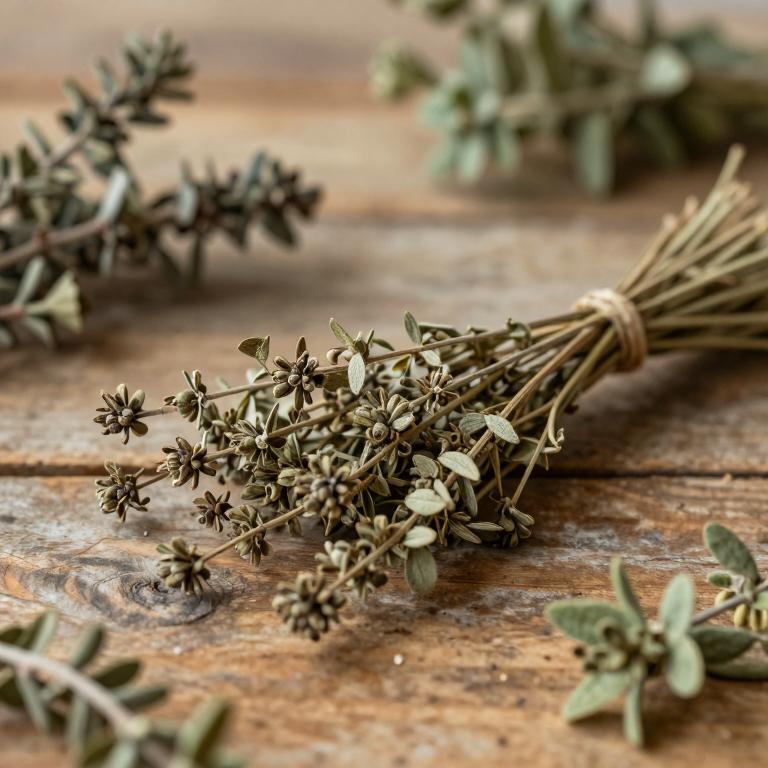
Names and Synonyms
Scientific Names
Accepted name
Labisia pumila var. pumilaSynonyms
- Labisia alata
- Labisia pumila var. alata
- Ardisia malouiana
- Ardisia spicata
- Ardisia pumila var. alata
- Angiopetalum punctatum
- Labisia malouiana
- Labisia malouana
- Labisia pothoina
- Labisia punctata
Taxonomical Classification
This plant belongs to the kingdom Plantae within the phylum Streptophyta and is classified under the class Equisetopsida. Following the subclass Magnoliidae and order Ericales, it is a member of the family Primulaceae. Specifically, this variety is categorized under the genus Labisia.
| Rank | Classification |
|---|---|
| Kingdom | Plantae |
| Phylum | Streptophyta |
| Class | Equisetopsida |
| Subclass | Magnoliidae |
| Order | Ericales |
| Family | Primulaceae |
| Genus | Labisia |
Sources: The World Checklist of Vascular Plants (WCVP)
Distribution
This plant exhibits a broad geographical distribution across Southeast Asia, spanning both the Indo-China and Malesia regions. Within the Indo-China territory, it can be found growing in Cambodia and Thailand. Moving into the Malesia region, the species is widely distributed across several key islands and peninsulas. Specifically, it inhabits the areas of Jawa, Malaya, and Sumatera. Consequently, its presence highlights a significant ecological footprint throughout the tropical landscapes of the region.
| Region | Area |
|---|---|
| Indo-China | Cambodia |
| Indo-China | Thailand |
| Malesia | Jawa |
| Malesia | Malaya |
| Malesia | Sumatera |
Sources: The World Checklist of Vascular Plants (WCVP)
Chemicals
Labisia pumila var. pumila has 4 reported phytochemicals identified across 0 scientific publications and several other databases. The most consistently reported chemicals include Flavonoids, Gallic acid, Indole-3-butyric acid, Zeatin.
| Chemical | Supporting sources | Consensus |
|---|---|---|
| Flavonoids | 1 supporting sources | ★☆☆☆☆ |
| Gallic acid | 1 supporting sources | ★☆☆☆☆ |
| Indole-3-butyric acid | 1 supporting sources | ★☆☆☆☆ |
| Zeatin | 1 supporting sources | ★☆☆☆☆ |
Flavonoids
- Molecules (Basel, Switzerland)
Gallic acid
- Molecules (Basel, Switzerland)
Indole-3-butyric acid
- Journal of Zhejiang University. Science. B
Zeatin
- Journal of Zhejiang University. Science. B
Activities
Labisia pumila var. pumila has 2 reported activities identified across 0 scientific publications and several other databases. The most consistently reported activities include Antifungal, Cytotoxic.
| Activity | Supporting sources | Consensus |
|---|---|---|
| Antifungal | 1 supporting sources | ★☆☆☆☆ |
| Cytotoxic | 1 supporting sources | ★☆☆☆☆ |
Antifungal
- BMC complementary and alternative medicine
Cytotoxic
- BMC complementary and alternative medicine
Conditions
Labisia pumila var. pumila has 1 reported investigations on conditions identified across 0 scientific publications and several other databases. The most consistently reported conditions include Mucor.
| Condition | Supporting sources | Consensus |
|---|---|---|
| Mucor | 1 supporting sources | ★☆☆☆☆ |
Mucor
- BMC complementary and alternative medicine
Preparations
Labisia pumila var. pumila has 3 reported preparations identified across 0 scientific publications and several other databases. The most consistently reported preparations include 80% ethanol extract, aqueous extract, extracts.
| Preparation | Supporting sources | Consensus |
|---|---|---|
| 80% ethanol extract | 1 supporting sources | ★☆☆☆☆ |
| Aqueous extract | 1 supporting sources | ★☆☆☆☆ |
| Extracts | 1 supporting sources | ★☆☆☆☆ |
80% ethanol extract
- Molecules (Basel, Switzerland)
Aqueous extract
- Molecules (Basel, Switzerland)
Extracts
- Journal of natural medicines