burgan
Kunzea ericoides · Accepted scientific name
Scientific literature: Very Sparse (37 studies) · ★☆☆☆☆
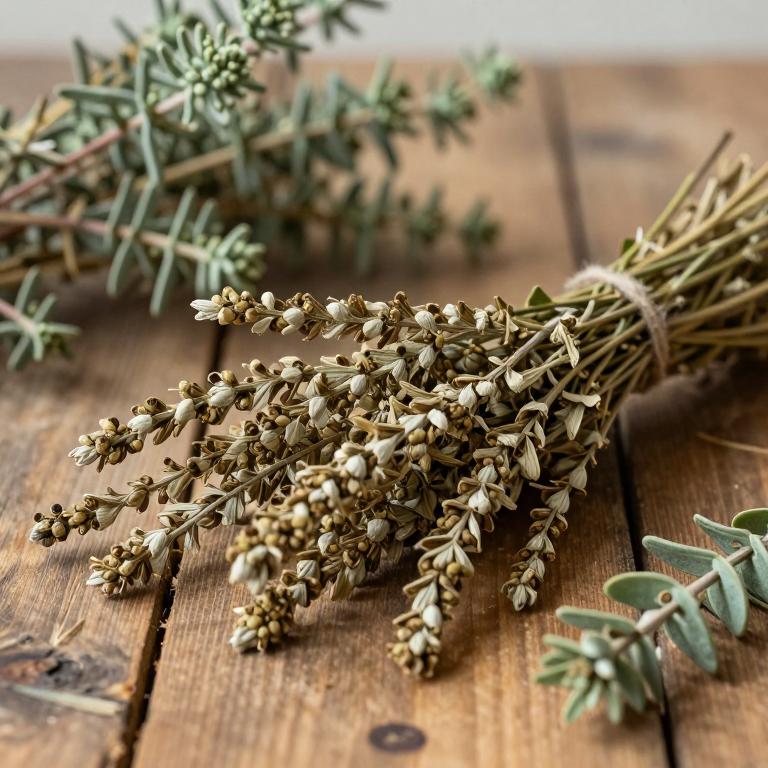
Burgan, scientifically known as Kunzea ericoides, is a versatile evergreen shrub native to New Zealand. Renowned for its profuse white flower clusters, it holds significant medicinal value. Traditionally used in Māori healing, its extracts possess potent antimicrobial and anti-inflammatory properties, offering promising therapeutic potential in modern natural medicine.
- Family
- Myrtaceae
- Native range
- Australasia
- Parts used
- Not available
- Common names
- Burgan · White Teatree · 1 more
- Scientific synonyms
- Leptospermum Aromaticum · Leptospermum Ericoides
Names and Synonyms
Common Names
- burgan
- white teatree
- white tea-tree
Scientific Names
Accepted name
Kunzea ericoidesSynonyms
- Leptospermum aromaticum
- Leptospermum ericoides
Regional and Traditional Names
Spanish:
- Leptospermum phylicoideum
- Leptospermum ericoides var. lineare
- Kunzea leptospermoides
- Leptospermum ericoides
- Kunzea glabriuscula
- Kunzea peduncularis var. brachyandra
- Leptospermum ericoides var. microflorum
- Kunzea peduncularis var brachyandra
- Kunzea ericoides var. microflora
- Baeckea phylicoides
- Leptospermum ericoides var microflorum
- Kanuka
- Leptospermum ericoides var lineare
- Kunzea peduncularis
- Baeckea virgata var. polyandra
German:
- Kanuka
- Kānuka
Sources: Wikidata, Catalogue of Life
Taxonomical Classification
This plant belongs to the kingdom Plantae and is classified within the phylum Streptophyta and class Equisetopsida. Further taxonomic details place it in the subclass Magnoliidae and order Myrtales, falling under the family Myrtaceae. Finally, it is specifically categorized within the genus Kunzea.
| Rank | Classification |
|---|---|
| Kingdom | Plantae |
| Phylum | Streptophyta |
| Class | Equisetopsida |
| Subclass | Magnoliidae |
| Order | Myrtales |
| Family | Myrtaceae |
| Genus | Kunzea |
Sources: The World Checklist of Vascular Plants (WCVP)
Distribution
This plant exhibits a specific geographical distribution across two different regions. In Australia, its presence is limited to the island state of Tasmania. Moving across the Tasman Sea, the species is also found within New Zealand. Specifically, in that country, it is located in the southern portions of the islands. Therefore, its natural range is concentrated in these particular southern temperate zones.
| Region | Area |
|---|---|
| Australia | Tasmania |
| New Zealand | New Zealand South |
Sources: The World Checklist of Vascular Plants (WCVP)
Botanical Identification
Ecology
The ecology of Kunzea ericoides is characterized by its ability to thrive in lowland habitats, where it often acts as a pioneer or colonizing species in disturbed or open landscapes. This plant maintains a vital symbiotic relationship with soil fungi, as it is associated with mycorrhiza, which aids in nutrient uptake and enhances its resilience in various soil types. Its presence in these low-lying environments contributes to the structural complexity of the ecosystem, providing niches for diverse fauna while actively participating in soil nutrient cycling through its fungal associations.
- Habitat :
- Lowland
- Mycorrhiza :
- yes
Life history
The life history of Kunzea ericoides is characterized by a perennial lifecycle, allowing the plant to persist across multiple growing seasons. It exhibits a phanerophyte life form, typically presenting as a woody shrub or small tree with branches held well above the ground, though it can also be classified under the nanophanerophyte category depending on its specific growth habit and stature within its habitat. Throughout its existence, the plant maintains an evergreen deciduousness, ensuring that its foliage remains functional and present year-round rather than shedding leaves seasonally.
- Deciduousness :
- evergreen
- Life form :
- nanophanerophyte
- Life form :
- phanerophyte
- Lifecycle :
- perennial
Morphology
The morphology of Kunzea ericoides is characterized by its growth form as a woody tree, which can reach a mean height of 3 meters, though it is capable of attaining a maximum height of up to 15 meters. As a self-supporting species, it does not function as a climber, liana, or vine, and it maintains an independent existence rather than acting as a parasite. This plant is strictly terrestrial in its habitat, lacking any aquatic, semiaquatic, or epiphytic tendencies. Its structural development is defined by its consistent woodiness, supporting its stature as a robust, self-supporting tree within its ecosystem.
- Aquatic :
- terrestrial
- Climber :
- self-supporting
- Epiphyte :
- terrestrial
- Growth form :
- tree
- Parasite :
- independent
- Plant height max:
- 15 m
- Plant height mean:
- 3 m
- Woodiness :
- woody
Physiology
The physiology of Kunzea ericoides is characterized by a C3 photosynthetic pathway, which governs its carbon fixation processes. The morphological characteristics of its foliage include narrow, linear leaves that exhibit significant dimensional variation; specifically, leaf length ranges from a minimum of 0.65 cm to a maximum of 2.5 cm, while the leaf width varies from a minimum of 0.1 cm to a maximum of 0.45 cm, with a mean width of approximately 0.2 cm. Furthermore, this species does not function as a nitrogen fixer, relying instead on external soil nutrient availability for its nitrogen requirements.
- Leaf length max:
- 2.5 cm
- Leaf length min:
- 0.65 cm
- Leaf width max:
- 0.45 cm
- Leaf width mean:
- 0.2 cm
- Leaf width min:
- 0.1 cm
- Nitrogen fixer :
- no
- Photosynthetic pathway :
- C3
Reproduction
The reproduction of Kunzea ericoides is driven by biotic pollination processes, specifically utilizing an insect pollination syndrome to facilitate fertilization. The plant produces dry fruits that maintain a mean length and width of 0.3 cm. Within these fruits, the seeds are characterized by a uniform length of 1.3 mm and a consistent seed volume of 0.048 mm³. The seeds are remarkably lightweight, with a mean seed mass of 3.215e-05 g, ranging from a minimum of 0 g to a maximum of 0.00012 g. Dispersal is achieved through an anemochorous syndrome, meaning the seeds are dispersed by the wind. Furthermore, the plant relies entirely on sexual reproduction, as asexual reproduction is absent in its life cycle.
- Dispersal syndrome :
- anemochorous
- Fruit dryness :
- dry
- Fruit length mean:
- 0.3 cm
- Fruit width mean:
- 0.3 cm
- Pollination syndrome :
- insect
- Pollination syndrome :
- biotic
- Reproduction asexual :
- absent
- Seed length mean:
- 1.3 mm
- Seed mass max:
- 0.00012 g
- Seed mass mean:
- 3.215e-05 g
- Seed mass min:
- 0 g
- Seed volume max:
- 0.048 mm³
Sources: Global Inventory of Floras and Traits (GIFT)
Chemicals
Kunzea ericoides has 11 reported phytochemicals identified across 0 scientific publications and several other databases. The most consistently reported chemicals include (E)-Ferulic acid, 4-Methoxyphenylacetic acid, Alkanes, Alkenes, CHLOROGENIC ACID.
| Chemical | Supporting sources | Consensus |
|---|---|---|
| (E)-Ferulic acid | 1 supporting sources | ★☆☆☆☆ |
| 4-Methoxyphenylacetic acid | 1 supporting sources | ★☆☆☆☆ |
| Alkanes | 1 supporting sources | ★☆☆☆☆ |
| Alkenes | 1 supporting sources | ★☆☆☆☆ |
| CHLOROGENIC ACID | 1 supporting sources | ★☆☆☆☆ |
| Esters | 1 supporting sources | ★☆☆☆☆ |
| Gallic acid | 1 supporting sources | ★☆☆☆☆ |
| Terpenes | 1 supporting sources | ★☆☆☆☆ |
| betulinic acid | 1 supporting sources | ★☆☆☆☆ |
| ketones | 1 supporting sources | ★☆☆☆☆ |
(E)-Ferulic acid
- Applied biochemistry and biotechnology
4-Methoxyphenylacetic acid
- Antioxidants (Basel, Switzerland)
Alkanes
- Journal of chromatography. A
Alkenes
- Journal of chromatography. A
CHLOROGENIC ACID
- Applied biochemistry and biotechnology
Esters
- Journal of chromatography. A
Gallic acid
- Applied biochemistry and biotechnology
Terpenes
- Journal of chromatography. A
betulinic acid
- Dr. Duke
ketones
- Journal of chromatography. A
Activities
Kunzea ericoides has 21 reported activities identified across 0 scientific publications and several other databases. The most consistently reported activities include Antiviral, Anthelmintic, AntiHIV, Antibacterial, Anticancer.
| Activity | Supporting sources | Consensus |
|---|---|---|
| Antiviral | 2 supporting sources | ★☆☆☆☆ |
| Anthelmintic | 1 supporting sources | ★☆☆☆☆ |
| AntiHIV | 1 supporting sources | ★☆☆☆☆ |
| Antibacterial | 1 supporting sources | ★☆☆☆☆ |
| Anticancer | 1 supporting sources | ★☆☆☆☆ |
| Anticarcinomic | 1 supporting sources | ★☆☆☆☆ |
| Antiedemic | 1 supporting sources | ★☆☆☆☆ |
| Antiinflammatory | 1 supporting sources | ★☆☆☆☆ |
| Antileukemic | 1 supporting sources | ★☆☆☆☆ |
| Antimalarial | 1 supporting sources | ★☆☆☆☆ |
Antiviral
- Dr. Duke
- Journal of chromatography. A
Anthelmintic
- Dr. Duke
AntiHIV
- Dr. Duke
Antibacterial
- Dr. Duke
Anticancer
- Dr. Duke
Anticarcinomic
- Dr. Duke
Antiedemic
- Dr. Duke
Antiinflammatory
- Dr. Duke
Antileukemic
- Dr. Duke
Antimalarial
- Dr. Duke
Conditions
Kunzea ericoides has 2 reported investigations on conditions identified across 0 scientific publications and several other databases. The most consistently reported conditions include inflammation, melanogenesis.
| Condition | Supporting sources | Consensus |
|---|---|---|
| Inflammation | 1 supporting sources | ★☆☆☆☆ |
| Melanogenesis | 1 supporting sources | ★☆☆☆☆ |
Inflammation
- The Journal of pharmacy and pharmacology
Melanogenesis
- Applied biochemistry and biotechnology