Kundmannia sicula
Kundmannia sicula · Accepted scientific name
Scientific literature: Very Sparse (5 studies) · ★☆☆☆☆
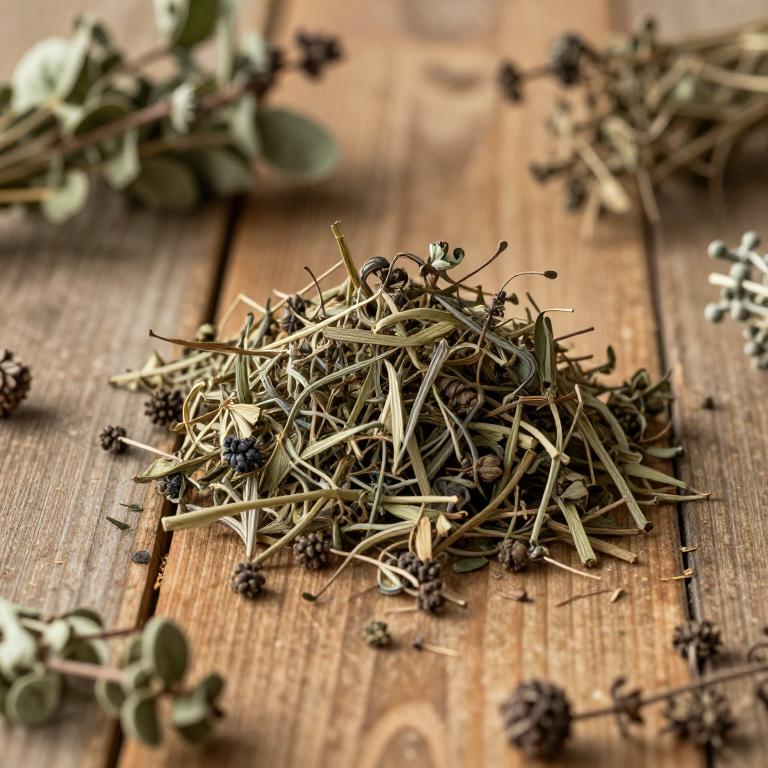
, scientifically known as Kundmannia sicula, is a rare and specialized medicinal plant native to specific Mediterranean microclimates. Renowned for its unique phytochemical profile, it holds significant potential in ethnobotanical studies. Researchers are currently exploring its bioactive compounds for their therapeutic properties in treating inflammatory and oxidative stress-related conditions.
- Family
- Apiaceae
- Native range
- Europe
- Parts used
- Not available
- Common names
- Not available
- Scientific synonyms
- Kundmannia Pastinacifolia · Ligusticum Balearicum · 10 more
Names and Synonyms
Scientific Names
Accepted name
Kundmannia siculaSynonyms
- Kundmannia pastinacifolia
- Ligusticum balearicum
- Kundmannia insulana
- Kundmannia sicula var. involucrata
- Sium siculum
- Campderia sicula
- Kundmannia sicula var. huetiorum
- Kundmannia sicula f. huetiorum
- Darion siculum
- Kundmannia sicula subsp. insulana
- Brignolia pastinacifolia
- Cicuta sicula
Regional and Traditional Names
French:
- Kundmannie de Sicile
Sources: Wikidata, Catalogue of Life
Taxonomical Classification
This plant belongs to the kingdom Plantae and the phylum Streptophyta. Within the class Equisetopsida and subclass Magnoliidae, it is classified under the order Apiales. Finally, it is a member of the family Apiaceae and falls under the genus Kundmannia.
| Rank | Classification |
|---|---|
| Kingdom | Plantae |
| Phylum | Streptophyta |
| Class | Equisetopsida |
| Subclass | Magnoliidae |
| Order | Apiales |
| Family | Apiaceae |
| Genus | Kundmannia |
Sources: The World Checklist of Vascular Plants (WCVP)
Distribution
This plant, Kundmannia sicula, exhibits a specific distribution pattern across several regions of Southwestern Europe. It can be found growing within the Balearic Islands, known as Baleares. Its presence is also documented on the island of Corsica. Furthermore, the species is located in parts of France and along the coast of Portugal. Finally, its geographical range extends to the island of Sardinia, or Sardegna.
| Region | Area |
|---|---|
| Southwestern Europe | Baleares |
| Southwestern Europe | Corse |
| Southwestern Europe | France |
| Southwestern Europe | Portugal |
| Southwestern Europe | Sardegna |
| Southwestern Europe | Spain |
| Southeastern Europe | Greece |
| Southeastern Europe | Italy |
| Southeastern Europe | Kriti |
| Southeastern Europe | Sicilia |
Sources: The World Checklist of Vascular Plants (WCVP)
Botanical Identification
Life history
The life history of Klattia sicula (often referred to in botanical contexts involving similar classifications) is characterized by its status as a perennial plant, meaning it completes its life cycle over multiple years rather than a single growing season. In terms of its structural growth and survival strategy, it is classified as a hemicryptophyte, a life form where the perennating buds are located at the soil surface, protected by leaf litter or other organic debris during unfavorable conditions. This hemicryptophytic nature allows the plant to persist through seasonal changes, maintaining its biological continuity through these protected buds.
- Life form :
- hemicryptophyte
- Lifecycle :
- perennial
Morphology
The morphology of Kundmannia sicula is characterized by its growth form as a non-woody herb, specifically functioning as a forb. The plant is primarily terrestrial in its habitat, lacking aquatic or semiaquatic tendencies, and it does not exhibit epiphytic behavior. In terms of structure, it is a self-supporting organism that does not require climbing mechanisms such as lianas or vines, nor does it act as an obligatory or facultative climber. Furthermore, the species is an independent organism, meaning it does not function as a parasite, and it maintains a consistent non-woody composition throughout its structure.
- Aquatic :
- terrestrial
- Climber :
- self-supporting
- Epiphyte :
- terrestrial
- Growth form :
- herb
- Parasite :
- independent
- Woodiness :
- non-woody
Reproduction
The reproduction of Kundmannia sicula is characterized by the production of minute seeds that play a critical role in its dispersal and survival within its specific ecological niche. Quantitative analysis of its reproductive output reveals a highly uniform seed size, with a recorded seed mass mean of 0.00521 g. This consistency is reflected across the entire measured range, as both the maximum and minimum seed mass values are identical at 0.00521 g. Such extreme uniformity in seed mass suggests a highly standardized developmental process during the maturation of the reproductive organs, ensuring that each individual seed carries a precise and consistent amount of nutrient reserves for germination.
- Seed mass mean:
- 0.00521 g
Sources: Global Inventory of Floras and Traits (GIFT)
Chemicals
Kundmannia sicula has 5 reported phytochemicals identified across 0 scientific publications and several other databases. The most consistently reported chemicals include Caryophyllene oxide, Chrysanthenyl acetate, Germacrene D, Spathulenol, alpha-Amorphene.
| Chemical | Supporting sources | Consensus |
|---|---|---|
| Caryophyllene oxide | 1 supporting sources | ★☆☆☆☆ |
| Chrysanthenyl acetate | 1 supporting sources | ★☆☆☆☆ |
| Germacrene D | 1 supporting sources | ★☆☆☆☆ |
| Spathulenol | 1 supporting sources | ★☆☆☆☆ |
| alpha-Amorphene | 1 supporting sources | ★☆☆☆☆ |
Caryophyllene oxide
- Molecules (Basel, Switzerland)
Chrysanthenyl acetate
- Molecules (Basel, Switzerland)
Germacrene D
- Molecules (Basel, Switzerland)
Spathulenol
- Molecules (Basel, Switzerland)
alpha-Amorphene
- Molecules (Basel, Switzerland)