Krameria tomentosa
Krameria tomentosa · Accepted scientific name
Scientific literature: Very Sparse (3 studies) · ★☆☆☆☆
Krameria tomentoosa, scientifically known as Krameria tomentoza, is a resilient woody shrub valued in traditional medicine. Native to specific tropical regions, this plant possesses unique phytochemical properties. It is frequently utilized for its antimicrobial and anti-inflammatory potential, offering significant therapeutic possibilities for managing various ailments in herbal practices.
- Family
- Krameriaceae
- Native range
- Southern America
- Parts used
- Root
- Common names
- Not available
- Scientific synonyms
- Krameria Grandifolia · Krameria Ovata · 1 more
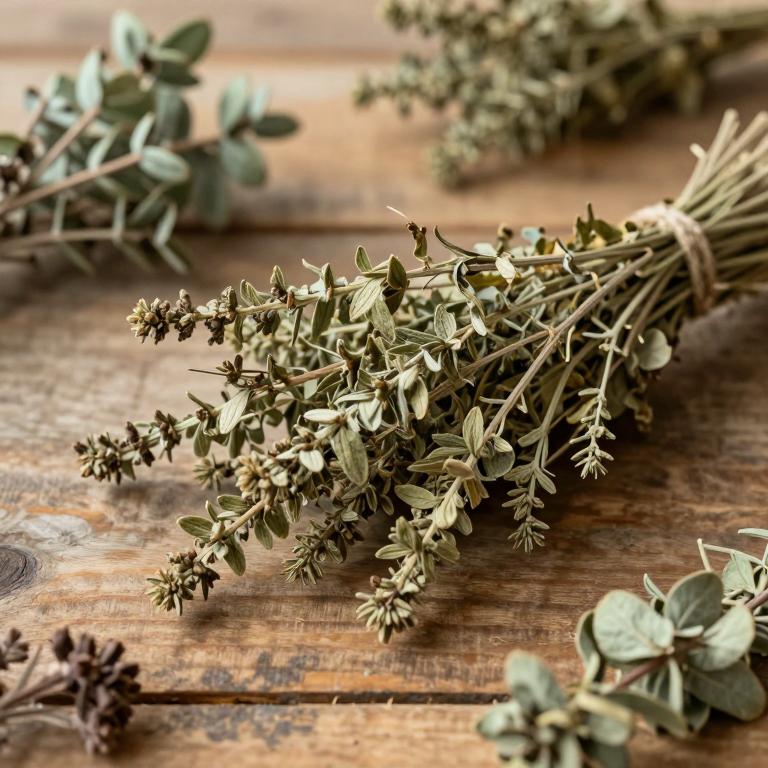
Names and Synonyms
Scientific Names
Accepted name
Krameria tomentosaSynonyms
- Krameria grandifolia
- Krameria ovata
- Krameria tomentosa var. elliptica
Sources: Wikidata, Catalogue of Life
Taxonomical Classification
This plant belongs to the kingdom Plantae and the phylum Streptophyta, placing it within the class Equisetopsida and subclass Magnoliidae. It is further classified under the order Zygophyllales and the family Krameriaceae. Finally, its taxonomic identity is defined by its membership in the genus Krameria.
| Rank | Classification |
|---|---|
| Kingdom | Plantae |
| Phylum | Streptophyta |
| Class | Equisetopsida |
| Subclass | Magnoliidae |
| Order | Zygophyllales |
| Family | Krameriaceae |
| Genus | Krameria |
Sources: The World Checklist of Vascular Plants (WCVP)
Distribution
This plant exhibits a diverse geographical range across several regions of the South American continent. In Northern South America, its presence is specifically noted within Guyana. Moving toward the western portion of the continent, it can be found in Bolivia. Within Brazil, the species is widely distributed across the West-Central, Northeast, and Southeast regions. Collectively, these locations highlight a broad distribution throughout various ecological zones in South America.
| Region | Area |
|---|---|
| Northern South America | Guyana |
| Western South America | Bolivia |
| Brazil | Brazil West-Central |
| Brazil | Brazil Northeast |
| Brazil | Brazil Southeast |
| Brazil | Brazil North |
Sources: The World Checklist of Vascular Plants (WCVP)
Botanical Identification
Ecology
The ecology of Krameria tomentoza is characterized by an extraordinary degree of environmental plasticity, allowing it to inhabit a vast array of distinct Brazilian biomes. It demonstrates a broad ecological amplitude, thriving in the semi-arid conditions of the Caatinga (stricto sensu) as well as the diverse landscapes of the Cerrado (lato sensu), including specific formations such as the Campo Limpo, Campo Rupestre, and the Savannah of the Amazon (Savaana Amazônica). This species is also capable of colonizing more humid and specialized environments, ranging from the coastal Restingas to the moisture-rich settings of the Floresta Ciliar or Galeria, the seasonal dynamics of the Floresta Estacional Decidual, and the high-precipitation zones of the Floresta Ombrófila (Floresta Pluvial). Additionally, its presence in the Carrasco formation further underscores its ability to adapt to varied soil types and hydrological regimes across the Neotropical landscape.
- Habitat :
- Caatinga (stricto sensu), Campo Limpo, Campo Rupestre, Carrasco, Cerrado (lato sensu), Floresta Ciliar ou Galeria, Floresta Estacional Decidual, Floresta Ombrófila (= Floresta Pluvial), Restinga, Savana Amazônica
Morphology
The morphology of Krameria tomentoza is characterized by its growth form as a woody shrub, exhibiting a robust and self-supporting structure. As an independent organism, it does not function as a parasite, maintaining its own nutritional requirements without relying on a host. In terms of its ecological habitat and positioning, the plant is strictly terrestrial, lacking aquatic or semiaquatic tendencies, and it does not exhibit epiphytic behavior such as being a holoepiphyte or hemiepiphyte. Furthermore, it does not possess a climbing habit, such as a liana or vine, but instead maintains a self-supporting, shrubby stature through its woody tissue.
- Aquatic :
- terrestrial
- Climber :
- self-supporting
- Epiphyte :
- terrestrial
- Growth form :
- shrub
- Parasite :
- independent
- Woodiness :
- woody
Sources: Global Inventory of Floras and Traits (GIFT)
Plant Parts
Krameria tomentosa has 1 reported plant parts identified across 1 scientific publications and several other databases that are studied for medicinal purposes. The most consistently reported plant part include root.
| Plant part | Supporting sources | Consensus |
|---|---|---|
| Root | 1 supporting sources | ★☆☆☆☆ |
Root
- Natural product letters
Chemicals
Krameria tomentosa has 2 reported phytochemicals identified across 1 scientific publications and several other databases. The most consistently reported chemicals include Conocarpan, Ratanhiaphenol I.
| Chemical | Supporting sources | Consensus |
|---|---|---|
| Conocarpan | 1 supporting sources | ★☆☆☆☆ |
| Ratanhiaphenol I | 1 supporting sources | ★☆☆☆☆ |
Conocarpan
- Natural product letters
Ratanhiaphenol I
- Natural product letters
Preparations
Krameria tomentosa has 1 reported preparations identified across 1 scientific publications and several other databases. The most consistently reported preparations include CHCl3 extract.
| Preparation | Supporting sources | Consensus |
|---|---|---|
| Chcl3 extract | 1 supporting sources | ★☆☆☆☆ |
Chcl3 extract
- Natural product letters