Himalayan knotweed
Koenigia polystachya · Accepted scientific name
Scientific literature: Very Sparse (2 studies) · ★☆☆☆☆
Himalayan knotweed, scientifically known as Koenigia polystachya, is a resilient perennial herb native to the high-altitude regions of the Himalayas. Renowned in traditional Ayurvedic medicine, it possesses potent anti-inflammatory and antimicrobial properties. This versatile botanical is frequently utilized to treat skin ailments, wounds, and various gastrointestinal disorders naturally.
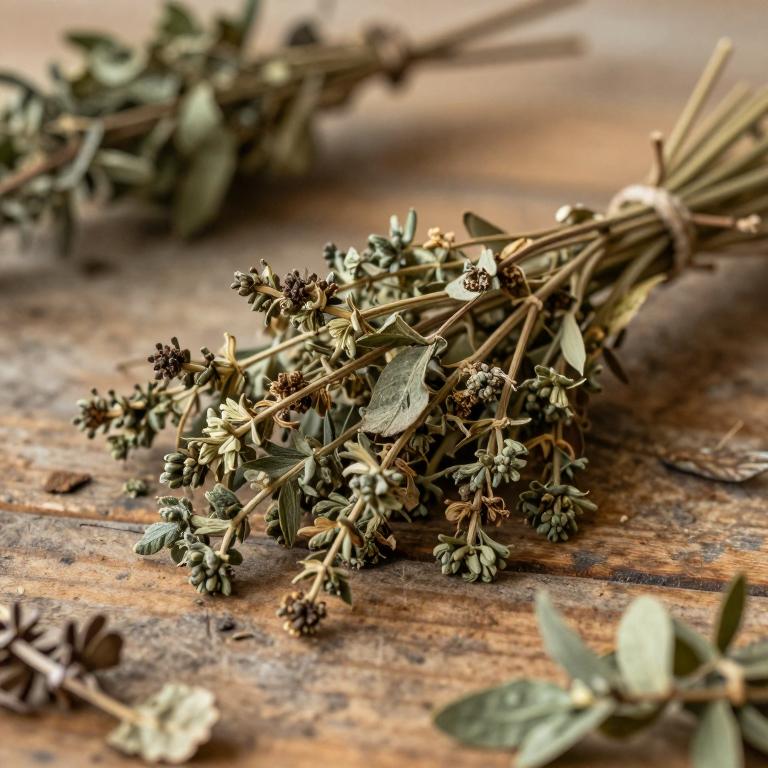
Names and Synonyms
Common Names
- Himalayan knotweed
- Kashmir plume
- cultivated knotweed
- garden knotweed
- Indian Knotweed
Scientific Names
Accepted name
Koenigia polystachyaSynonyms
- Aconogonon polystachyum var. pubescens
- Pleuropteropyrum hagei
- Rubrivena polystachya
- Pleuropteropyrum polystachyum
- Reynoutria polystachya
- Polygonum polystachyum var. pubescens
- Polygonum hagei
- Polygonum polystachyum
- Polygonum polystachyum var. longifolium
- Persicaria wallichii var. tomentosa
- Persicaria wallichii var. pubescens
- Persicaria wallichii
- Peutalis polystachya
- Aconogonon polystachyum
- Koenigia polystachya var. longifolia
Regional and Traditional Names
German:
- Himalaja-Knöterich
French:
- renouée à nombreux épis
- renouée à épis nombreux
Sources: Wikidata, Catalogue of Life
Taxonomical Classification
This plant belongs to the kingdom Plantae and is classified under the phylum Streptophyta within the class Equisetopsida. It is further categorized into the subclass Magnoliidae and the order Caryophyllales, falling under the family Polygonaceae. Finally, it is identified by the genus Koenigia.
| Rank | Classification |
|---|---|
| Kingdom | Plantae |
| Phylum | Streptophyta |
| Class | Equisetopsida |
| Subclass | Magnoliidae |
| Order | Caryophyllales |
| Family | Polygonaceae |
| Genus | Koenigia |
Sources: The World Checklist of Vascular Plants (WCVP)
Distribution
This plant exhibits a specific distribution pattern concentrated within the northern regions of Europe. It can be found growing across the coastal and inland areas of Denmark. Furthermore, the species is established within the territories of Great Britain and Ireland. Its presence extends even further north into the Scandinavian Peninsula. Specifically, the plant is documented to inhabit the landscapes of both Norway and Sweden.
| Region | Area |
|---|---|
| Northern Europe | Denmark |
| Northern Europe | Great Britain |
| Northern Europe | Ireland |
| Northern Europe | Norway |
| Northern Europe | Sweden |
| Middle Europe | Austria |
| Middle Europe | Belgium |
| Middle Europe | Czechia-Slovakia |
| Middle Europe | Germany |
| Middle Europe | Netherlands |
Sources: The World Checklist of Vascular Plants (WCVP)
Botanical Identification
Ecology
The ecology of Koenigia polysachya is characterized by its preference for lowland environments within high-altitude regions, demonstrating a specialized distribution pattern. This species thrives across a distinct elevational gradient, with its occurrence documented from a minimum altitude of 2400 m AMSL up to a maximum of 4500 m AMSL. The distribution is centered around a mean elevation of 3600 m AMSL, indicating that it is primarily adapted to the specific climatic and environmental conditions found within these high-mountain lowland zones.
- Elevational range max:
- 4500 m AMSL
- Elevational range mean:
- 3600 m AMSL
- Elevational range min:
- 2400 m AMSL
- Habitat :
- Lowland
Life history
The life history of Koenigia polysachya is characterized by a perennial lifecycle, allowing the plant to persist through multiple growing seasons. It functions as a hemicryptophyte, a life form where the perennating buds are located at or just below the soil surface, typically protected by leaf litter or soil. Throughout its existence, the plant maintains an evergreen deciduousness, retaining its foliage consistently rather than shedding it seasonally.
- Deciduousness :
- evergreen
- Life form :
- hemicryptophyte
- Lifecycle :
- perennial
Morphology
The morphology of Koenigia polystachya is characterized by its growth form as a non-woody herb, specifically classified as a forb. This plant exhibits a versatile ecological habit, ranging from aquatic and semiaquatic environments to terrestrial habitats. It is a self-supporting organism rather than a climber or a liana, and it functions as an independent species without parasitic tendencies. As a terrestrial plant, it does not exhibit epiphytic behavior. In terms of stature, the plant typically reaches a height between a minimum of 0.8 m and a maximum of 1.8 m.
- Aquatic :
- terrestrial
- Climber :
- self-supporting
- Epiphyte :
- terrestrial
- Growth form :
- herb
- Growth form :
- forb
- Parasite :
- independent
- Plant height max:
- 1.8 m
- Plant height min:
- 0.8 m
- Woodiness :
- non-woody
Physiology
The physiology of Koenigia polyspachya is characterized by a C3 photosynthetic pathway, indicating a metabolic process optimized for standard atmospheric carbon dioxide fixation. The plant's foliar morphology exhibits significant variability, with leaf lengths ranging from a minimum of 6 cm to a maximum of 21.5 cm, maintaining a mean length of 11 cm. Correspondingly, the leaf width fluctuates between a minimum of 3 cm and a maximum of 7 cm, resulting in a mean width of 5.8 cm. These structural dimensions contribute to a mean Specific Leaf Area (SLA) of 363.4 cm²/g, reflecting the plant's leaf mass per unit area and its strategy for light interception and resource allocation. Furthermore, the plant is classified as non-carnivorous, relying on traditional nutrient uptake methods rather than the capture of prey to sustain its physiological requirements.
- Carnivory :
- non-carnivorous
- Leaf length max:
- 21.5 cm
- Leaf length mean:
- 11 cm
- Leaf length min:
- 6 cm
- Leaf width max:
- 7 cm
- Leaf width mean:
- 5.8 cm
- Leaf width min:
- 3 cm
- Photosynthetic pathway :
- C3
- Specific Leaf Area (SLA) mean:
- 363.4 cm²/g
Reproduction
The reproduction of Koenigia polysachya is characterized by a sexual reproductive cycle that relies on biotic pollination syndromes, specifically involving insects. The flowering period typically commences in August and concludes in October. Following successful pollination, the plant produces fruits categorized as achenes. These fruits are indehiscent in nature and maintain a consistent length, with a mean, minimum, and maximum measurement of 0.25 cm. The resulting seeds are extremely lightweight, possessing a mean mass of 0.002435 g, with a range spanning from a minimum of 0.00241 g to a maximum of 0.00246 g. Dispersal of the seeds follows an unspecialized syndrome, suggesting a non-specific method of spread. Notably, asexual reproduction is absent in this species, making sexual processes the primary driver of its reproductive cycle.
- Dehiscence :
- indehiscent
- Dispersal syndrome :
- unspecialized
- Flowering time :
- Aug
- Flowering time :
- Oct
- Fruit length max:
- 0.25 cm
- Fruit type :
- achene
- Pollination syndrome :
- insect
- Pollination syndrome :
- biotic
- Reproduction asexual :
- absent
- Seed mass max:
- 0.00246 g
- Seed mass mean:
- 0.002435 g
- Seed mass min:
- 0.00241 g
Sources: Global Inventory of Floras and Traits (GIFT)
Activities
Koenigia polystachya has 1 reported activities identified across 0 scientific publications and several other databases. The most consistently reported activities include Antioxidant.
| Activity | Supporting sources | Consensus |
|---|---|---|
| Antioxidant | 1 supporting sources | ★☆☆☆☆ |
Antioxidant
- Laboratory animal research
Conditions
Koenigia polystachya has 1 reported investigations on conditions identified across 0 scientific publications and several other databases. The most consistently reported conditions include diabetes mellitus.
| Condition | Supporting sources | Consensus |
|---|---|---|
| Diabetes mellitus | 1 supporting sources | ★☆☆☆☆ |
Diabetes mellitus
- Laboratory animal research
Preparations
Koenigia polystachya has 1 reported preparations identified across 0 scientific publications and several other databases. The most consistently reported preparations include hydro-ethanolic leaf extract.
| Preparation | Supporting sources | Consensus |
|---|---|---|
| Hydro-ethanolic leaf extract | 1 supporting sources | ★☆☆☆☆ |
Hydro-ethanolic leaf extract
- Laboratory animal research