soft knotweed
Koenigia mollis · Accepted scientific name
Scientific literature: Very Sparse (6 studies) · ★☆☆☆☆
Soft knotweed, scientifically known as Koenigia mollis, is a versatile medicinal herb often found in moist, disturbed soils. Renowned for its astringent and anti-inflammatory properties, this plant is traditionally used to treat skin irritations, wounds, and digestive ailments, offering a natural approach to holistic healing and wellness.
- Family
- Polygonaceae
- Native range
- Europe
- Parts used
- Flower
- Common names
- Soft Knotweed · Sikkim Knotweed
- Scientific synonyms
- Persicaria Mollis · Aconogonon Molle · 2 more
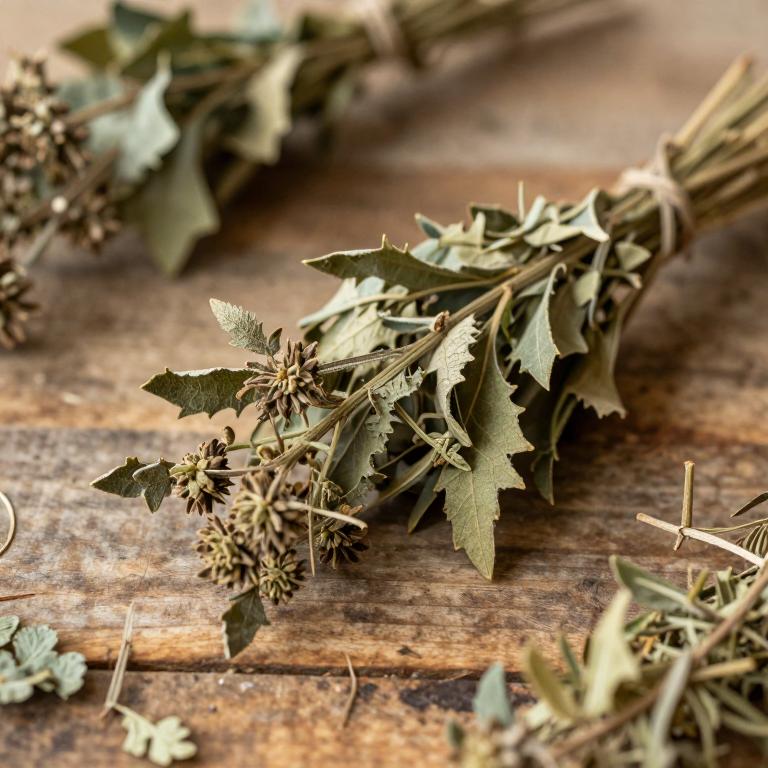
Names and Synonyms
Common Names
- soft knotweed
- Sikkim Knotweed
Scientific Names
Accepted name
Koenigia mollisSynonyms
- Persicaria mollis
- Aconogonon molle
- Ampelygonum molle
- Polygonum molle
Sources: Wikidata, Catalogue of Life
Taxonomical Classification
This plant belongs to the kingdom Plantae and is classified under the phylum Streptophyta within the class Equisetopsida. As a member of the subclass Magnoliidae, it falls under the order Caryophyllales and the family Polygonaceae. Ultimately, it is identified by its genus, Koenigia.
| Rank | Classification |
|---|---|
| Kingdom | Plantae |
| Phylum | Streptophyta |
| Class | Equisetopsida |
| Subclass | Magnoliidae |
| Order | Caryophyllales |
| Family | Polygonaceae |
| Genus | Koenigia |
Sources: The World Checklist of Vascular Plants (WCVP)
Distribution
This plant exhibits a wide geographical distribution spanning across several distinct regions. In Northern Europe, its presence can be documented within Great Britain. Its range extends significantly into China, where it is found in South-Central, Southeast, and Tibet. Additionally, the species is located within the Indian Subcontinent, specifically in the Assam region. Together, these locations highlight the diverse habitats where Koenigia mollis thrives.
| Region | Area |
|---|---|
| Northern Europe | Great Britain |
| China | China South-Central |
| China | China Southeast |
| China | Tibet |
| Indian Subcontinent | Assam |
| Indian Subcontinent | East Himalaya |
| Indian Subcontinent | India |
| Indian Subcontinent | Nepal |
| Indian Subcontinent | Pakistan |
| Indian Subcontinent | Sri Lanka |
Sources: The World Checklist of Vascular Plants (WCVP)
Botanical Identification
Ecology
The ecology of Koenigia mollis is characterized by a broad altitudinal distribution that spans from lowland regions to high-altitude environments. It is found across a significant vertical gradient, with its presence recorded at a minimum elevation of 900 m AMSL and reaching a maximum elevation of 4200 m AMSL. The mean elevation for this species is approximately 2183.33 m AMSL, indicating a strong adaptability to varying montane and subalpine conditions within its ecological niche.
- Elevational range max:
- 4200 m AMSL
- Elevational range mean:
- 2183.33333333333 m AMSL
- Elevational range min:
- 900 m AMSL
- Habitat :
- Lowland
Life history
The life history of Koenigia mollis is characterized by its classification as a perennial species, meaning it persists through multiple growing seasons rather than completing its life cycle in a single year. In terms of its structural life form, the plant is identified as a phanerophyte, specifically exhibiting characteristics consistent with the nanophanerophyte and chamaephyte categories, which describes how its buds and regenerative organs are positioned relative to the ground surface. This life history strategy allows the plant to establish a stable presence within its ecological niche, utilizing its perennial nature to survive seasonal variations and its phanerophyte growth habit to manage its vegetative development over time.
- Life form :
- phanerophyte
- Lifecycle :
- perennial
Morphology
The morphology of Koenigia mollis is characterized by its growth form, which transitions between a herb and a shrub, displaying a variable degree of woodiness. It functions as a self-supporting plant rather than an obligatory or facultative climber, maintaining a terrestrial habit. In terms of stature, the plant exhibits a height that can reach a maximum of 1 m, with a recorded mean height of approximately 2.5 m depending on environmental conditions and specific growth stages.
- Climber :
- self-supporting
- Epiphyte :
- terrestrial
- Growth form :
- herb
- Growth form :
- shrub
- Plant height max:
- 1 m
- Plant height mean:
- 2.5 m
- Woodiness :
- variable
Physiology
The physiological development of Koenigia mollis is characterized by significant variability in its vegetative morphology, particularly regarding its foliage structure. The leaf dimensions exhibit a broad spectrum of growth, with leaf lengths typically averaging 15 cm, though they can range from a minimum of 10 cm to a maximum of 26 cm. Correspondingly, the width of the leaves shows a distinct range of expansion, maintaining a minimum width of 3 cm and an average width of 8 cm, which also serves as its maximum observed width. This variation in leaf surface area plays a crucial role in the plant's photosynthetic capacity and its ability to regulate transpiration within its ecological niche.
- Leaf length max:
- 26 cm
- Leaf length mean:
- 15 cm
- Leaf length min:
- 10 cm
- Leaf width mean:
- 8 cm
- Leaf width min:
- 3 cm
Reproduction
Reproduction in Koenigia mollis involves both sexual and asexual mechanisms, with the latter being present to facilitate its propagation. The sexual phase is characterized by the production of small fruits that exhibit specific morphological dimensions. These fruits typically measure a minimum of 0.2 cm in length, with a mean length of approximately 0.2125 cm, reaching a maximum size of 0.25 cm.
- Fruit length max:
- 0.25 cm
- Fruit length mean:
- 0.2125 cm
- Fruit length min:
- 0.2 cm
- Reproduction asexual :
- present
Sources: Global Inventory of Floras and Traits (GIFT)
Plant Parts
Koenigia mollis has 1 reported plant parts identified across 1 scientific publications and several other databases that are studied for medicinal purposes. The most consistently reported plant part include flower.
| Plant part | Supporting sources | Consensus |
|---|---|---|
| Flower | 1 supporting sources | ★☆☆☆☆ |
Flower
- Natural product research
Chemicals
Koenigia mollis has 5 reported phytochemicals identified across 1 scientific publications and several other databases. The most consistently reported chemicals include CHLOROGENIC ACID, Gallic acid, RUTIN, protocatechulic acid, quercetin.
| Chemical | Supporting sources | Consensus |
|---|---|---|
| CHLOROGENIC ACID | 1 supporting sources | ★☆☆☆☆ |
| Gallic acid | 1 supporting sources | ★☆☆☆☆ |
| RUTIN | 1 supporting sources | ★☆☆☆☆ |
| protocatechulic acid | 1 supporting sources | ★☆☆☆☆ |
| quercetin | 1 supporting sources | ★☆☆☆☆ |
CHLOROGENIC ACID
- Natural product research
Gallic acid
- Natural product research
RUTIN
- Natural product research
protocatechulic acid
- Natural product research
quercetin
- Natural product research
Preparations
Koenigia mollis has 1 reported preparations identified across 1 scientific publications and several other databases. The most consistently reported preparations include flowers.
| Preparation | Supporting sources | Consensus |
|---|---|---|
| Flowers | 1 supporting sources | ★☆☆☆☆ |
Flowers
- Natural product research