Koelpinia linearis
Koelpinia linearis · Accepted scientific name
Scientific literature: Very Sparse (2 studies) · ★☆☆☆☆
, scientifically known as Koelpinia linearis, is a remarkable medicinal plant valued for its diverse therapeutic properties. Renowned for its potent bioactive compounds, this species plays a crucial role in traditional healing practices. Understanding its chemical profile and applications offers significant potential for advancing modern pharmacological research and natural wellness.
- Family
- Asteraceae
- Native range
- Europe
- Parts used
- Not available
- Common names
- Not available
- Scientific synonyms
- Koelpinia Linearis Var. Latifolia · Koelpinia Chrysoglochis · 4 more
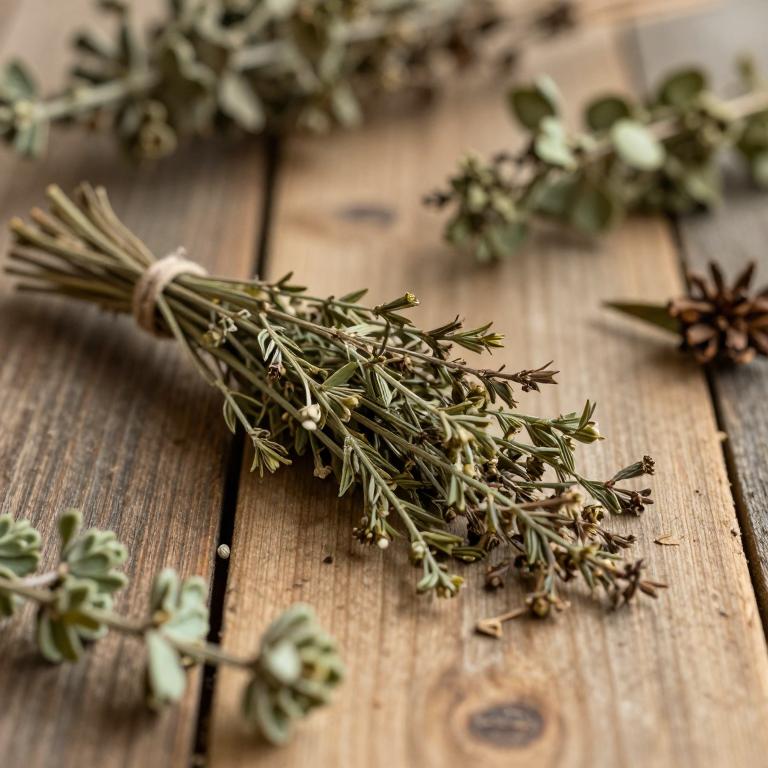
Names and Synonyms
Scientific Names
Accepted name
Koelpinia linearisSynonyms
- Koelpinia linearis var. latifolia
- Koelpinia chrysoglochis
- Koelpinia linearis var. filiformis
- Lapsana koelpinia
- Rhagadiolus koelpinia
- Koelpinia latifolia
Sources: Wikidata, Catalogue of Life
Taxonomical Classification
This plant, Koelpinia linearis, belongs to the kingdom Plantae and the phylum Streptophyta. It is classified within the class Equisetopsida and the subclass Magnoliidae, falling under the order Asterales. Finally, it is a member of the family Asteraceae and is situated within the genus Koelpinia.
| Rank | Classification |
|---|---|
| Kingdom | Plantae |
| Phylum | Streptophyta |
| Class | Equisetopsida |
| Subclass | Magnoliidae |
| Order | Asterales |
| Family | Asteraceae |
| Genus | Koelpinia |
Sources: The World Checklist of Vascular Plants (WCVP)
Distribution
This plant exhibits a broad geographical distribution that spans across several distinct regions. In Southwestern Europe, its presence is specifically noted within the borders of Spain. Moving toward Eastern Europe, the species can be found throughout Central European Russia and South European Russia. The range extends further into the territory of Ukraine. Finally, the distribution reaches into Northern Africa, where it is documented in Algeria.
| Region | Area |
|---|---|
| Southwestern Europe | Spain |
| Eastern Europe | Central European Russia |
| Eastern Europe | South European Russia |
| Eastern Europe | Ukraine |
| Northern Africa | Algeria |
| Northern Africa | Egypt |
| Northern Africa | Libya |
| Northern Africa | Morocco |
| Northern Africa | Tunisia |
| Central Asia | Kazakhstan |
Sources: The World Checklist of Vascular Plants (WCVP)
Botanical Identification
Ecology
The ecology of Koelpinia linearis is characterized by its ability to thrive across a diverse range of landscapes, spanning from disturbed agricultural areas like crop fields to more rugged, natural environments including hills, mountains, deserts, semideserts, and stony places. This species exhibits a specific altitudinal distribution, typically found at elevations ranging from a minimum of 450 m AMSL to a maximum of 1000 m AMSL. Within this vertical gradient, the plant maintains a mean elevation of approximately 725 m AMSL, suggesting a preference for mid-altitude terrains where it can adapt to both arid and rocky substrates.
- Elevational range max:
- 1000 m AMSL
- Elevational range mean:
- 725 m AMSL
- Elevational range min:
- 450 m AMSL
- Habitat :
- crop fields, desert, hills, mountains, semidesert, stony places
Life history
The life history of Koeplinia linearis is characterized by an annual lifecycle, meaning the plant completes its entire developmental progression from germination to seed production within a single growing season. Functioning as a therophyte, it survives the unfavorable periods of its environment primarily through the production of seeds, which remain dormant until conditions are suitable for growth. This life form is further classified as a therophyte, emphasizing its strategy of completing its reproductive cycle rapidly before the onset of seasonal stress.
- Life form :
- therophyte
- Lifecycle :
- annual
Morphology
The morphology of Koelpinia linearis is characterized by its growth form as a non-woody herb, functioning as an independent organism without parasitic dependencies. This plant exhibits a versatile habitat range, being capable of thriving in aquatic, semiaquatic, or terrestrial environments. It maintains a relatively low stature, with a plant height ranging from a minimum of 0.05 m to a maximum of 0.4 m. Furthermore, the species is self-supporting rather than acting as a climber, maintaining its structural integrity within its ecosystem.
- Aquatic :
- terrestrial
- Climber :
- self-supporting
- Growth form :
- herb
- Parasite :
- independent
- Plant height max:
- 0.4 m
- Plant height min:
- 0.05 m
- Woodiness :
- non-woody
Reproduction
The reproduction of Koelpinia linearis is characterized by a specific flowering phenology and the production of minute seeds. The flowering period is concentrated in the month of April, with the flowering start and end both occurring within this month, although the species exhibits potential variability across the calendar year. Following successful pollination, the plant produces seeds with highly uniform mass characteristics; the seed mass remains constant at a mean, maximum, and minimum value of 0.00199 g, indicating a very consistent and lightweight seed size for the species.
- Flowering time :
- Apr
- Seed mass mean:
- 0.00199 g
Sources: Global Inventory of Floras and Traits (GIFT)
Activities
Koelpinia linearis has 2 reported activities identified across 0 scientific publications and several other databases. The most consistently reported activities include Antimicrobial, Antitumor.
| Activity | Supporting sources | Consensus |
|---|---|---|
| Antimicrobial | 1 supporting sources | ★☆☆☆☆ |
| Antitumor | 1 supporting sources | ★☆☆☆☆ |
Antimicrobial
- Saudi pharmaceutical journal : SPJ : the official publication of the Saudi Pharmaceutical Society
Antitumor
- Saudi pharmaceutical journal : SPJ : the official publication of the Saudi Pharmaceutical Society