Kniphofia sumarae
Kniphofia sumarae · Accepted scientific name
Scientific literature: Very Sparse (0 studies) · ★☆☆☆☆
Kniphofia sumarae is a distinctive botanical species that has garnered significant interest in phytochemical research. Scientists frequently investigate its medicinal potential through various specialized preparations. These investigations often involve the use of aqueous extracts to isolate water-soluble components. Additionally, researchers employ dichloromethane extracts and methanol extracts to capture a broader spectrum of bioactive compounds. By utilizing these diverse extracts, studies can more comprehensively map the chemical profile of this unique plant.
- Synonyms
- Not available
- Common names
- Not available
- Family
- Asphodelaceae
- Distribution
- Southern America
- Plant Parts
- Not available
Classification
Taxonomy
Kniphofia sumarae is a fascinating botanical specimen that belongs to the diverse kingdom Plantae. Within this vast biological realm, the plant is classified under the class Equisetopsida. It further belongs to the specific order Asparagales, showcasing its unique evolutionary lineage. As a member of the Asphodelaceae family, it shares structural traits with many related species. Ultimately, this plant is identified by its distinct genus, Kniphofia.
| Rank | Classification |
|---|---|
| Kingdom | Plantae |
| Phylum | Streptophyta |
| Class | Equisetopsida |
| Subclass | Magnoliidae |
| Order | Asparagales |
| Family | Asphodelaceae |
| Genus | Kniphofia |
Sources: The World Checklist of Vascular Plants (WCVP)
Distribution
Geographic Regions
Kniphofia sumarae is a distinctive plant species primarily found within the Asia-Temperate regions. Its natural range extends into the unique landscapes of the Arabian Peninsula, showcasing its ability to thrive in specific environmental conditions. Within these areas, it can be found growing in the rugged terrain of Yemen. This distribution highlights the plant's specialized niche within its geographic habitat. Understanding these locations is essential for researchers studying its ecological role and conservation needs.
Sources: The World Checklist of Vascular Plants (WCVP)
Identification
Morphology
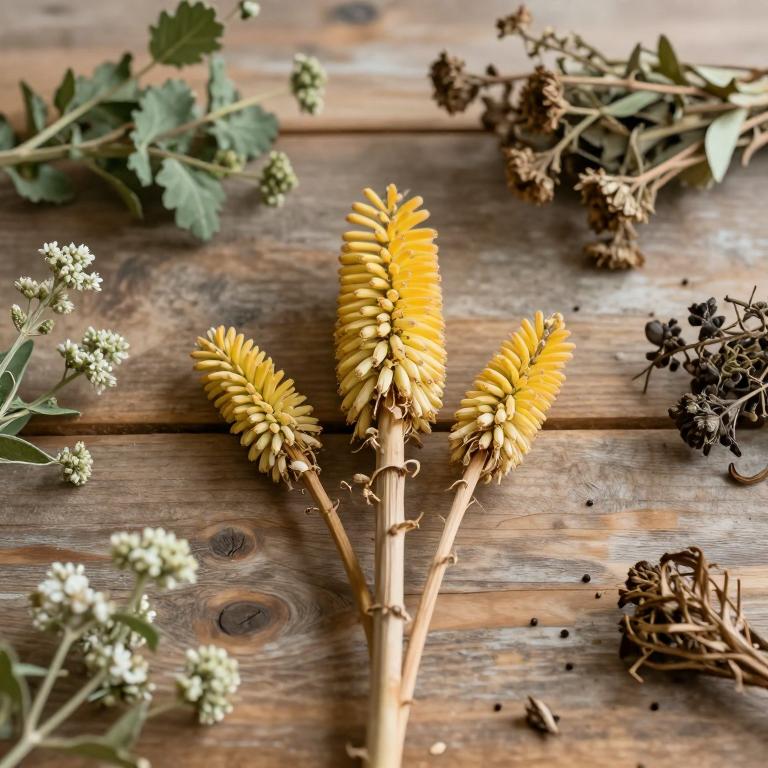
Kniphofia sumarae maintains a sturdy, self-supporting structure that allows it to stand upright without the need for external assistance.
Sources: Global Inventory of Floras and Traits (GIFT)
Biological Activities
Compounds
Conditions
Kniphofia sumarae demonstrates inhibitory activity against the enzyme neutral endopeptidase (NEP). This specific therapeutic relationship was identified through the screening of methanol extracts from various Yemeni medicinal plants. Among the tested substances, the methanolic extract of Kniphofia sumarae contributed to the significant reduction of NEP enzymatic activity. This inhibitory effect was observed at concentrations of 50 microg/ml and above. Consequently, the plant serves as a functional source for targeting NEP within this experimental framework.
Preparations
Kniphofia sumarae is prepared as extracts to facilitate various pharmacological screenings. The whole plant is processed to produce aqueous extracts, dichloromethane extracts, and methanol extracts for scientific investigation. These specific whole plant methanol extracts have demonstrated the ability to inhibit the enzymatic activity of neutral endopeptidase (NEP). Additionally, research has noted that Kniphofia sumarae extracts can exhibit high levels of cytotoxicity in certain in vitro assays. Through these different extraction methods, the plant's chemical properties are evaluated for potential medicinal applications.