Witsering
Kirkia acuminata · Accepted scientific name
Scientific literature: Very Sparse (24 studies) · ★☆☆☆☆
Witsering, scientifically known as Kirkia acuminata, is a resilient, slow-growing shrub native to the arid regions of East Africa. Renowned for its robust medicinal properties, this plant is traditionally utilized in various cultures to treat ailments ranging from gastrointestinal issues to skin infections, offering significant pharmacological potential.
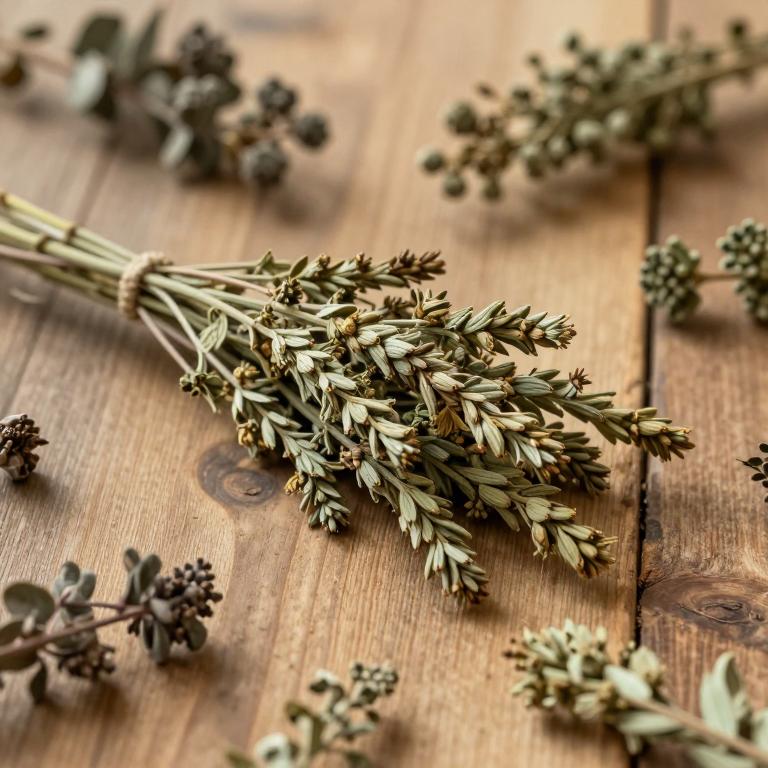
Names and Synonyms
Common Names
- Common Kirkia
- Kirkia
- White Kirkia
- White-Seringa
Scientific Names
Accepted name
Kirkia acuminataSynonyms
- Kirkia glauca
- Kirkia pubescens
- Kirkia acuminata var. cordata
Regional and Traditional Names
German:
- Berg-seringe
- Weisse Seringe
Sources: Wikidata, Catalogue of Life
Taxonomical Classification
This plant belongs to the kingdom Plantae and is classified under the phylum Streptophyta and the class Equisetopsida. Within the subclass Magnoliidae, it is ordered under Sapindales and placed in the family Kirkiaceae. Ultimately, its taxonomic identity is defined by the genus Kirkia, specifically the species Kirkia acuminata.
| Rank | Classification |
|---|---|
| Kingdom | Plantae |
| Phylum | Streptophyta |
| Class | Equisetopsida |
| Subclass | Magnoliidae |
| Order | Sapindales |
| Family | Kirkiaceae |
| Genus | Kirkia |
Sources: The World Checklist of Vascular Plants (WCVP)
Distribution
This plant exhibits a broad geographical presence across several key regions of the African continent. In West-Central Tropical Africa, its distribution includes the Democratic Republic of the Congo. Moving toward East Tropical Africa, the species can be found within the borders of Tanzania. Its reach extends significantly into South Tropical Africa, where it inhabits the nation of Angola. Finally, the plant is also established in the southern regions of Malawi and Mozambique.
| Region | Area |
|---|---|
| West-Central Tropical Africa | DR Congo |
| East Tropical Africa | Tanzania |
| South Tropical Africa | Angola |
| South Tropical Africa | Malawi |
| South Tropical Africa | Mozambique |
| South Tropical Africa | Zambia |
| South Tropical Africa | Zimbabwe |
| Southern Africa | Botswana |
| Southern Africa | Caprivi Strip |
| Southern Africa | Namibia |
Sources: The World Checklist of Vascular Plants (WCVP)
Botanical Identification
Ecology
The ecology of Kirkia acuminata is characterized by its ability to thrive within specific altitudinal gradients across its native habitats. This species occupies a diverse vertical niche, ranging from low-lying areas at an elevation of 245 m AMSL to higher reaches reaching a maximum of 1465 m AMSL. This broad elevational range suggests an adaptability to varying environmental pressures, including fluctuations in temperature, atmospheric pressure, and moisture availability typically encountered between these two altitudes.
- Elevational range max:
- 1465 m AMSL
- Elevational range min:
- 245 m AMSL
Life history
The life history of Kirkia acuminata is characterized by its status as a perennial species, allowing it to persist in its habitat over many growing seasons. As a deciduous plant, it undergoes a seasonal cycle of leaf shedding, typically losing its foliage during unfavorable environmental periods to conserve resources and survive dormancy. This combination of a long-lived perennial lifecycle and a deciduous growth habit enables the plant to adapt to its specific ecological niche through periodic cycles of regrowth and seasonal rest.
- Deciduousness :
- deciduous
- Lifecycle :
- perennial
Morphology
The morphology of Kirkia acuminata is characterized by its growth form as a woody tree that functions as a self-supporting structure. It is a terrestrial plant that grows independently, without being a parasite or an epiphyte. In terms of stature, the species exhibits significant height variability, with individual plants typically ranging from a minimum of 3 meters to a maximum of 17 meters, resulting in a mean plant height of approximately 13 meters.
- Aquatic :
- terrestrial
- Climber :
- self-supporting
- Epiphyte :
- terrestrial
- Growth form :
- tree
- Parasite :
- independent
- Plant height max:
- 17 m
- Plant height mean:
- 13 m
- Plant height min:
- 3 m
- Woodiness :
- woody
Physiology
The physiology of Kirkia acuminata is characterized by specific metabolic and nutritional processes adapted to its ecological niche. Regarding its carbon assimilation, the plant utilizes the C3 photosynthetic pathway, a common mechanism in many woody species where CO2 is fixed directly into a three-carbon compound during the Calvin cycle. Furthermore, in terms of nutrient cycling and symbiotic relationships, Kirkia acuminata is not a nitrogen fixer, meaning it does not possess the specialized symbiotic mechanisms required to convert atmospheric nitrogen into biologically available forms through specialized nodules.
- Nitrogen fixer :
- no
- Photosynthetic pathway :
- C3
Reproduction
The reproduction of Kirkia acuminata is characterized by specific seed morphological properties that define its dispersal potential and seedling establishment. The species produces seeds with a notable consistency in volume, maintaining a measured seed volume of 110 mm³ throughout its distribution (with both minimum and maximum recorded values at 110 mm³). In terms of mass, the seeds exhibit significant variability, ranging from a minimum of 0.02275 g to a maximum of 0.33333 g. The average seed mass for this plant is calculated at approximately 0.1022475 g, representing the typical investment per individual seed unit during the reproductive cycle.
- Seed mass max:
- 0.33333 g
- Seed mass mean:
- 0.1022475 g
- Seed mass min:
- 0.02275 g
- Seed volume max:
- 110 mm³
Sources: Global Inventory of Floras and Traits (GIFT)
Plant Parts
Kirkia acuminata has 2 reported plant parts identified across 4 scientific publications and several other databases that are studied for medicinal purposes. The most consistently reported plant part include root, stem.
| Plant part | Supporting sources | Consensus |
|---|---|---|
| Root | 2 supporting sources | ★☆☆☆☆ |
| Stem | 2 supporting sources | ★☆☆☆☆ |
Root
- Journal of tropical medicine
- African journal of traditional, complementary, and alternative medicines : AJTCAM
Stem
- Journal of tropical medicine
- African journal of traditional, complementary, and alternative medicines : AJTCAM
Chemicals
Kirkia acuminata has 1 reported phytochemicals identified across 4 scientific publications and several other databases. The most consistently reported chemicals include Lignans.
| Chemical | Supporting sources | Consensus |
|---|---|---|
| Lignans | 1 supporting sources | ★☆☆☆☆ |
Lignans
- African journal of traditional, complementary, and alternative medicines : AJTCAM
Activities
Kirkia acuminata has 4 reported activities identified across 4 scientific publications and several other databases. The most consistently reported activities include Antimicrobial, Antibacterial, Anticancer, Antioxidant.
| Activity | Supporting sources | Consensus |
|---|---|---|
| Antimicrobial | 2 supporting sources | ★☆☆☆☆ |
| Antibacterial | 1 supporting sources | ★☆☆☆☆ |
| Anticancer | 1 supporting sources | ★☆☆☆☆ |
| Antioxidant | 1 supporting sources | ★☆☆☆☆ |
Antimicrobial
- BMC microbiology
- Microorganisms
Antibacterial
- African journal of traditional, complementary, and alternative medicines : AJTCAM
Anticancer
- BMC microbiology
Antioxidant
- Microorganisms
Conditions
Kirkia acuminata has 12 reported investigations on conditions identified across 4 scientific publications and several other databases. The most consistently reported conditions include cholera, Mycobacterium smegmatis, Staphylococcus aureus, abdominal pains, backache.
| Condition | Supporting sources | Consensus |
|---|---|---|
| Cholera | 2 supporting sources | ★☆☆☆☆ |
| Mycobacterium smegmatis | 1 supporting sources | ★☆☆☆☆ |
| Staphylococcus aureus | 1 supporting sources | ★☆☆☆☆ |
| Abdominal pains | 1 supporting sources | ★☆☆☆☆ |
| Backache | 1 supporting sources | ★☆☆☆☆ |
| Constipation | 1 supporting sources | ★☆☆☆☆ |
| Cough | 1 supporting sources | ★☆☆☆☆ |
| Diarrhea | 1 supporting sources | ★☆☆☆☆ |
| Dysentery | 1 supporting sources | ★☆☆☆☆ |
| Snake bites | 1 supporting sources | ★☆☆☆☆ |
Cholera
- Journal of tropical medicine
- African journal of traditional, complementary, and alternative medicines : AJTCAM
Mycobacterium smegmatis
- African health sciences
Staphylococcus aureus
- African health sciences
Abdominal pains
- African journal of traditional, complementary, and alternative medicines : AJTCAM
Backache
- African journal of traditional, complementary, and alternative medicines : AJTCAM
Constipation
- African journal of traditional, complementary, and alternative medicines : AJTCAM
Cough
- African journal of traditional, complementary, and alternative medicines : AJTCAM
Diarrhea
- African journal of traditional, complementary, and alternative medicines : AJTCAM
Dysentery
- African journal of traditional, complementary, and alternative medicines : AJTCAM
Snake bites
- African journal of traditional, complementary, and alternative medicines : AJTCAM
Preparations
Kirkia acuminata has 2 reported preparations identified across 4 scientific publications and several other databases. The most consistently reported preparations include root and stem bark decoctions, root and stem bark infusions.
| Preparation | Supporting sources | Consensus |
|---|---|---|
| Root and stem bark decoctions | 1 supporting sources | ★☆☆☆☆ |
| Root and stem bark infusions | 1 supporting sources | ★☆☆☆☆ |
Root and stem bark decoctions
- Journal of tropical medicine
Root and stem bark infusions
- Journal of tropical medicine