Kalanchoë
Kalanchoe · Accepted scientific name
Scientific literature: Very Sparse (13 studies) · ★☆☆☆☆
Kalanchoë, scientifically known as Kalanchoë, is a versatile genus of succulent plants renowned for their striking foliage and vibrant blooms. Beyond their ornamental appeal, many species possess significant medicinal properties, utilized in traditional healing to address inflammation, wounds, and various ailments, making them a fascinating blend of beauty and botany.
- Family
- Crassulaceae
- Native range
- Europe
- Parts used
- Leaf · Root
- Common names
- Kalanchoes
- Scientific synonyms
- Physocalycium · Bryophyllum · 5 more
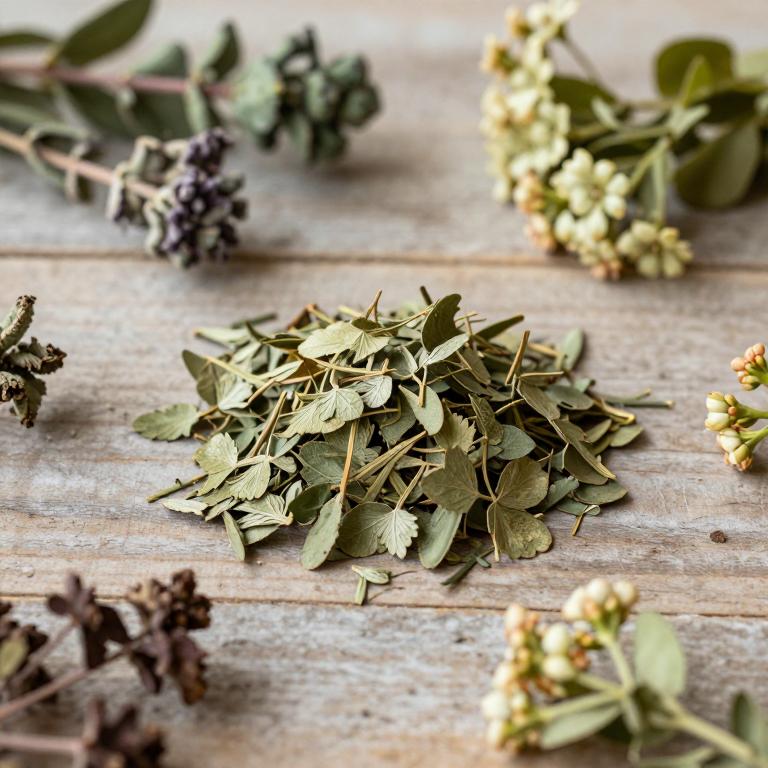
Names and Synonyms
Common Names
- Kalanchoes
Scientific Names
Accepted name
KalanchoeSynonyms
- Physocalycium
- Bryophyllum
- Kitchingia
- Geaya
- Meristostylus
- Crassuvia
- Vereia
Regional and Traditional Names
Spanish:
- Kalanchoes africanos
French:
- Kalanchoé
Sources: Wikidata, Catalogue of Life
Taxonomical Classification
This plant belongs to the kingdom Plantae and is classified under the phylum Streptophyta and class Equisetopsida. Within the subclass Magnoliidae and order Saxifragales, it is further categorized into the family Crassulaceae. Finally, it is identified by its specific genus, Kalanchoe.
| Rank | Classification |
|---|---|
| Kingdom | Plantae |
| Phylum | Streptophyta |
| Class | Equisetopsida |
| Subclass | Magnoliidae |
| Order | Saxifragales |
| Family | Crassulaceae |
| Genus | Kalanchoe |
Sources: The World Checklist of Vascular Plants (WCVP)
Distribution
This plant exhibits a specific geographical distribution primarily concentrated within the Mediterranean region. In Southwestern Europe, it can be found inhabiting the various islands of the Baleares. Its presence extends to the rugged landscapes of Corse and the coastal areas of Sardegna. Furthermore, the species is widely distributed across the mainland territories of Spain and Portugal. Together, these locations define the key environmental niches where this medicinal plant thrives.
| Region | Area |
|---|---|
| Southwestern Europe | Baleares |
| Southwestern Europe | Corse |
| Southwestern Europe | Portugal |
| Southwestern Europe | Sardegna |
| Southwestern Europe | Spain |
| Southeastern Europe | Greece |
| Southeastern Europe | Italy |
| Southeastern Europe | Sicilia |
| Northern Africa | Algeria |
| Northern Africa | Morocco |
Sources: The World Checklist of Vascular Plants (WCVP)
Plant Parts
Kalanchoe has 2 reported plant parts identified across 2 scientific publications and several other databases that are studied for medicinal purposes. The most consistently reported plant part include leaf, root.
| Plant part | Supporting sources | Consensus |
|---|---|---|
| Leaf | 1 supporting sources | ★☆☆☆☆ |
| Root | 1 supporting sources | ★☆☆☆☆ |
Leaf
- Phytomedicine : international journal of phytotherapy and phytopharmacology
Root
- Antioxidants (Basel, Switzerland)
Chemicals
Kalanchoe has 2 reported phytochemicals identified across 2 scientific publications and several other databases. The most consistently reported chemicals include Flavonoids, polyphenols.
| Chemical | Supporting sources | Consensus |
|---|---|---|
| Flavonoids | 1 supporting sources | ★☆☆☆☆ |
| polyphenols | 1 supporting sources | ★☆☆☆☆ |
Flavonoids
- Anais da Academia Brasileira de Ciencias
polyphenols
- Plants (Basel, Switzerland)
Activities
Kalanchoe has 1 reported activities identified across 2 scientific publications and several other databases. The most consistently reported activities include Analgesic.
| Activity | Supporting sources | Consensus |
|---|---|---|
| Analgesic | 1 supporting sources | ★☆☆☆☆ |
Analgesic
- Planta medica
Conditions
Kalanchoe has 6 reported investigations on conditions identified across 2 scientific publications and several other databases. The most consistently reported conditions include analgesic, cancer, infections, inflammation, injuries.
| Condition | Supporting sources | Consensus |
|---|---|---|
| Analgesic | 1 supporting sources | ★☆☆☆☆ |
| Cancer | 1 supporting sources | ★☆☆☆☆ |
| Infections | 1 supporting sources | ★☆☆☆☆ |
| Inflammation | 1 supporting sources | ★☆☆☆☆ |
| Injuries | 1 supporting sources | ★☆☆☆☆ |
| Tumor | 1 supporting sources | ★☆☆☆☆ |
Analgesic
- Planta medica
Cancer
- Natural product research
Infections
- Molecules (Basel, Switzerland)
Inflammation
- Molecules (Basel, Switzerland)
Injuries
- Molecules (Basel, Switzerland)
Tumor
- Planta medica
Preparations
Kalanchoe has 6 reported preparations identified across 2 scientific publications and several other databases. The most consistently reported preparations include Aqueous or ethanol extracts, cell cultures, cell suspension cultures, plant extracts, plant-derived extracts.
| Preparation | Supporting sources | Consensus |
|---|---|---|
| Aqueous or ethanol extracts | 1 supporting sources | ★☆☆☆☆ |
| Cell cultures | 1 supporting sources | ★☆☆☆☆ |
| Cell suspension cultures | 1 supporting sources | ★☆☆☆☆ |
| Plant extracts | 1 supporting sources | ★☆☆☆☆ |
| Plant-derived extracts | 1 supporting sources | ★☆☆☆☆ |
| Water extracts | 1 supporting sources | ★☆☆☆☆ |
Aqueous or ethanol extracts
- Phytomedicine : international journal of phytotherapy and phytopharmacology
Cell cultures
- Frontiers in plant science
Cell suspension cultures
- Frontiers in plant science
Plant extracts
- Plants (Basel, Switzerland)
Plant-derived extracts
- Plants (Basel, Switzerland)
Water extracts
- Indian journal of pharmaceutical sciences