Penwiper
Kalanchoe marmorata · Accepted scientific name
Scientific literature: Very Sparse (4 studies) · ★☆☆☆☆
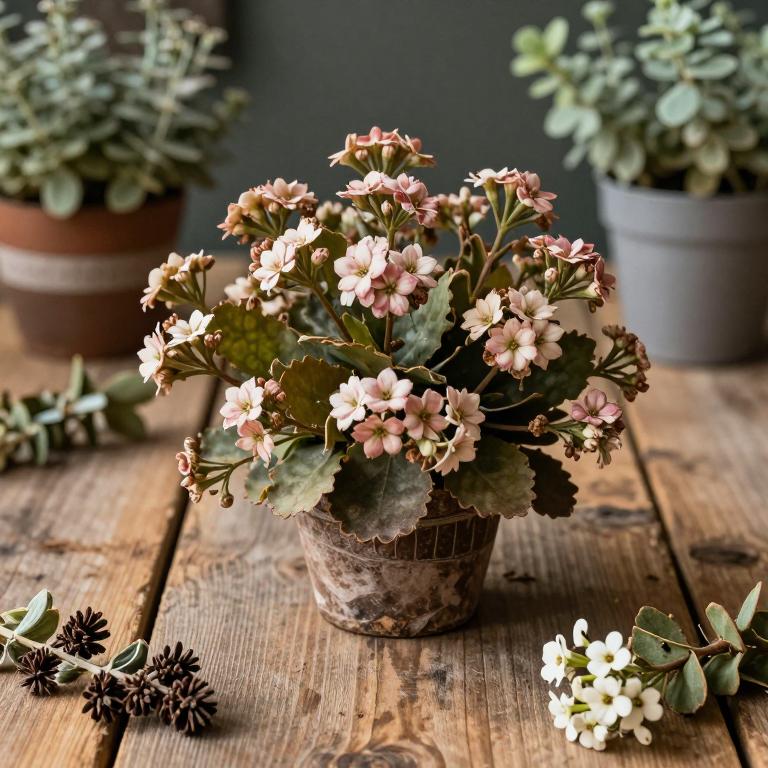
Penwiper, scientifically known as Kalanchoe marmorata, is a striking succulent celebrated for its unique, marbled foliage. Beyond its ornamental appeal, this resilient plant is valued in traditional medicine for its potential therapeutic properties. Understanding its botanical characteristics and medicinal uses offers insight into its role in natural wellness practices.
- Family
- Crassulaceae
- Native range
- Africa
- Parts used
- Not available
- Common names
- Penwiper
- Scientific synonyms
- Not available
Names and Synonyms
Common Names
- Penwiper
Scientific Names
Accepted name
Kalanchoe marmorataRegional and Traditional Names
Spanish:
- Kalanchoe africano de hoja moteada
Sources: Wikidata, Catalogue of Life
Taxonomical Classification
This plant belongs to the kingdom Plantae and the phylum Streptophyta, falling under the class Equisetopsida and subclass Magnoliidae. Within the order Saxifragales, it is a member of the family Crassulaceae. Finally, it is classified under the genus Kalanchoe as the species Kalanchoe marmorata.
| Rank | Classification |
|---|---|
| Kingdom | Plantae |
| Phylum | Streptophyta |
| Class | Equisetopsida |
| Subclass | Magnoliidae |
| Order | Saxifragales |
| Family | Crassulaceae |
| Genus | Kalanchoe |
Sources: The World Checklist of Vascular Plants (WCVP)
Distribution
This plant exhibits a diverse geographical distribution spanning several key regions across the African continent. In Northern Africa, its presence has been documented in Tunisia. Moving into West-Central Tropical Africa, the species can be found in both Rwanda and the DR Congo. The plant also extends into Northeast Tropical Africa, specifically inhabiting the territories of Eritrea and Ethiopia. Together, these locations highlight the wide ecological range of Kalanchoe marmorata.
| Region | Area |
|---|---|
| Northern Africa | Tunisia |
| West-Central Tropical Africa | Rwanda |
| West-Central Tropical Africa | DR Congo |
| Northeast Tropical Africa | Eritrea |
| Northeast Tropical Africa | Ethiopia |
| Northeast Tropical Africa | Somalia |
| Northeast Tropical Africa | Sudan-South Sudan |
| East Tropical Africa | Kenya |
| East Tropical Africa | Tanzania |
| East Tropical Africa | Uganda |
Sources: The World Checklist of Vascular Plants (WCVP)
Botanical Identification
Morphology
The morphology of Kalanchoe marmorata is characterized by its distinct growth form as a succulent herb, exhibiting a compact and fleshy structure. In terms of its structural composition, the plant is classified as non-woody, lacking a lignified stem and instead relying on thickened, water-storing tissues to maintain its upright or spreading habit.
- Growth form :
- herb
- Woodiness :
- non-woody
Sources: Global Inventory of Floras and Traits (GIFT)
Chemicals
Kalanchoe marmorata has 1 reported phytochemicals identified across 0 scientific publications and several other databases. The most consistently reported chemicals include Flavonoid.
| Chemical | Supporting sources | Consensus |
|---|---|---|
| Flavonoid | 1 supporting sources | ★☆☆☆☆ |
Flavonoid
- Chemistry & biodiversity
Conditions
Kalanchoe marmorata has 3 reported investigations on conditions identified across 0 scientific publications and several other databases. The most consistently reported conditions include cancer, infections, inflammation.
| Condition | Supporting sources | Consensus |
|---|---|---|
| Cancer | 1 supporting sources | ★☆☆☆☆ |
| Infections | 1 supporting sources | ★☆☆☆☆ |
| Inflammation | 1 supporting sources | ★☆☆☆☆ |
Cancer
- Chemistry & biodiversity
Infections
- Chemistry & biodiversity
Inflammation
- Chemistry & biodiversity