Lavender Scallops
Kalanchoe fedtschenkoi · Accepted scientific name
Scientific literature: Very Sparse (6 studies) · ★☆☆☆☆
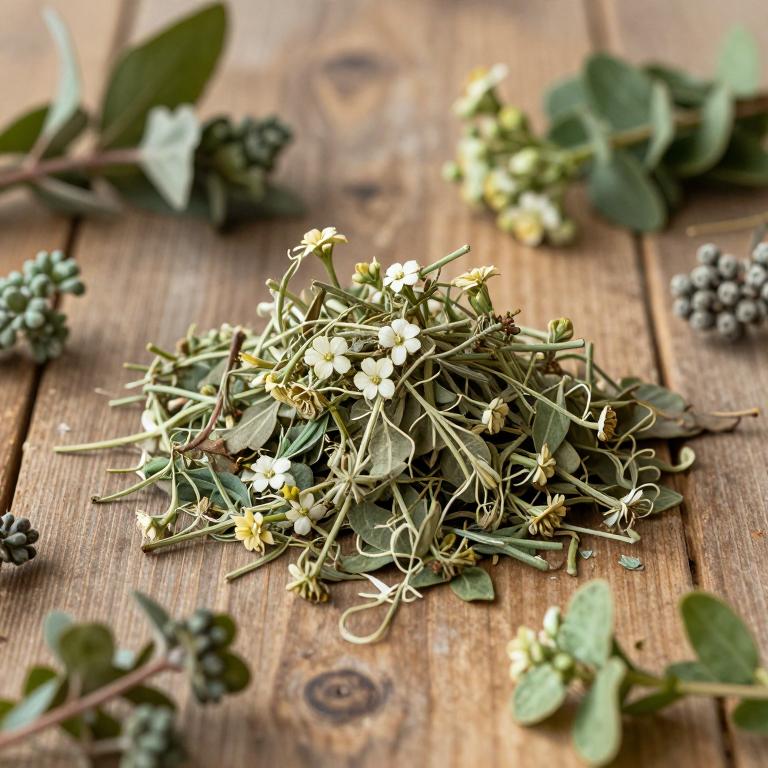
Lavender Scallops, scientifically known as Kalanchoe fedtschenkoi, is a striking succulent celebrated for its unique, scalloped leaves and vibrant hues. Beyond its ornamental beauty, this resilient plant is valued in traditional herbal practices for its potential medicinal properties, offering a fascinating blend of aesthetic charm and therapeutic interest.
- Family
- Crassulaceae
- Native range
- Europe
- Parts used
- Not available
- Common names
- Lavender Scallops
- Scientific synonyms
- Bryophyllum Fedtschenkoi
Names and Synonyms
Common Names
- Lavender Scallops
Scientific Names
Accepted name
Kalanchoe fedtschenkoiSynonyms
- Bryophyllum fedtschenkoi
Regional and Traditional Names
Spanish:
- Calanchoe de Madagascar
French:
- Kalanchoe de Fedtschenko
Sources: Wikidata, Catalogue of Life
Taxonomical Classification
This plant, Kalanchoe fedtschenkoi, belongs to the kingdom Plantae and the phylum Streptophyta. Within the class Equisetopsida and subclass Magnoliidae, it is classified under the order Saxifragales. Finally, it is a member of the family Crassulaceae and falls under the genus Kalanchoe.
| Rank | Classification |
|---|---|
| Kingdom | Plantae |
| Phylum | Streptophyta |
| Class | Equisetopsida |
| Subclass | Magnoliidae |
| Order | Saxifragales |
| Family | Crassulaceae |
| Genus | Kalanchoe |
Sources: The World Checklist of Vascular Plants (WCVP)
Distribution
This plant exhibits a specific geographical distribution across several distinct regions. In Southwestern Europe, it can be found inhabiting the landscapes of both Portugal and Spain. Its range also extends into Northern Africa, specifically within the territory of Tunisia. Additionally, the species is present in the Macaronesian islands, including the Azores. Finally, it is also documented growing in the Madeira archipelago.
| Region | Area |
|---|---|
| Southwestern Europe | Portugal |
| Southwestern Europe | Spain |
| Northern Africa | Tunisia |
| Macaronesia | Azores |
| Macaronesia | Madeira |
| West Tropical Africa | Senegal |
| West-Central Tropical Africa | Cameroon |
| East Tropical Africa | Kenya |
| South Tropical Africa | Zimbabwe |
| Southern Africa | Cape Provinces |
Sources: The World Checklist of Vascular Plants (WCVP)
Botanical Identification
Ecology
The ecology of Kalanchoe fedtschenkoi is characterized by its specialization in high-altitude environments, specifically within the Campo de Altitude ecosystem. This species is intrinsically linked to rocky landscapes, demonstrating a high degree of adaptation to vegetation growing over rocky outcrops (vegetação sobre afloramentos rochosos). In these habitats, the plant thrives in microenvironments where soil layers are often thin or non-existent, relying on the crevices and stability provided by rock formations. This ecological niche exposes the species to unique environmental stressors, such as intense solar radiation, significant diurnal temperature fluctuations, and rapid drainage, necessitating physiological adaptations to manage moisture retention and nutrient scarcity typical of these lithophytic or rupicolous conditions.
- Habitat :
- Campo de Altitude, Vegetação Sobre Afloramentos Rochosos
Life history
The life history of Kalanchoe fedtschenkoi is characterized by its classification as a perennial, allowing it to persist through multiple growing seasons and maintain stability within its ecological niche. Structurally, the plant exhibits a dual life form expression, functioning as a phanerophyte due to its visible above-ground stem development, while also specifically acting as a lithophyte, which dictates its specialized adaptation to growing on or among rocks and stony substrates. This combination of a long-lived lifecycle and a rock-dwelling growth habit enables the species to thrive in specialized environments where it can endure varying seasonal conditions over many years.
- Life form :
- lithophyte
- Life form :
- phanerophyte
- Lifecycle :
- perennial
Morphology
The morphology of Kalanchoe fedtschenkoi is characterized by a growth form classified as a herbaceous forb. This plant is a non-climbing, self-supporting species that functions as an independent organism, lacking any parasitic tendencies. It is a terrestrial plant, existing neither as an aquatic, semiaquatic, nor epiphytic species. Despite its herbaceous nature, the plant exhibits woody characteristics in its structure. In terms of physical dimensions, it maintains a relatively compact stature, reaching a maximum plant height of approximately 0.6 m.
- Aquatic :
- terrestrial
- Climber :
- self-supporting
- Epiphyte :
- terrestrial
- Growth form :
- herb
- Growth form :
- forb
- Parasite :
- independent
- Plant height max:
- 0.6 m
- Woodiness :
- woody
Physiology
The physiology of Kalanchoe fedtschenkoi is fundamentally characterized by its specialized water-management systems, most notably its high degree of succulence. As a succulent plant, it possesses thickened, fleshy leaves and stems designed for the efficient storage of water within specialized parenchymatous tissues, allowing it to maintain hydration during extended periods of drought. This morphological adaptation is coupled with a metabolic strategy typical of many members of the Crassulaceae family, involving specialized cellular structures that regulate osmotic potential to prevent desiccation. The plant's physiological processes are optimized for survival in arid or semi-arid environments, where the ability to sequester moisture internally serves as a critical buffer against fluctuating environmental moisture availability.
- Succulence :
- yes
Reproduction
The reproduction of Kalanchoe fedtschenkoi is characterized by a sexual process involving bisexual flowers, which facilitates cross-pollination as self-fertilization is notably absent. The plant relies on biotic pollination, specifically utilizing an insect pollination syndrome to ensure genetic exchange. Once fertilization occurs, the plant produces a significant quantity of seeds per fruit, typically ranging within the 101-1000 interval. These individual seeds are extremely lightweight, with a mean seed mass of approximately 2e-05 g. Regarding the movement of progeny, the species exhibits an unspecialized dispersal syndrome, though it is also subject to anthropochorous dispersal, meaning it is frequently moved or spread by human activity.
- Dispersal syndrome :
- unspecialized
- Dispersal syndrome :
- anthropochorous
- Pollination syndrome :
- insect
- Pollination syndrome :
- biotic
- Reproduction sexual :
- bisexual
- Seed mass mean:
- 2e-05 g
- Seeds_per_fruit :
- 101-1000
- Self fertilization :
- absent
Sources: Global Inventory of Floras and Traits (GIFT)
Chemicals
Kalanchoe fedtschenkoi has 3 reported phytochemicals identified across 0 scientific publications and several other databases. The most consistently reported chemicals include caffeic acid, kaempferol, quercetin.
| Chemical | Supporting sources | Consensus |
|---|---|---|
| caffeic acid | 1 supporting sources | ★☆☆☆☆ |
| kaempferol | 1 supporting sources | ★☆☆☆☆ |
| quercetin | 1 supporting sources | ★☆☆☆☆ |
caffeic acid
- Frontiers in pharmacology
kaempferol
- Frontiers in pharmacology
quercetin
- Frontiers in pharmacology
Conditions
Kalanchoe fedtschenkoi has 3 reported investigations on conditions identified across 0 scientific publications and several other databases. The most consistently reported conditions include Acinetobacter baumannii, Pseudomonas aeruginosa, Staphylococcus aureus.
| Condition | Supporting sources | Consensus |
|---|---|---|
| Acinetobacter baumannii | 1 supporting sources | ★☆☆☆☆ |
| Pseudomonas aeruginosa | 1 supporting sources | ★☆☆☆☆ |
| Staphylococcus aureus | 1 supporting sources | ★☆☆☆☆ |
Acinetobacter baumannii
- Frontiers in pharmacology
Pseudomonas aeruginosa
- Frontiers in pharmacology
Staphylococcus aureus
- Frontiers in pharmacology