Kalanchoe blossfeldiana
Kalanchoe blossfeldiana · Accepted scientific name
Scientific literature: Very Sparse (2 studies) · ★☆☆☆☆
Kalanchoe blossfeldiana is a versatile succulent known for more than just its vibrant, ornamental blooms. Emerging scientific research has highlighted the plant's significant biological potential, particularly regarding its medicinal properties. Specifically, studies have explored its potent antibacterial activities against harmful pathogens like Staphylococcus aureus. Furthermore, the plant has shown promising anticancer capabilities in various laboratory settings. These findings suggest that Kalanchoe blossfeldiana may play a vital role in the future development of targeted therapeutic treatments.
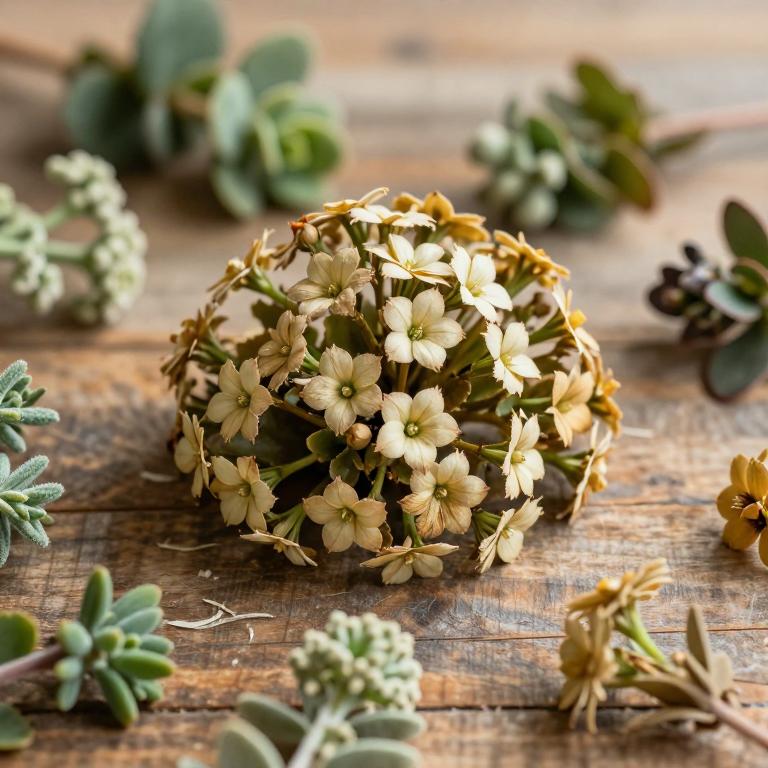
- Synonyms
- Kalanchoe Globulifera Var. Coccinea
- Common names
- Not available
- Family
- Crassulaceae
- Distribution
- Not available
- Plant Parts
- Not available
Classification
Common Names
Kalanchoe blossfeldiana is a versatile succulent that is known by several charming and distinct common names. Many gardeners affectionately refer to this plant as the Christmas kalanchoe or the Calandiva. It is also frequently identified by the whimsical name Brujita. Certain vibrant varieties are specifically celebrated under the nicknames Flaming Katie or Flaming Katy. These diverse names highlight the plant's widespread popularity and varied aesthetic appeal in floral collections.
Sources: Catalogue of Life (COL)
Synonyms
Kalanchoe blossfeldiana is a popular succulent widely recognized for its vibrant and long-lasting blooms. In botanical literature, you may occasionally encounter this plant referred to by its synonym, Kalanchoe globulifera var. coccinea. While these names may appear different, they both represent the same beloved flowering species. Understanding these taxonomic variations helps gardeners and researchers navigate complex plant classifications more easily. Recognizing these synonymous relationships ensures that collectors can accurately identify this striking plant in any setting.
Sources: The World Checklist of Vascular Plants (WCVP)
Taxonomy
Kalanchoe blossfeldiana belongs to the vast kingdom Plantae, marking its place among the diverse world of living plants. Within this kingdom, it is classified under the class Equisetopsida, which identifies its fundamental structural characteristics. The plant further descends through the order Saxifragales, connecting it to a specific lineage of flowering species. It is a distinguished member of the genus Kalanchoe, a group known for its unique succulent qualities. Finally, its taxonomic journey leads to the family Crassulaceae, where it shares its biological traits with other stonecrop relatives.
| Rank | Classification |
|---|---|
| Kingdom | Plantae |
| Phylum | Streptophyta |
| Class | Equisetopsida |
| Subclass | Magnoliidae |
| Order | Saxifragales |
| Family | Crassulaceae |
| Genus | Kalanchoe |
Sources: The World Checklist of Vascular Plants (WCVP)
Distribution
Geographic Regions
Kalanchoe blossfeldiana exhibits a remarkable geographical range that spans multiple continents and diverse climates. In Africa, this resilient plant can be found throughout West Tropical Africa, specifically in Senegal, as well as across the Western Indian Ocean in Madagascar. Its presence extends into Asia, where it thrives in the temperate regions of Türkiye and the tropical landscapes of Vietnam. The species also makes an appearance in Europe, specifically inhabiting the Mediterranean environment of Sardegna. This widespread distribution highlights the plant's incredible ability to adapt to various ecological niches across the globe.
Sources: The World Checklist of Vascular Plants (WCVP)
Identification
Morphology
Kalanchoe blossfeldiana is characterized by its herbaceous growth form. This resilient plant is entirely self-supporting, allowing it to maintain its structure without additional assistance.
Sources: Global Inventory of Floras and Traits (GIFT)
Biological Activities
Kalanchoe blossfeldiana is a medicinal plant that holds significant promise due to its diverse therapeutic properties. Research has highlighted its antibacterial potential, specifically through the study of endophytic bacteria like Klebsiella aerogenes isolated from its tissues. These bacterial secondary metabolites have demonstrated effectiveness in inhibiting multi-drug resistant pathogens such as Salmonella typhi and Staphylococcus aureus. Beyond fighting infection, this plant is also recognized for its anticancer activities within the broader landscape of medicinal flora. By utilizing bioactive phytochemicals, Kalanchoe blossfeldiana may contribute to the development of novel treatments aimed at regulating cancer progression and inducing apoptosis.
Compounds
Conditions
Kalanchoe blossfeldiana serves as a vital medicinal plant with diverse therapeutic applications against various diseases. The plant hosts endophytic bacteria like Klebsiella aerogenes, which produce secondary metabolites capable of treating Staphylococcus aureus. These bacterial extracts also demonstrate significant antibacterial effectiveness against multi-drug resistant (MDR) Salmonella typhi. Beyond its antimicrobial properties, Kalanchoe blossfeldiana is recognized for its potential anti-tumorigenic effects in the fight against cancer. Together, these findings highlight the plant's significant role in developing treatments for both infectious and oncological conditions.