black galingale
Kaempferia parviflora · Accepted scientific name
Scientific literature: Sparse (94 studies) · ★★☆☆☆
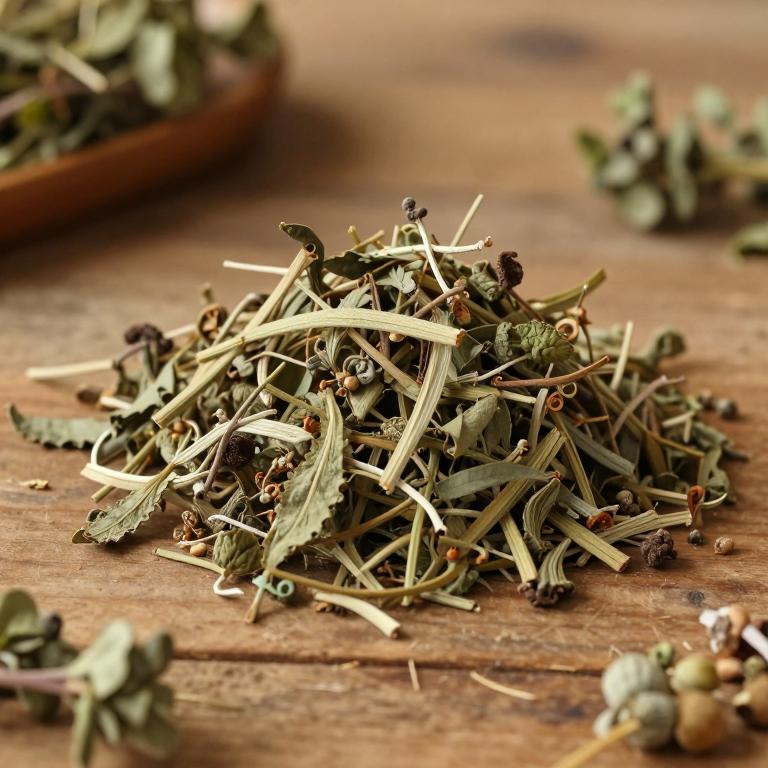
Black gingelly, scientifically known as Kaempferia parviflora, is a potent medicinal herb native to Southeast Asia. Often called "Black Ginger," this rhizomatous plant is celebrated in traditional medicine for its ability to boost energy, enhance libido, and improve metabolic health, offering powerful antioxidant and anti-inflammatory benefits for wellness.
- Family
- Zingiberaceae
- Native range
- Asia-Tropical
- Parts used
- Rhizome · Leaf
- Common names
- Black Galingale
- Scientific synonyms
- Kaempferia Rubromarginata · Stahlianthus Rubromarginatus
Names and Synonyms
Common Names
- black galingale
Scientific Names
Accepted name
Kaempferia parvifloraSynonyms
- Kaempferia rubromarginata
- Stahlianthus rubromarginatus
Sources: Wikidata, Catalogue of Life
Taxonomical Classification
This plant belongs to the kingdom Plantae and the phylum Streptophyta, falling under the class Equisetopsida and subclass Magnoliidae. Within the order Zingiberales, it is classified under the family Zingiberaceae. Ultimately, its taxonomic identity is defined by the genus Kaempferia, specifically the species parviflora.
| Rank | Classification |
|---|---|
| Kingdom | Plantae |
| Phylum | Streptophyta |
| Class | Equisetopsida |
| Subclass | Magnoliidae |
| Order | Zingiberales |
| Family | Zingiberaceae |
| Genus | Kaempferia |
Sources: The World Checklist of Vascular Plants (WCVP)
Distribution
This plant is native to several distinct regions across Southern and Southeast Asia. Within the Indian Subcontinent, its presence has been documented in Bangladesh. Moving into the Indo-China region, it can be found growing in Cambodia. Its distribution also extends to the country of Myanmar. Finally, this medicinal species is commonly located throughout Thailand.
| Region | Area |
|---|---|
| Indian Subcontinent | Bangladesh |
| Indo-China | Cambodia |
| Indo-China | Myanmar |
| Indo-China | Thailand |
Sources: The World Checklist of Vascular Plants (WCVP)
Botanical Identification
Life history
The life history of Kaempferia parviflora is characterized by its classification as a geophyte, a survival strategy that relies on specialized underground storage organs to endure unfavorable environmental conditions. This plant maintains its life cycle through a perennial rhythm, utilizing thickened rhizomes situated beneath the soil surface to store essential nutrients and water. During the favorable growing seasons, the plant emerges from these rhizomes to produce foliage and reproductive structures, but during periods of dormancy or environmental stress, it retreats into its subterranean state to protect its vital tissues. This geophytic habit allows the species to persist in tropical forest understories, where it can effectively manage seasonal fluctuations by remaining dormant until optimal moisture and temperature levels trigger new vegetative growth.
- Life form :
- geophyte
Morphology
The morphology of Kaempferia parviflora is characterized by its growth habit as a terrestrial herb, functioning as an independent organism that does not rely on a host, thus being neither a parasite nor an epiphyte. It possesses a rhizomatous structure that allows it to grow in a self-supporting manner, lacking any climbing mechanisms such as tendrils or twining stems that would categorize it as an obligatory or facultative climber. Instead, the plant maintains a low-growing, prostrate form where the leaves emerge close to the soil surface, supported entirely by its own structural integrity within its terrestrial habitat.
- Climber :
- self-supporting
- Epiphyte :
- terrestrial
- Parasite :
- independent
Sources: Global Inventory of Floras and Traits (GIFT)
Plant Parts
Kaempferia parviflora has 3 reported plant parts identified across 12 scientific publications and several other databases that are studied for medicinal purposes. The most consistently reported plant part include rhizome, leaf, stem.
| Plant part | Supporting sources | Consensus |
|---|---|---|
| Rhizome | 9 supporting sources | ★★★★☆ |
| Leaf | 2 supporting sources | ★☆☆☆☆ |
| Stem | 1 supporting sources | ★☆☆☆☆ |
Rhizome
- Molecules (Basel, Switzerland)
- Journal of ethnopharmacology
- Nutrition and cancer
- Die Pharmazie
- Journal of the science of food and agriculture
View 4 additional sources
- Journal of advanced pharmaceutical technology & research
- Scientific reports
- Chemistry & biodiversity
- Metabolites
Leaf
- Chemistry & biodiversity
- Metabolites
Stem
- Chemistry & biodiversity
Chemicals
Kaempferia parviflora has 30 reported phytochemicals identified across 12 scientific publications and several other databases. The most consistently reported chemicals include 5,7-Dimethoxyflavone, 3,5,7-Trimethoxyflavone, 5-Hydroxy-7-methoxyflavone, Flavonoids, 3,7-Dimethoxy-5-hydroxyflavone.
| Chemical | Supporting sources | Consensus |
|---|---|---|
| 5,7-Dimethoxyflavone | 5 supporting sources | ★★★☆☆ |
| 3,5,7-Trimethoxyflavone | 4 supporting sources | ★★☆☆☆ |
| 5-Hydroxy-7-methoxyflavone | 3 supporting sources | ★★☆☆☆ |
| Flavonoids | 3 supporting sources | ★★☆☆☆ |
| 3,7-Dimethoxy-5-hydroxyflavone | 2 supporting sources | ★☆☆☆☆ |
| 5,7,4'-Trimethoxyflavone | 2 supporting sources | ★☆☆☆☆ |
| 5-hydroxy-3,7,3',4'-tetramethoxyflavone | 2 supporting sources | ★☆☆☆☆ |
| CAMPHENE | 2 supporting sources | ★☆☆☆☆ |
| Linalool | 2 supporting sources | ★☆☆☆☆ |
| 3,4',5,7-tetramethoxyflavone | 1 supporting sources | ★☆☆☆☆ |
5,7-Dimethoxyflavone
- Journal of ethnopharmacology
- Die Pharmazie
- Journal of advanced pharmaceutical technology & research
- PloS one
- Chemistry & biodiversity
3,5,7-Trimethoxyflavone
- International journal of molecular sciences
- Antioxidants (Basel, Switzerland)
- Plants (Basel, Switzerland)
- Chemistry & biodiversity
5-Hydroxy-7-methoxyflavone
- Die Pharmazie
- Plants (Basel, Switzerland)
- Antioxidants (Basel, Switzerland)
Flavonoids
- Plant foods for human nutrition (Dordrecht, Netherlands)
- Plants (Basel, Switzerland)
- Chemistry & biodiversity
3,7-Dimethoxy-5-hydroxyflavone
- Antioxidants (Basel, Switzerland)
- Plants (Basel, Switzerland)
5,7,4'-Trimethoxyflavone
- International journal of molecular sciences
- MedComm
5-hydroxy-3,7,3',4'-tetramethoxyflavone
- Phytotherapy research : PTR
- Plants (Basel, Switzerland)
CAMPHENE
- Journal of advanced pharmaceutical technology & research
- Scientific reports
Linalool
- Journal of advanced pharmaceutical technology & research
- Scientific reports
3,4',5,7-tetramethoxyflavone
- Chemistry & biodiversity
Activities
Kaempferia parviflora has 4 reported activities identified across 12 scientific publications and several other databases. The most consistently reported activities include Antioxidant, Antifungal, Antibacterial, Antimalarial.
| Activity | Supporting sources | Consensus |
|---|---|---|
| Antioxidant | 3 supporting sources | ★★☆☆☆ |
| Antifungal | 2 supporting sources | ★☆☆☆☆ |
| Antibacterial | 1 supporting sources | ★☆☆☆☆ |
| Antimalarial | 1 supporting sources | ★☆☆☆☆ |
Antioxidant
- Preparative biochemistry & biotechnology
- Asian Pacific journal of cancer prevention : APJCP
- Chemistry & biodiversity
Antifungal
- Preparative biochemistry & biotechnology
- Journal of the science of food and agriculture
Antibacterial
- Preparative biochemistry & biotechnology
Antimalarial
- Journal of the science of food and agriculture
Conditions
Kaempferia parviflora has 22 reported investigations on conditions identified across 12 scientific publications and several other databases. The most consistently reported conditions include oxidative stress, Alzheimer disease, H5N1 virus, abscesses, acne.
| Condition | Supporting sources | Consensus |
|---|---|---|
| Oxidative stress | 3 supporting sources | ★★☆☆☆ |
| Alzheimer disease | 1 supporting sources | ★☆☆☆☆ |
| H5n1 virus | 1 supporting sources | ★☆☆☆☆ |
| Abscesses | 1 supporting sources | ★☆☆☆☆ |
| Acne | 1 supporting sources | ★☆☆☆☆ |
| Allergies | 1 supporting sources | ★☆☆☆☆ |
| Allergy | 1 supporting sources | ★☆☆☆☆ |
| Brain injury | 1 supporting sources | ★☆☆☆☆ |
| Colorectal cancer | 1 supporting sources | ★☆☆☆☆ |
| Dysentery | 1 supporting sources | ★☆☆☆☆ |
Oxidative stress
- Journal of ethnopharmacology
- Antioxidants (Basel, Switzerland)
- Medicinal chemistry (Shariqah (United Arab Emirates))
Alzheimer disease
- Journal of the Medical Association of Thailand = Chotmaihet thangphaet
H5n1 virus
- Asian Pacific journal of tropical medicine
Abscesses
- Plants (Basel, Switzerland)
Acne
- Molecules (Basel, Switzerland)
Allergies
- Plants (Basel, Switzerland)
Allergy
- Journal of ethnopharmacology
Brain injury
- Advances in experimental medicine and biology
Colorectal cancer
- MedComm
Dysentery
- Plants (Basel, Switzerland)
Preparations
Kaempferia parviflora has 28 reported preparations identified across 12 scientific publications and several other databases. The most consistently reported preparations include plant extracts, rhizomes, 7-methoxyflavone constituents, 7-methoxyflavones, EtOH extract.
| Preparation | Supporting sources | Consensus |
|---|---|---|
| Plant extracts | 2 supporting sources | ★☆☆☆☆ |
| Rhizomes | 2 supporting sources | ★☆☆☆☆ |
| 7-methoxyflavone constituents | 1 supporting sources | ★☆☆☆☆ |
| 7-methoxyflavones | 1 supporting sources | ★☆☆☆☆ |
| Etoh extract | 1 supporting sources | ★☆☆☆☆ |
| Ethanolic and water extracts | 1 supporting sources | ★☆☆☆☆ |
| K. parviflora extract | 1 supporting sources | ★☆☆☆☆ |
| Kp extracts (kpe) in dcm | 1 supporting sources | ★☆☆☆☆ |
| Kp extracts (kpe) in ethyl acetate | 1 supporting sources | ★☆☆☆☆ |
| Kp extracts (kpe) in methanol | 1 supporting sources | ★☆☆☆☆ |
Plant extracts
- Journal of ethnopharmacology
- Plants (Basel, Switzerland)
Rhizomes
- Journal of ethnopharmacology
- Biological & pharmaceutical bulletin
7-methoxyflavone constituents
- Journal of ethnopharmacology
7-methoxyflavones
- Journal of ethnopharmacology
Etoh extract
- Journal of ethnopharmacology
Ethanolic and water extracts
- Journal of ethnopharmacology
K. parviflora extract
- Scientific reports
Kp extracts (kpe) in dcm
- Medicina (Kaunas, Lithuania)
Kp extracts (kpe) in ethyl acetate
- Medicina (Kaunas, Lithuania)
Kp extracts (kpe) in methanol
- Medicina (Kaunas, Lithuania)