Justicia schimperiana
Justicia schimperiana · Accepted scientific name
Scientific literature: Very Sparse (20 studies) · ★☆☆☆☆
Justicia schimperiana, scientifically known as Justicia schimperiana, is a significant medicinal shrub native to East Africa. Renowned for its diverse therapeutic properties, it is traditionally used to treat ailments ranging from skin infections to gastrointestinal issues. This plant holds great promise for pharmacological research and natural healthcare integration.
- Family
- Acanthaceae
- Native range
- Africa
- Parts used
- Leaf · Root
- Common names
- Not available
- Scientific synonyms
- Adhatoda Schimperiana · Ecbolium Schimperianum
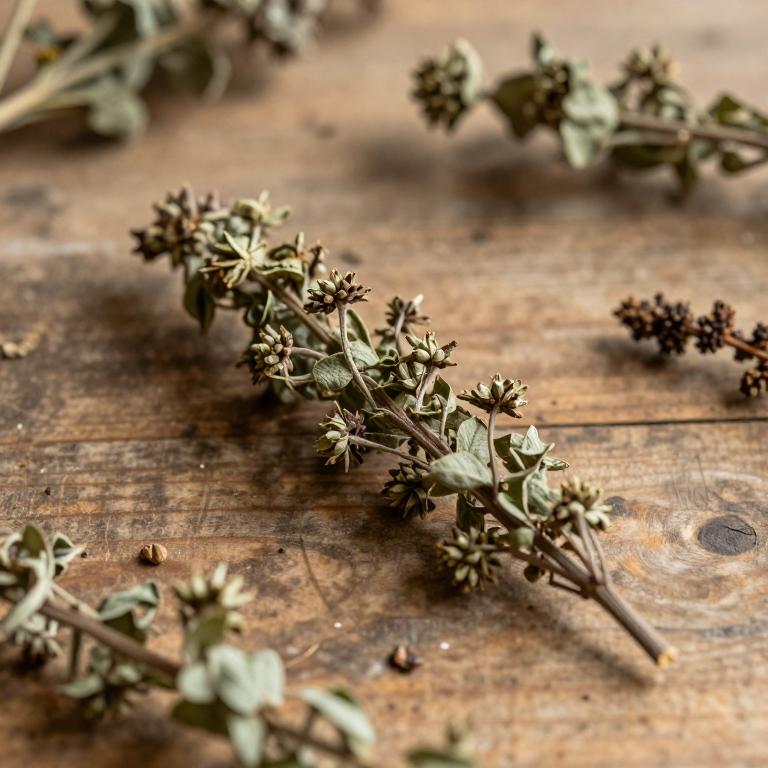
Names and Synonyms
Scientific Names
Accepted name
Justicia schimperianaSynonyms
- Adhatoda schimperiana
- Ecbolium schimperianum
Sources: Wikidata
Taxonomical Classification
This plant belongs to the kingdom Plantae and is classified within the phylum Streptophyta and class Equisetopsida. Within the subclass Magnoliidae, it is organized under the order Lamiales and the family Acanthaceae. Finally, its taxonomic identity is defined by its placement in the genus Justicia.
| Rank | Classification |
|---|---|
| Kingdom | Plantae |
| Phylum | Streptophyta |
| Class | Equisetopsida |
| Subclass | Magnoliidae |
| Order | Lamiales |
| Family | Acanthaceae |
| Genus | Justicia |
Sources: The World Checklist of Vascular Plants (WCVP)
Distribution
This plant is primarily distributed throughout the northeastern and eastern regions of tropical Africa. Within Northeast Tropical Africa, its range extends across Eritrea, Ethiopia, and Somalia. It is also commonly found in the East Tropical Africa region. Specifically, its presence is documented in both Kenya and Tanzania. These locations collectively define the natural habitat where the species can be found.
| Region | Area |
|---|---|
| Northeast Tropical Africa | Eritrea |
| Northeast Tropical Africa | Ethiopia |
| Northeast Tropical Africa | Somalia |
| East Tropical Africa | Kenya |
| East Tropical Africa | Tanzania |
Sources: The World Checklist of Vascular Plants (WCVP)
Botanical Identification
Ecology
The ecology of Justicia schimperiana is characterized by its presence in diverse yet specific landscapes, primarily thriving within dry coastal bushland, riverine woodlands, and bushed grasslands. It occupies niches where moisture availability varies, ranging from the more stable, water-influenced environments of riverine systems to the more seasonal and arid conditions found in coastal scrublands and grassy bushlands. This distribution suggests an adaptability to varied soil moisture levels and light availability, allowing the species to integrate into both the dense structural complexity of woodland understories and the more open, sun-exposed patches of coastal and inland grasslands.
- Habitat :
- dry (coastal) bushland, riverine woodland, bushed grassland
Morphology
The morphology of Justicia schimperiana is characterized by its growth form as a shrub, which establishes a structured and perennial presence in its habitat. This plant exhibits a woody nature, developing firm, lignified tissues that provide essential structural integrity. In terms of its climbing behavior, it functions as a self-supporting organism, possessing the internal mechanical strength to maintain its upright posture without the necessity of external structures for support.
- Climber :
- self-supporting
- Growth form :
- shrub
- Woodiness :
- woody
Sources: Global Inventory of Floras and Traits (GIFT)
Plant Parts
Justicia schimperiana has 2 reported plant parts identified across 2 scientific publications and several other databases that are studied for medicinal purposes. The most consistently reported plant part include leaf, root.
| Plant part | Supporting sources | Consensus |
|---|---|---|
| Leaf | 1 supporting sources | ★☆☆☆☆ |
| Root | 1 supporting sources | ★☆☆☆☆ |
Leaf
- Zeitschrift fur Naturforschung. C, Journal of biosciences
Root
- Zeitschrift fur Naturforschung. C, Journal of biosciences
Chemicals
Justicia schimperiana has 6 reported phytochemicals identified across 2 scientific publications and several other databases. The most consistently reported chemicals include Debrisoquine, Flavonoids, Kaempferol-3-O-rutinoside, Phenols, hexanedioic acid.
| Chemical | Supporting sources | Consensus |
|---|---|---|
| Debrisoquine | 1 supporting sources | ★☆☆☆☆ |
| Flavonoids | 1 supporting sources | ★☆☆☆☆ |
| Kaempferol-3-O-rutinoside | 1 supporting sources | ★☆☆☆☆ |
| Phenols | 1 supporting sources | ★☆☆☆☆ |
| hexanedioic acid | 1 supporting sources | ★☆☆☆☆ |
| trans-resveratrol | 1 supporting sources | ★☆☆☆☆ |
Debrisoquine
- International journal of molecular sciences
Flavonoids
- Advances in pharmacological and pharmaceutical sciences
Kaempferol-3-O-rutinoside
- Zeitschrift fur Naturforschung. C, Journal of biosciences
Phenols
- Advances in pharmacological and pharmaceutical sciences
hexanedioic acid
- International journal of molecular sciences
trans-resveratrol
- Zeitschrift fur Naturforschung. C, Journal of biosciences
Activities
Justicia schimperiana has 4 reported activities identified across 2 scientific publications and several other databases. The most consistently reported activities include Antibacterial, Antidiabetic, Antimicrobial, Antioxidant.
| Activity | Supporting sources | Consensus |
|---|---|---|
| Antibacterial | 1 supporting sources | ★☆☆☆☆ |
| Antidiabetic | 1 supporting sources | ★☆☆☆☆ |
| Antimicrobial | 1 supporting sources | ★☆☆☆☆ |
| Antioxidant | 1 supporting sources | ★☆☆☆☆ |
Antibacterial
- International journal of molecular sciences
Antidiabetic
- Zeitschrift fur Naturforschung. C, Journal of biosciences
Antimicrobial
- Zeitschrift fur Naturforschung. C, Journal of biosciences
Antioxidant
- International journal of molecular sciences
Conditions
Justicia schimperiana has 7 reported investigations on conditions identified across 2 scientific publications and several other databases. The most consistently reported conditions include malaria, Candida albicans, asthma, diarrhea, fever.
| Condition | Supporting sources | Consensus |
|---|---|---|
| Malaria | 2 supporting sources | ★☆☆☆☆ |
| Candida albicans | 1 supporting sources | ★☆☆☆☆ |
| Asthma | 1 supporting sources | ★☆☆☆☆ |
| Diarrhea | 1 supporting sources | ★☆☆☆☆ |
| Fever | 1 supporting sources | ★☆☆☆☆ |
| Liver diseases | 1 supporting sources | ★☆☆☆☆ |
| Scabies | 1 supporting sources | ★☆☆☆☆ |
Malaria
- Zeitschrift fur Naturforschung. C, Journal of biosciences
- Malaria journal
Candida albicans
- Advances in pharmacological and pharmaceutical sciences
Asthma
- Zeitschrift fur Naturforschung. C, Journal of biosciences
Diarrhea
- Zeitschrift fur Naturforschung. C, Journal of biosciences
Fever
- Zeitschrift fur Naturforschung. C, Journal of biosciences
Liver diseases
- Pharmaceutical biology
Scabies
- Zeitschrift fur Naturforschung. C, Journal of biosciences
Preparations
Justicia schimperiana has 6 reported preparations identified across 2 scientific publications and several other databases. The most consistently reported preparations include EOs from leaves, EOs from roots, essential oils, extracts, plant extracts.
| Preparation | Supporting sources | Consensus |
|---|---|---|
| Eos from leaves | 1 supporting sources | ★☆☆☆☆ |
| Eos from roots | 1 supporting sources | ★☆☆☆☆ |
| Essential oils | 1 supporting sources | ★☆☆☆☆ |
| Extracts | 1 supporting sources | ★☆☆☆☆ |
| Plant extracts | 1 supporting sources | ★☆☆☆☆ |
| Root extracts | 1 supporting sources | ★☆☆☆☆ |
Eos from leaves
- Zeitschrift fur Naturforschung. C, Journal of biosciences
Eos from roots
- Zeitschrift fur Naturforschung. C, Journal of biosciences
Essential oils
- Zeitschrift fur Naturforschung. C, Journal of biosciences
Extracts
- Zeitschrift fur Naturforschung. C, Journal of biosciences
Plant extracts
- Advances in pharmacological and pharmaceutical sciences
Root extracts
- Zeitschrift fur Naturforschung. C, Journal of biosciences