Justicia carnea
Justicia carnea · Accepted scientific name
Scientific literature: Very Sparse (0 studies) · ★☆☆☆☆
Justicia carnea is a plant that has garnered significant interest for its potential therapeutic effects on metabolic health. Research suggests that the plant's leaf may play a role in managing lipid profiles, specifically targeting cholesterol, HDL cholesterol, and LDL cholesterol levels. Furthermore, studies have explored its impact on hypertension, making it a subject of importance in cardiovascular wellness. Scientists often examine these benefits through various preparations, ranging from low dose applications to high dose administrations. Specifically, the medicinal properties are frequently evaluated using hydroethanolic leaf extracts to ensure effective bioactive delivery.
- Synonyms
- Justicia Magnifica · Dianthera Pohliana · 26 more
- Common names
- Not available
- Family
- Acanthaceae
- Distribution
- Not available
- Plant Parts
- Leaf
Classification
Common Names
Justicia carnea is a striking plant known by a diverse array of colorful nicknames. It is frequently referred to as the Brazilian-plume or the plumeflower due to its unique shape. In some regions, the species is affectionately called the flamingo-flower, highlighting its vibrant pink hues. It also carries the regal title of king's-crown, adding a sense of elegance to its identity. Finally, it is recognized by the name brasilianische Justizie in certain botanical circles.
Sources: Catalogue of Life (COL)
Synonyms
Justicia carnea is a species known to be associated with several distinct botanical synonyms within various taxonomic classifications. It has been historically identified under the name Amphiscopia pohliana, including the specific variation known as Amphiscopia pohliana var. angustifolia. Furthermore, the plant shares a complex relationship with the genus Cyrtanthera through several recognized names. These include the designations Cyrtanthera carnea and Cyrtanthera longiflora. Finally, the name Cyrtanthera magnifica also serves as a recognized synonym for this versatile species.
Sources: The World Checklist of Vascular Plants (WCVP)
Taxonomy
Justicia carnea belongs to the diverse kingdom Plantae, serving as a vibrant example of botanical complexity. Within this vast kingdom, the species is categorized under the class Equisetopsida. It further follows the biological lineage of the order Lamiales, showcasing its specific evolutionary path. As a member of the genus Justicia, it shares distinct characteristics with its close relatives. Finally, this plant is firmly established within the family Acanthaceae, rounding out its scientific classification.
| Rank | Classification |
|---|---|
| Kingdom | Plantae |
| Phylum | Streptophyta |
| Class | Equisetopsida |
| Subclass | Magnoliidae |
| Order | Lamiales |
| Family | Acanthaceae |
| Genus | Justicia |
Sources: The World Checklist of Vascular Plants (WCVP)
Distribution
Geographic Regions
Justicia carnea exhibits an incredibly expansive global distribution that spans several diverse continents and island groups. Its natural range includes various regions across Africa and the Macaronesia islands, such as the Azores. The plant also thrives within the Middle Atlantic Ocean, specifically near St. Helena, and reaches into the tropical reaches of Asia through Indo-China and Myanmar. In the Western Hemisphere, it can be found throughout central Mexico in North America. Finally, its presence extends into the Pacific, particularly within the North-Central Pacific region of Hawaii.
Sources: The World Checklist of Vascular Plants (WCVP)
Identification
Morphology
Justicia carnea is a self-supporting plant that takes on a distinct shrub-like growth form. Depending on its environment, this species typically reaches a maximum height of 1.25 meters. However, under ideal conditions, the shrub can grow even larger to reach a height of up to 2 meters. This versatile plant remains a sturdy addition to any landscape due to its structural integrity.
Sources: Global Inventory of Floras and Traits (GIFT)
Biological Activities
Compounds
Conditions
Justicia carnea is reported to be effective in the management of blood disorders and diabetes. Research indicates that the plant's extracts can treat cholesterol by decreasing overall concentrations. Specifically, the plant helps treat LDL cholesterol by significantly reducing its levels in the body. Furthermore, Justicia carnea treats HDL-cholesterol by promoting a significant increase in its concentration. These combined effects demonstrate the plant's ability to improve lipid profiles and address various metabolic and hematological concerns.
Preparations
Justicia carnea is prepared as extracts to investigate its potential for treating anemia and managing lipid abnormalities. These preparations often utilize hydroethanolic leaf extracts to evaluate their effects on various biochemical and hematological parameters in animal models. During experimental testing, Justicia carnea is prepared as a low dose to observe its therapeutic benefits. Conversely, Justicia carnea is prepared as a high dose, which has been shown to significantly enhance hematological parameters like hemoglobin concentration. However, research also indicates that when Justicia carnea is prepared as a high dose, it may lead to hepatorenal toxicity.
Parts used
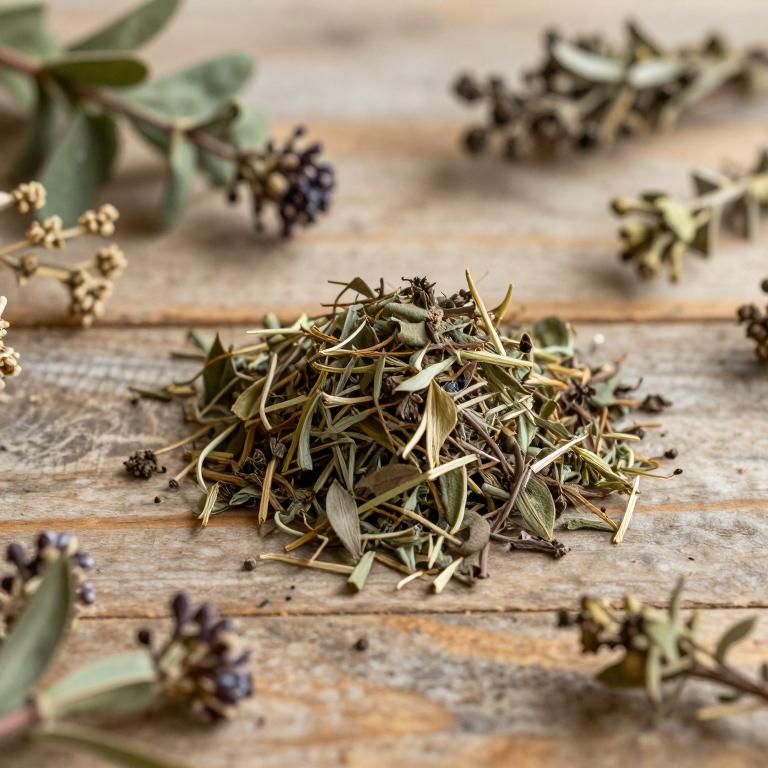
Justicia carnea is a medicinal plant widely recognized for the therapeutic potential of its leaves in managing various health conditions. Research indicates that extracts from these leaves can significantly boost hematological parameters, such as increasing red blood cell counts and hemoglobin concentrations in anemic subjects. Furthermore, the leaf extract has demonstrated an ability to improve lipid profiles by reducing cholesterol and increasing beneficial HDL levels. However, while the leaves offer hematological benefits, high doses have been linked to potential hepatorenal toxicity in animal models. Consequently, while the leaves are valuable for blood health, careful monitoring is essential to avoid adverse effects on the liver and kidneys.