junipers
Juniperus · Accepted scientific name
Scientific literature: Very Sparse (12 studies) · ★☆☆☆☆
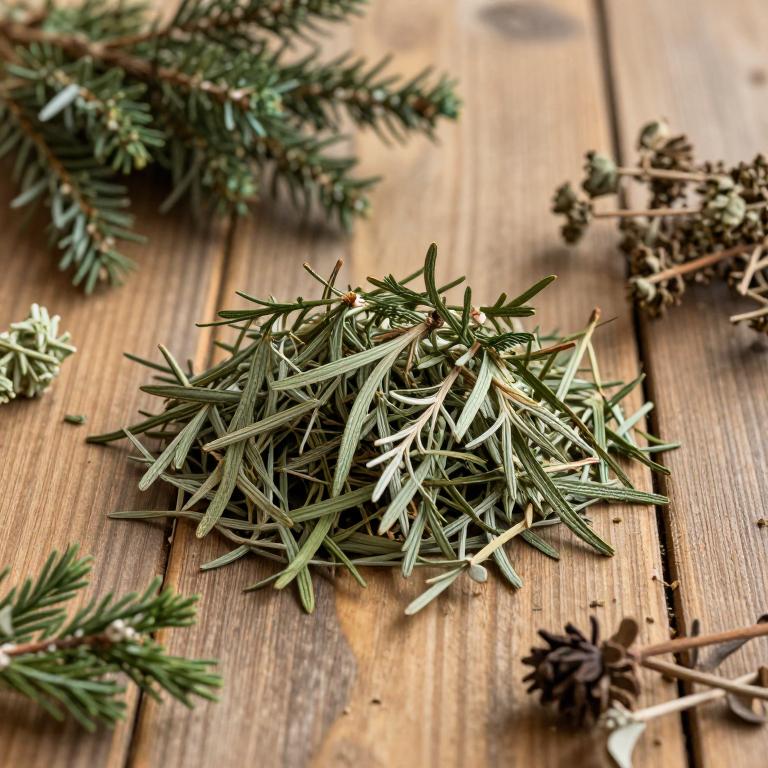
Junipers, scientifically known as Juniperus, is a diverse genus of coniferous evergreen trees and shrubs celebrated for their aromatic qualities. Renowned in traditional medicine, these resilient plants offer potent antioxidant, antimicrobial, and anti-inflammatory properties, frequently utilized in herbal remedies and culinary infusions to support digestive and urinary health.
Names and Synonyms
Common Names
- juniper
- red cedar
- junipers
Scientific Names
Accepted name
JuniperusSynonyms
- Arceuthos
- Thuiaecarpus
- Sabinella
- Sabina
- Oxycedrus
Regional and Traditional Names
Spanish:
- Junípero
- Sabinas
- Juníperos
- Junipero
- Enebro
- Juniperos
- enebros y sabinas
German:
- Wacholder
- Kronwittbirl
- Wacholderbusch
- Machangel
- Wacholderstrauch
- Kranewitt
- Wacholder
French:
- genévrier
- Genevrier
- genévriers
Sources: Wikidata, Catalogue of Life
Taxonomical Classification
This plant belongs to the kingdom Plantae and is classified under the phylum Streptophyta within the class Equisetopsida. Following the subclass Pinidae and order Pinales, it is a member of the family Cupressaceae. It is specifically identified by the genus Juniperus.
| Rank | Classification |
|---|---|
| Kingdom | Plantae |
| Phylum | Streptophyta |
| Class | Equisetopsida |
| Subclass | Pinidae |
| Order | Pinales |
| Family | Cupressaceae |
| Genus | Juniperus |
Sources: The World Checklist of Vascular Plants (WCVP)
Distribution
This plant is widely distributed across several key regions in Northern Europe. In the northern reaches of the continent, it can be found growing in Finland. Its presence extends to the island nations, including Iceland and the Faroe Islands. Additionally, the species is established within the territories of Denmark and Great Britain. These diverse locations highlight the plant's ability to thrive in various Northern European landscapes.
| Region | Area |
|---|---|
| Northern Europe | Denmark |
| Northern Europe | Finland |
| Northern Europe | Føroyar |
| Northern Europe | Great Britain |
| Northern Europe | Iceland |
| Northern Europe | Ireland |
| Northern Europe | Norway |
| Northern Europe | Sweden |
| Middle Europe | Austria |
| Middle Europe | Belgium |
Sources: The World Checklist of Vascular Plants (WCVP)
Plant Parts
Juniperus has 2 reported plant parts identified across 4 scientific publications and several other databases that are studied for medicinal purposes. The most consistently reported plant part include leaf, fruit.
| Plant part | Supporting sources | Consensus |
|---|---|---|
| Leaf | 3 supporting sources | ★★☆☆☆ |
| Fruit | 1 supporting sources | ★☆☆☆☆ |
Leaf
- Biotechnology letters
- International immunopharmacology
- Journal of ethnopharmacology
Fruit
- Biotechnology letters
Chemicals
Juniperus has 1 reported phytochemicals identified across 4 scientific publications and several other databases. The most consistently reported chemicals include VITAMIN K.
| Chemical | Supporting sources | Consensus |
|---|---|---|
| VITAMIN K | 1 supporting sources | ★☆☆☆☆ |
VITAMIN K
- Annali italiani di medicina interna : organo ufficiale della Societa italiana di medicina interna
Conditions
Juniperus has 5 reported investigations on conditions identified across 4 scientific publications and several other databases. The most consistently reported conditions include appetite, asthma, cachexia, pain, urinary tract infections.
| Condition | Supporting sources | Consensus |
|---|---|---|
| Appetite | 1 supporting sources | ★☆☆☆☆ |
| Asthma | 1 supporting sources | ★☆☆☆☆ |
| Cachexia | 1 supporting sources | ★☆☆☆☆ |
| Pain | 1 supporting sources | ★☆☆☆☆ |
| Urinary tract infections | 1 supporting sources | ★☆☆☆☆ |
Appetite
- Praxis
Asthma
- Journal of complementary & integrative medicine
Cachexia
- Praxis
Pain
- Praxis
Urinary tract infections
- Acta poloniae pharmaceutica
Preparations
Juniperus has 1 reported preparations identified across 4 scientific publications and several other databases. The most consistently reported preparations include Extracts of cones and leaves.
| Preparation | Supporting sources | Consensus |
|---|---|---|
| Extracts of cones and leaves | 1 supporting sources | ★☆☆☆☆ |
Extracts of cones and leaves
- International immunopharmacology