Juniperus seravschanica
Juniperus seravschanica · Accepted scientific name
Scientific literature: Sparse (71 studies) · ★★☆☆☆
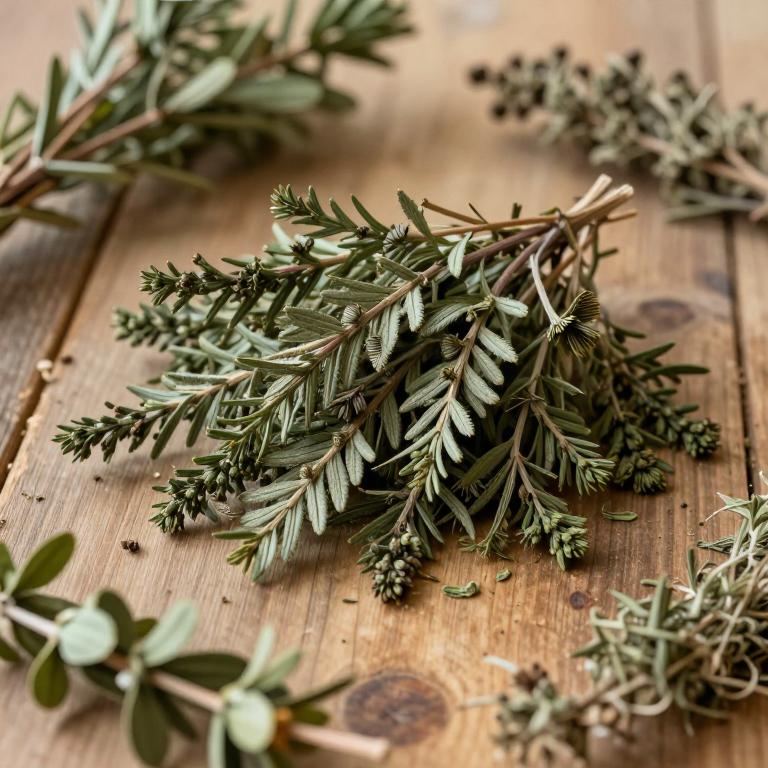
Juniperus seravschanica, scientifically known as Juniperus seravschanica, is a resilient evergreen shrub native to the mountainous regions of Central Asia. Renowned for its therapeutic properties, this plant is traditionally utilized in herbal medicine to support digestive health, provide antioxidant benefits, and act as a natural antiseptic for healing.
- Family
- Cupressaceae
- Native range
- Asia-Temperate
- Parts used
- Fruit · Leaf
- Common names
- Not available
- Scientific synonyms
- Juniperus Polycarpos Var. Seravschanica · Juniperus Excelsa Subsp. Seravschanica · 4 more
Names and Synonyms
Scientific Names
Accepted name
Juniperus seravschanicaSynonyms
- Juniperus polycarpos var. seravschanica
- Juniperus excelsa subsp. seravschanica
- Juniperus excelsa var. seravschanica
- Juniperus himalayaensis
- Juniperus macropoda
- Sabina seravschanica
Sources: Wikidata
Taxonomical Classification
This plant belongs to the kingdom Plantae within the phylum Streptophyta and the class Equisetopsida. It is further classified under the subclass Pinidae and the order Pinales, falling into the family Cupressaceae. Ultimately, it is identified by the genus Juniperus as Juniperus seravschanica.
| Rank | Classification |
|---|---|
| Kingdom | Plantae |
| Phylum | Streptophyta |
| Class | Equisetopsida |
| Subclass | Pinidae |
| Order | Pinales |
| Family | Cupressaceae |
| Genus | Juniperus |
Sources: The World Checklist of Vascular Plants (WCVP)
Distribution
This plant, Juniperus seravschanica, is primarily distributed across the vast landscapes of Central Asia. Its natural habitat extends through the diverse terrains of Kazakhstan and Kirgizstan. Additionally, it can be found growing within the regional boundaries of Turkmenistan. The species also inhabits significant portions of Tadzhikistan. Finally, its geographical range is completed by its presence in Uzbekistan.
| Region | Area |
|---|---|
| Central Asia | Kazakhstan |
| Central Asia | Kirgizstan |
| Central Asia | Turkmenistan |
| Central Asia | Tadzhikistan |
| Central Asia | Uzbekistan |
| Western Asia | Afghanistan |
| Western Asia | Iran |
| Arabian Peninsula | Oman |
| Indian Subcontinent | Pakistan |
| Indian Subcontinent | West Himalaya |
Sources: The World Checklist of Vascular Plants (WCVP)
Botanical Identification
Ecology
The ecology of Juniperus seravschanica is characterized by its preference for high-altitude environments, where it typically thrives within mountainous landscapes. It is most commonly found integrated into forest ecosystems, often occupying specific niches within montane woodland structures. Its distribution is closely tied to these rugged terrains, where it adapts to the varying topographical conditions and climatic patterns inherent to mountain forests.
- Habitat :
- forest, mountains
Life history
The life history of Juniperus seravschanica is characterized by a perennial lifecycle, allowing the plant to persist in its natural habitat over many years. As a phanerophyte, its reproductive buds are located on high branches well above the ground, a structural adaptation that defines its life form. This phanerophyte classification is consistent across its developmental stages, ensuring that its growth habit remains robust and elevated throughout its long-term existence in the ecosystem.
- Life form :
- phanerophyte
- Lifecycle :
- perennial
Morphology
The morphology of Juniperus seravschanica is characterized by its growth form as a woody tree, which can reach a plant height ranging from a minimum of 5 m to a maximum of 10 m. As an independent species, it does not function as a parasite and maintains a terrestrial habit rather than being an epiphyte. The plant is self-supporting in its structure, exhibiting a robust, woody constitution typical of its arboreal classification.
- Climber :
- self-supporting
- Epiphyte :
- terrestrial
- Growth form :
- tree
- Parasite :
- independent
- Plant height max:
- 10 m
- Plant height min:
- 5 m
- Woodiness :
- woody
Physiology
The physiology of Juniperus seravschanica is primarily characterized by its carbon assimilation strategy, utilizing the C3 photosynthetic pathway to facilitate the fixation of atmospheric carbon dioxide. As a member of the Cupressaceae family, its metabolic processes are adapted to manage gas exchange through specialized stomatal control, which is essential for maintaining water relations in its specific ecological niches. The C3 pathway involves the direct fixation of CO2 by the enzyme RuBisCO during the Calvin cycle, a mechanism that dictates its resource allocation and growth patterns. This physiological framework, combined with its structural adaptations for moisture retention, allows the plant to regulate its internal water potential and photosynthetic efficiency in response to varying environmental stressors.
- Photosynthetic pathway :
- C3
Reproduction
Reproduction in Juniperus seravschanica is characterized by the production of specialized seed structures that play a critical role in its life cycle and dispersal. The seeds produced by this species exhibit a highly consistent physical profile, with a recorded seed mass mean of 0.02899 g. This consistency is further evidenced by the fact that the maximum and minimum measured seed masses are identical, both reaching 0.02899 g. This uniformity in seed mass suggests a stabilized reproductive output within the species, ensuring that each individual seed carries a standardized amount of nutrient reserves to facilitate successful germination and establishment in its natural habitat.
- Seed mass mean:
- 0.02899 g
Sources: Global Inventory of Floras and Traits (GIFT)
Plant Parts
Juniperus seravschanica has 3 reported plant parts identified across 3 scientific publications and several other databases that are studied for medicinal purposes. The most consistently reported plant part include fruit, leaf, stem.
| Plant part | Supporting sources | Consensus |
|---|---|---|
| Fruit | 1 supporting sources | ★☆☆☆☆ |
| Leaf | 1 supporting sources | ★☆☆☆☆ |
| Stem | 1 supporting sources | ★☆☆☆☆ |
Fruit
- Microscopy research and technique
Leaf
- Microscopy research and technique
Stem
- Microscopy research and technique
Chemicals
Juniperus seravschanica has 14 reported phytochemicals identified across 3 scientific publications and several other databases. The most consistently reported chemicals include 10-nonacosanol, CADINENE, Cedrol, EO, Hinokiflavone.
| Chemical | Supporting sources | Consensus |
|---|---|---|
| 10-nonacosanol | 1 supporting sources | ★☆☆☆☆ |
| CADINENE | 1 supporting sources | ★☆☆☆☆ |
| Cedrol | 1 supporting sources | ★☆☆☆☆ |
| EO | 1 supporting sources | ★☆☆☆☆ |
| Hinokiflavone | 1 supporting sources | ★☆☆☆☆ |
| Iridin | 1 supporting sources | ★☆☆☆☆ |
| Irigenin | 1 supporting sources | ★☆☆☆☆ |
| Kaempferol 3-O-beta-D-glucoside | 1 supporting sources | ★☆☆☆☆ |
| PINENE | 1 supporting sources | ★☆☆☆☆ |
| Quercetin 3-O-alpha-L-rhamnoside | 1 supporting sources | ★☆☆☆☆ |
10-nonacosanol
- Dr. Duke
CADINENE
- Dr. Duke
Cedrol
- Molecules (Basel, Switzerland)
EO
- Dr. Duke
Hinokiflavone
- Dr. Duke
Iridin
- Dr. Duke
Irigenin
- Dr. Duke
Kaempferol 3-O-beta-D-glucoside
- Dr. Duke
PINENE
- Dr. Duke
Quercetin 3-O-alpha-L-rhamnoside
- Dr. Duke
Activities
Juniperus seravschanica has 48 reported activities identified across 3 scientific publications and several other databases. The most consistently reported activities include Antibacterial, Acetylcholinergic, Aldose-Reductase-Inhibitor, Allergenic, AntiEBV.
| Activity | Supporting sources | Consensus |
|---|---|---|
| Antibacterial | 2 supporting sources | ★☆☆☆☆ |
| Acetylcholinergic | 1 supporting sources | ★☆☆☆☆ |
| Aldose-Reductase-Inhibitor | 1 supporting sources | ★☆☆☆☆ |
| Allergenic | 1 supporting sources | ★☆☆☆☆ |
| AntiEBV | 1 supporting sources | ★☆☆☆☆ |
| AntiHIV | 1 supporting sources | ★☆☆☆☆ |
| Anticancer (Oral) | 1 supporting sources | ★☆☆☆☆ |
| Antidiabetic | 1 supporting sources | ★☆☆☆☆ |
| Antiedemic | 1 supporting sources | ★☆☆☆☆ |
| Antifeedant | 1 supporting sources | ★☆☆☆☆ |
Antibacterial
- Dr. Duke
- Natural product communications
Acetylcholinergic
- Dr. Duke
Aldose-Reductase-Inhibitor
- Dr. Duke
Allergenic
- Dr. Duke
AntiEBV
- Dr. Duke
AntiHIV
- Dr. Duke
Anticancer (Oral)
- Dr. Duke
Antidiabetic
- Dr. Duke
Antiedemic
- Dr. Duke
Antifeedant
- Dr. Duke
Preparations
Juniperus seravschanica has 3 reported preparations identified across 3 scientific publications and several other databases. The most consistently reported preparations include Essential oils, J. macropoda oil, Juniperus macropoda essential oil.
| Preparation | Supporting sources | Consensus |
|---|---|---|
| Essential oils | 1 supporting sources | ★☆☆☆☆ |
| J. macropoda oil | 1 supporting sources | ★☆☆☆☆ |
| Juniperus macropoda essential oil | 1 supporting sources | ★☆☆☆☆ |
Essential oils
- Bioresource technology
J. macropoda oil
- Natural product communications
Juniperus macropoda essential oil
- Natural product communications