Juniperus excelsa var. polycarpos
Juniperus polycarpos · Accepted scientific name
Scientific literature: Very Sparse (5 studies) · ★☆☆☆☆
Juniperus excelsa var. polycarpos, scientifically known as Juniperus polycarpos, is a resilient evergreen shrub native to the arid regions of the Middle East. Renowned for its aromatic foliage and berries, this medicinal plant is highly valued in traditional medicine for its potent antioxidant, antimicrobial, and anti-inflammatory healing properties.
- Family
- Cupressaceae
- Native range
- Asia-Temperate
- Parts used
- Fruit · Leaf
- Common names
- Not available
- Scientific synonyms
- Juniperus Pingii Subsp. Polycarpos · Juniperus Excelsa Subsp. Polycarpos · 2 more
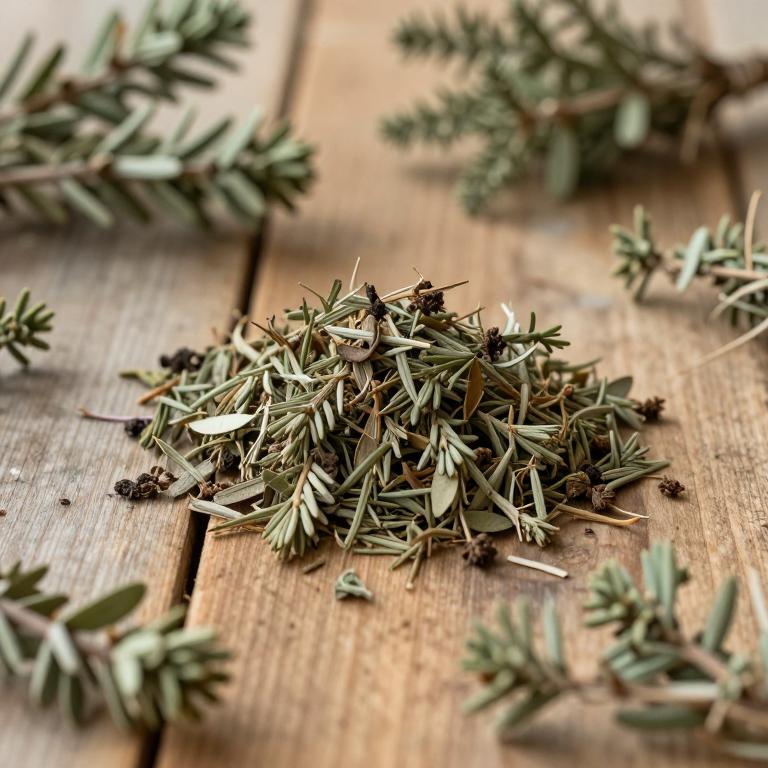
Names and Synonyms
Scientific Names
Accepted name
Juniperus polycarposSynonyms
- Juniperus pingii subsp. polycarpos
- Juniperus excelsa subsp. polycarpos
- Juniperus excelsa var. polycarpos
- Sabina polycarpos
Regional and Traditional Names
German:
- Persischer Wacholder
- Juniperus excelsa subsp. polycarpos
- Juniperus excelsa var. polycarpos
- Sabina polycarpos
- Juniperus macropoda
- Juniperus seravschanica
- Juniperus turcomanica
Sources: Wikidata
Taxonomical Classification
This plant belongs to the kingdom Plantae and the phylum Streptophyta, falling under the class Equisetopsida and subclass Pinidae. Within the order Pinales, it is classified under the family Cupressaceae. It is specifically identified by the genus Juniperus as Juniperus polycarpos.
| Rank | Classification |
|---|---|
| Kingdom | Plantae |
| Phylum | Streptophyta |
| Class | Equisetopsida |
| Subclass | Pinidae |
| Order | Pinales |
| Family | Cupressaceae |
| Genus | Juniperus |
Sources: The World Checklist of Vascular Plants (WCVP)
Distribution
This plant is primarily distributed across the diverse landscapes of Central and Western Asia. In Central Asia, its presence is specifically noted within the borders of Turkmenistan. The species also extends into the Caucasus region, inhabiting both the North Caucasus and the Transcaucasus areas. Its range continues through Western Asia, where it is found growing in Iran. Finally, the distribution reaches the Levant, covering the territory of Lebanon and Syria.
| Region | Area |
|---|---|
| Central Asia | Turkmenistan |
| Caucasus | North Caucasus |
| Caucasus | Transcaucasus |
| Western Asia | Iran |
| Western Asia | Lebanon-Syria |
| Western Asia | Türkiye |
Sources: The World Checklist of Vascular Plants (WCVP)
Botanical Identification
Ecology
The ecology of Juniperus polycarpos is characterized by its ability to thrive across a diverse altitudinal gradient, ranging from lower elevations of 300 m AMSL to high-altitude environments reaching up to 3400 m AMSL. This species is primarily found within montane ecosystems, establishing itself in rugged mountain terrains and within forest habitats. Its distribution across such a wide elevational range indicates a high degree of adaptability to varying climatic conditions and topographic complexities typical of mountain landscapes.
- Elevational range max:
- 3400 m AMSL
- Elevational range min:
- 300 m AMSL
- Habitat :
- forest, mountains
Life history
The life history of Juniperus polycarpos is characterized by its nature as a perennial species, allowing it to persist in its environment over many successive growing seasons. As a plant, it exhibits a phanerophyte life form, specifically categorized under the classifications of phanerophyte and nanophanerophyte, meaning its reproductive buds are elevated above the ground level on woody stems. This growth strategy enables the species to withstand various environmental conditions through its long-lived, woody structure.
- Life form :
- phanerophyte
- Lifecycle :
- perennial
Morphology
The morphology of Juniperus polycarpos is characterized by a woody growth form, functioning as a self-supporting tree. It is an independent, terrestrial species that does not exhibit parasitic or epiphytic behavior. In terms of stature, the plant typically reaches a height ranging from a minimum of 6 m to a maximum of 7 m.
- Climber :
- self-supporting
- Epiphyte :
- terrestrial
- Growth form :
- tree
- Parasite :
- independent
- Plant height max:
- 7 m
- Plant height min:
- 6 m
- Woodiness :
- woody
Reproduction
The reproduction of Juniperus polycarpos is characterized by the production of specialized seeds that serve as the primary vehicle for the dispersal and establishment of new individuals. Based on botanical data, the seeds of this species exhibit a highly consistent physical profile with no observed variance in weight. The seed mass is recorded at a constant value, where the mean, maximum, and minimum measurements all converge at exactly 0.24066 g. This uniformity in seed mass suggests a stabilized reproductive strategy within the species, ensuring that each unit of offspring carries a specific, predictable nutrient load essential for germination and early seedling development.
- Seed mass mean:
- 0.24066 g
Sources: Global Inventory of Floras and Traits (GIFT)
Plant Parts
Juniperus polycarpos has 2 reported plant parts identified across 2 scientific publications and several other databases that are studied for medicinal purposes. The most consistently reported plant part include fruit, leaf.
| Plant part | Supporting sources | Consensus |
|---|---|---|
| Fruit | 1 supporting sources | ★☆☆☆☆ |
| Leaf | 1 supporting sources | ★☆☆☆☆ |
Fruit
- Evidence-based complementary and alternative medicine : eCAM
Leaf
- Evidence-based complementary and alternative medicine : eCAM
Chemicals
Juniperus polycarpos has 2 reported phytochemicals identified across 2 scientific publications and several other databases. The most consistently reported chemicals include Deoxypodophyllotoxin, Isocupressic acid.
| Chemical | Supporting sources | Consensus |
|---|---|---|
| Deoxypodophyllotoxin | 1 supporting sources | ★☆☆☆☆ |
| Isocupressic acid | 1 supporting sources | ★☆☆☆☆ |
Deoxypodophyllotoxin
- Natural product research
Isocupressic acid
- Natural product research
Conditions
Juniperus polycarpos has 1 reported investigations on conditions identified across 2 scientific publications and several other databases. The most consistently reported conditions include HepG2 cells.
| Condition | Supporting sources | Consensus |
|---|---|---|
| Hepg2 cells | 1 supporting sources | ★☆☆☆☆ |
Hepg2 cells
- Natural product research
Preparations
Juniperus polycarpos has 2 reported preparations identified across 2 scientific publications and several other databases. The most consistently reported preparations include Methanol extract of fruits, Methanol extract of leaves.
| Preparation | Supporting sources | Consensus |
|---|---|---|
| Methanol extract of fruits | 1 supporting sources | ★☆☆☆☆ |
| Methanol extract of leaves | 1 supporting sources | ★☆☆☆☆ |
Methanol extract of fruits
- Evidence-based complementary and alternative medicine : eCAM
Methanol extract of leaves
- Evidence-based complementary and alternative medicine : eCAM