large-fruited juniper
Juniperus macrocarpa · Accepted scientific name
Scientific literature: Very Sparse (3 studies) · ★☆☆☆☆
Large-fruited juniper, scientifically known as Juniperus macrocarpa, is a resilient evergreen shrub native to North American prairies. Renowned for its ability to thrive in arid environments, this plant offers significant ethnobotanical value. Historically used in traditional medicine, its aromatic berries possess antimicrobial and digestive properties highly valued in herbalism.
- Family
- Cupressaceae
- Native range
- Europe
- Parts used
- Not available
- Common names
- Large-Berry Juniper · Plum Juniper
- Scientific synonyms
- Juniperus Communis Var. Macrocarpa · Sabina Phoenicea Var. Lobelii · 15 more
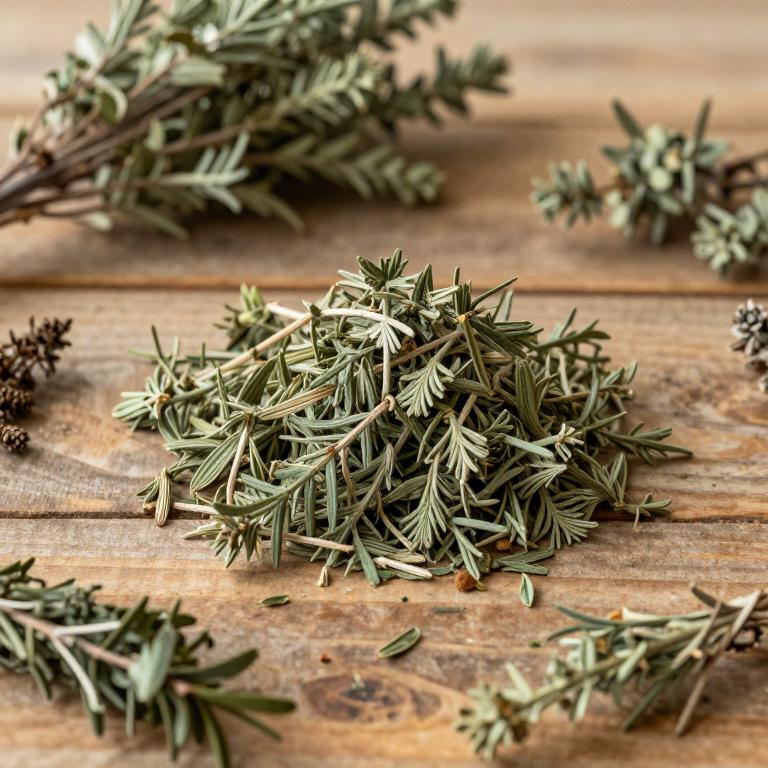
Names and Synonyms
Common Names
- large-berry juniper
- plum juniper
Scientific Names
Accepted name
Juniperus macrocarpaSynonyms
- Juniperus communis var. macrocarpa
- Sabina phoenicea var. lobelii
- Juniperus macrocarpa var. lobelii
- Juniperus oxycedrus var. macrocarpa
- Juniperus sphaerocarpa
- Juniperus lobelii
- Juniperus biasolettii
- Juniperus attica
- Juniperus oxycedrus subsp. macrocarpa
- Juniperus macrocarpa var. globosa
- Juniperus major
- Juniperus oblongata
- Juniperus oxycedrus var. globosa
- Juniperus oxycedrus var. lobelii
- Juniperus umbilicata
- Juniperus macrocarpa var. ellipsoidea
- Juniperus willkommii
Regional and Traditional Names
Spanish:
- enebro marítimo
- enebro marino
German:
- Großfrüchtiger Wacholder
French:
- genévrier à gros cônes
Sources: Wikidata, Catalogue of Life
Taxonomical Classification
This plant belongs to the kingdom Plantae and is classified under the phylum Streptophyta within the class Equisetopsida. It is further organized into the subclass Pinidae and order Pinales, falling under the family Cupressaceae. Finally, it is identified by its specific genus, Juniperus.
| Rank | Classification |
|---|---|
| Kingdom | Plantae |
| Phylum | Streptophyta |
| Class | Equisetopsida |
| Subclass | Pinidae |
| Order | Pinales |
| Family | Cupressaceae |
| Genus | Juniperus |
Sources: The World Checklist of Vascular Plants (WCVP)
Distribution
This plant, known as Juniperus macrocarpa, exhibits a specific distribution across various regions of Southwestern Europe. It can be found growing within the Balearic Islands, which are part of the Baleares archipelago. Additionally, its habitat extends to the island of Corse and the coastal areas of France. The species is also documented in the Mediterranean territory of Sardegna. Finally, its geographical range includes significant populations located throughout Spain.
| Region | Area |
|---|---|
| Southwestern Europe | Baleares |
| Southwestern Europe | Corse |
| Southwestern Europe | France |
| Southwestern Europe | Sardegna |
| Southwestern Europe | Spain |
| Southeastern Europe | Albania |
| Southeastern Europe | Bulgaria |
| Southeastern Europe | Greece |
| Southeastern Europe | Italy |
| Southeastern Europe | Kriti |
Sources: The World Checklist of Vascular Plants (WCVP)
Botanical Identification
Ecology
The ecology of Juniperus macrocarpa is characterized by its adaptation to specific topographical and altitudinal gradients, typically thriving in environments where it can tolerate varying degrees of moisture availability and soil composition. This species occupies a specific niche within its habitat, with an observed elevational range that places it in relatively low-lying areas, featuring an elevational range mean of 61 m AMSL. Such low-altitude positioning suggests an ecological preference for warmer, potentially more arid or semi-arid landscapes, where it often functions as a hardy component of the shrubland or woodland community. Its distribution is closely tied to these lower elevations, where it interacts with local soil chemistry and climatic patterns to establish dominance in its respective ecosystem.
- Elevational range mean:
- 61 m AMSL
Life history
The life history of Juniperus macrocarpa is characterized by its status as a perennial species, allowing it to persist through multiple growing seasons and maintain long-term presence within its ecological niche. As a phanerophyte, the plant's reproductive buds are elevated above the ground level on woody stems, a structural strategy that protects its vital organs from various environmental stressors. This phanerophyte life form ensures that its growth remains robust and structurally integrated, facilitating its development over an extended lifespan within its specific habitat.
- Life form :
- phanerophyte
- Lifecycle :
- perennial
Morphology
The morphology of Juniperus macrocarpa is characterized by a woody growth form, specifically manifesting as a self-supporting shrub. As a terrestrial species, it does not exhibit aquatic or semiaquatic tendencies, nor does it function as an epiphyte. The plant is biologically independent, meaning it does not act as a parasite on other organisms. Its structural development is defined by its woody nature, providing the necessary rigidity to maintain its shrubby habit without the need for climbing or external support.
- Aquatic :
- terrestrial
- Climber :
- self-supporting
- Epiphyte :
- terrestrial
- Growth form :
- shrub
- Parasite :
- independent
- Woodiness :
- woody
Reproduction
The reproduction of Juniperus macrocarpa is characterized by a diverse range of seed characteristics and specialized dispersal mechanisms. The seeds exhibit significant variability in size, with a minimum mass of 0.00855 g, a maximum mass of 0.02826 g, and an average seed mass of approximately 0.018405 g. In terms of its ecological strategy for spreading offspring, the species primarily utilizes a zoochorous dispersal syndrome. This reliance on animal vectors for seed movement is a key component of its reproductive cycle, facilitating the distribution of seeds away from the parent plant to colonize new habitats.
- Dispersal syndrome :
- zoochorous
- Seed mass max:
- 0.02826 g
- Seed mass mean:
- 0.018405 g
- Seed mass min:
- 0.00855 g
Sources: Global Inventory of Floras and Traits (GIFT)
Chemicals
Juniperus macrocarpa has 2 reported phytochemicals identified across 0 scientific publications and several other databases. The most consistently reported chemicals include Flavonoids, polyphenols.
| Chemical | Supporting sources | Consensus |
|---|---|---|
| Flavonoids | 1 supporting sources | ★☆☆☆☆ |
| polyphenols | 1 supporting sources | ★☆☆☆☆ |
Flavonoids
- F1000Research
polyphenols
- F1000Research
Activities
Juniperus macrocarpa has 1 reported activities identified across 0 scientific publications and several other databases. The most consistently reported activities include Antioxidant.
| Activity | Supporting sources | Consensus |
|---|---|---|
| Antioxidant | 1 supporting sources | ★☆☆☆☆ |
Antioxidant
- F1000Research
Preparations
Juniperus macrocarpa has 2 reported preparations identified across 0 scientific publications and several other databases. The most consistently reported preparations include Juniperus macrocarpa extract, aqueous extract.
| Preparation | Supporting sources | Consensus |
|---|---|---|
| Juniperus macrocarpa extract | 1 supporting sources | ★☆☆☆☆ |
| Aqueous extract | 1 supporting sources | ★☆☆☆☆ |
Juniperus macrocarpa extract
- F1000Research
Aqueous extract
- F1000Research