Stinking Juniper
Juniperus foetidissima · Accepted scientific name
Scientific literature: Very Sparse (33 studies) · ★☆☆☆☆
Stinking Juniper, scientifically known as Juniperus foetidissima, is a resilient evergreen shrub native to arid regions of Asia and Africa. Renowned for its distinctive, pungent aroma, this medicinal plant is traditionally utilized in folk medicine to treat various ailments, including skin infections, respiratory issues, and digestive disturbances through its bioactive compounds.
- Family
- Cupressaceae
- Native range
- Europe
- Parts used
- Leaf · Fruit
- Common names
- Stinking Juniper · Twia
- Scientific synonyms
- Sabina Foetidissima · Juniperus Foetidissima F. Squarrosa · 3 more
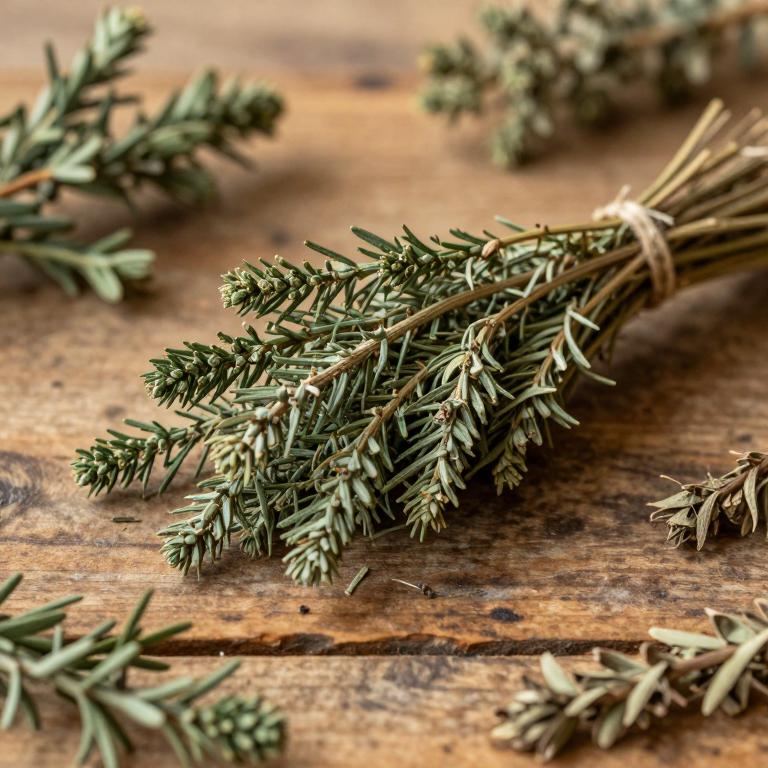
Names and Synonyms
Common Names
- Stinking Juniper
- twia
Scientific Names
Accepted name
Juniperus foetidissimaSynonyms
- Sabina foetidissima
- Juniperus foetidissima f. squarrosa
- Juniperus foetidissima var. pindicola
- Juniperus foetidissima var. squarrosa
- Sabina grisebachii
Regional and Traditional Names
German:
- Stinkender Wacholder
Sources: Wikidata, Catalogue of Life
Taxonomical Classification
This plant belongs to the kingdom Plantae and the phylum Streptophyta within the class Equisetopsida. It is further classified under the subclass Pinidae and order Pinales, falling into the family Cupressaceae. Finally, it is categorized under the genus Juniperus.
| Rank | Classification |
|---|---|
| Kingdom | Plantae |
| Phylum | Streptophyta |
| Class | Equisetopsida |
| Subclass | Pinidae |
| Order | Pinales |
| Family | Cupressaceae |
| Genus | Juniperus |
Sources: The World Checklist of Vascular Plants (WCVP)
Distribution
This plant exhibits a diverse geographical range spanning across several distinct regions. In Southeastern Europe, it can be found growing within the borders of Albania and Greece. Its presence also extends to the northwestern part of the Balkan Peninsula. Moving further east, the species is documented in the Crimea region of Eastern Europe. Finally, its distribution reaches into Central Asia, specifically within Turkmenistan.
| Region | Area |
|---|---|
| Southeastern Europe | Albania |
| Southeastern Europe | Greece |
| Southeastern Europe | NW. Balkan Pen. |
| Eastern Europe | Krym |
| Central Asia | Turkmenistan |
| Caucasus | North Caucasus |
| Caucasus | Transcaucasus |
| Western Asia | Cyprus |
| Western Asia | East Aegean Is. |
| Western Asia | Iran |
Sources: The World Checklist of Vascular Plants (WCVP)
Botanical Identification
Ecology
The ecology of Juniperus foetidissima is characterized by its ability to thrive across a broad altitudinal gradient, spanning from sea level up to an elevation of 1600 m AMSL. This species demonstrates a strong preference for specific edaphic conditions, typically colonizing habitats consisting of sand and stony places. Such environments suggest an adaptation to well-drained, often nutrient-poor or disturbed substrates where it can establish itself amidst rocky or sandy terrain.
- Elevational range max:
- 1600 m AMSL
- Elevational range min:
- 0 m AMSL
- Habitat :
- sand, stony places
Life history
The life history of Juniperus foetidissima is characterized by its status as a perennial species, ensuring its long-term presence within its ecological niche. As a phanerophyte, its regenerative buds are elevated well above the ground, a structural adaptation that defines its life form and allows it to persist through various environmental conditions. This classification as a phanerophyte is consistent across its developmental stages, establishing a robust growth habit that supports its enduring biological cycle.
- Life form :
- phanerophyte
- Lifecycle :
- perennial
Morphology
The morphology of Juniperus foetidissima is characterized by a robust growth form, primarily manifesting as a tree or large shrub. As a woody species, it possesses a sturdy, lignified structure that allows it to remain entirely self-supporting without the need for climbing mechanisms, such as lianas or vines. It is categorized as an independent organism, neither functioning as a parasite nor as an epiphyte, as it maintains a strictly terrestrial existence. Its physiological development is suited for land-based environments, lacking any aquatic or semiaquatic adaptations.
- Aquatic :
- terrestrial
- Climber :
- self-supporting
- Epiphyte :
- terrestrial
- Growth form :
- tree
- Parasite :
- independent
- Woodiness :
- woody
Physiology
The physiology of Juniperus foetidissima is characterized by specialized metabolic and structural adaptations that allow it to thrive in arid and semi-arid environments. Centrally, the plant utilizes a C3 photosynthetic pathway, a characteristic common among many gymnosperms, which involves the direct fixation of atmospheric carbon dioxide through the enzyme RuBisCO during the Calvin cycle. To mitigate the inherent water loss associated with this pathway in high-temperature or low-moisture habitats, the plant employs several physiological mechanisms, including the regulation of stomatal conductance and the maintenance of high osmotic potential within its tissues. Its physiological resilience is further supported by a robust cuticle and needle-like leaf morphology, which reduce transpiration rates while maintaining the metabolic efficiency required for carbon assimilation via its C3 mechanism.
- Photosynthetic pathway :
- C3
Reproduction
Reproduction in Juniperus foetidissima involves the production of specialized seeds that are characterized by a very specific and consistent mass profile. Based on empirical data, the seed mass exhibits no variance, with a mean, maximum, and minimum value all strictly recorded at 0.25641 g. This uniformity in seed mass suggests a highly stabilized reproductive output within the species, ensuring that each individual seed carries a standardized amount of nutrient reserves essential for the development of the next generation.
- Seed mass mean:
- 0.25641 g
Sources: Global Inventory of Floras and Traits (GIFT)
Plant Parts
Juniperus foetidissima has 2 reported plant parts identified across 8 scientific publications and several other databases that are studied for medicinal purposes. The most consistently reported plant part include leaf, fruit.
| Plant part | Supporting sources | Consensus |
|---|---|---|
| Leaf | 5 supporting sources | ★★★☆☆ |
| Fruit | 3 supporting sources | ★★☆☆☆ |
Leaf
- Journal of food science
- Natural product communications
- Molecules (Basel, Switzerland)
- Pharmaceutical biology
- Evidence-based complementary and alternative medicine : eCAM
Fruit
- Journal of food science
- Molecules (Basel, Switzerland)
- Evidence-based complementary and alternative medicine : eCAM
Chemicals
Juniperus foetidissima has 12 reported phytochemicals identified across 8 scientific publications and several other databases. The most consistently reported chemicals include (-)-Catechin, ALPHA-PINENE, CAMPHENE, Cupressuflavone, Delta-3-Carene.
| Chemical | Supporting sources | Consensus |
|---|---|---|
| (-)-Catechin | 1 supporting sources | ★☆☆☆☆ |
| ALPHA-PINENE | 1 supporting sources | ★☆☆☆☆ |
| CAMPHENE | 1 supporting sources | ★☆☆☆☆ |
| Cupressuflavone | 1 supporting sources | ★☆☆☆☆ |
| Delta-3-Carene | 1 supporting sources | ★☆☆☆☆ |
| Hinokiflavone | 1 supporting sources | ★☆☆☆☆ |
| ISOPIMARIC ACID | 1 supporting sources | ★☆☆☆☆ |
| Imbricatolic Acid | 1 supporting sources | ★☆☆☆☆ |
| SUGIOL | 1 supporting sources | ★☆☆☆☆ |
| Sesquiterpenes | 1 supporting sources | ★☆☆☆☆ |
(-)-Catechin
- Pakistan journal of pharmaceutical sciences
ALPHA-PINENE
- Journal of the science of food and agriculture
CAMPHENE
- Molecules (Basel, Switzerland)
Cupressuflavone
- Pakistan journal of pharmaceutical sciences
Delta-3-Carene
- Journal of the science of food and agriculture
Hinokiflavone
- Pakistan journal of pharmaceutical sciences
ISOPIMARIC ACID
- Pakistan journal of pharmaceutical sciences
Imbricatolic Acid
- Pakistan journal of pharmaceutical sciences
SUGIOL
- Pakistan journal of pharmaceutical sciences
Sesquiterpenes
- Natural product research
Activities
Juniperus foetidissima has 5 reported activities identified across 8 scientific publications and several other databases. The most consistently reported activities include Antioxidant, Cytotoxic, Analgesic, Antimicrobial, Hepatoprotective.
| Activity | Supporting sources | Consensus |
|---|---|---|
| Antioxidant | 3 supporting sources | ★★☆☆☆ |
| Cytotoxic | 2 supporting sources | ★☆☆☆☆ |
| Analgesic | 1 supporting sources | ★☆☆☆☆ |
| Antimicrobial | 1 supporting sources | ★☆☆☆☆ |
| Hepatoprotective | 1 supporting sources | ★☆☆☆☆ |
Antioxidant
- Molecules (Basel, Switzerland)
- Natural product research
- Journal of the science of food and agriculture
Cytotoxic
- Molecules (Basel, Switzerland)
- Natural product research
Analgesic
- Journal of ethnopharmacology
Antimicrobial
- Journal of the science of food and agriculture
Hepatoprotective
- Pakistan journal of pharmaceutical sciences
Preparations
Juniperus foetidissima has 9 reported preparations identified across 8 scientific publications and several other databases. The most consistently reported preparations include essential oils, Methanol extract of fruits, Methanol extract of leaves, berries, chloroform fraction.
| Preparation | Supporting sources | Consensus |
|---|---|---|
| Essential oils | 2 supporting sources | ★☆☆☆☆ |
| Methanol extract of fruits | 1 supporting sources | ★☆☆☆☆ |
| Methanol extract of leaves | 1 supporting sources | ★☆☆☆☆ |
| Berries | 1 supporting sources | ★☆☆☆☆ |
| Chloroform fraction | 1 supporting sources | ★☆☆☆☆ |
| Essential oil | 1 supporting sources | ★☆☆☆☆ |
| Leaves | 1 supporting sources | ★☆☆☆☆ |
| Methanol fraction | 1 supporting sources | ★☆☆☆☆ |
| Petroleum ether fraction | 1 supporting sources | ★☆☆☆☆ |
Essential oils
- Natural product research
- Molecules (Basel, Switzerland)
Methanol extract of fruits
- Evidence-based complementary and alternative medicine : eCAM
Methanol extract of leaves
- Evidence-based complementary and alternative medicine : eCAM
Berries
- Journal of food science
Chloroform fraction
- Pakistan journal of pharmaceutical sciences
Essential oil
- Natural product communications
Leaves
- Journal of food science
Methanol fraction
- Pakistan journal of pharmaceutical sciences
Petroleum ether fraction
- Pakistan journal of pharmaceutical sciences