Arceuthos drupacea
Juniperus drupacea · Accepted scientific name
Scientific literature: Very Sparse (8 studies) · ★☆☆☆☆
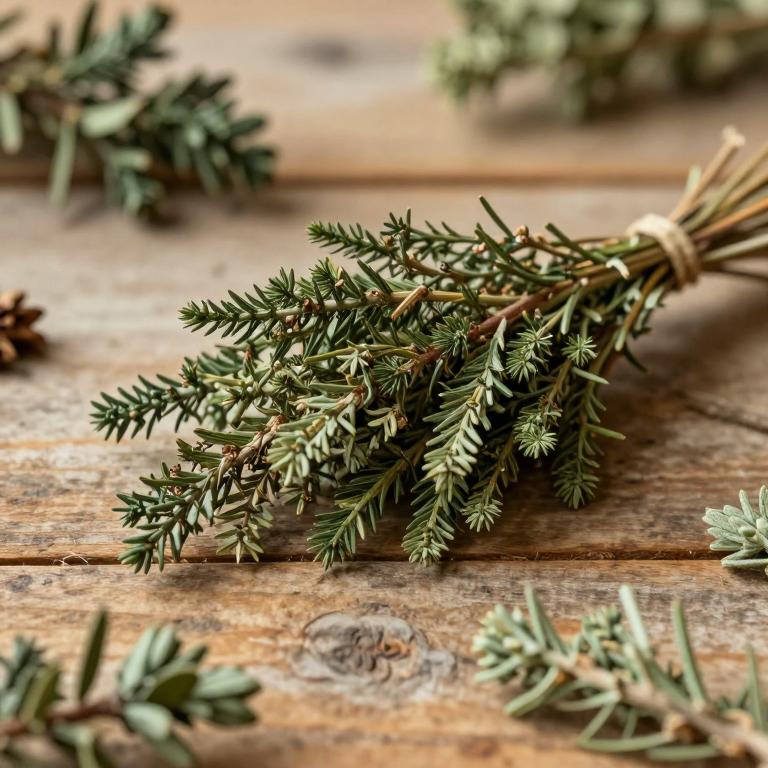
Arceuthos drupacea, scientifically known as Juniperus drupacea, is a resilient evergreen shrub native to the Mediterranean. Valued for its aromatic foliage and berry-like cones, it holds significant ethnobotanical importance. Historically utilized in traditional medicine, this species offers unique phytochemical properties that continue to interest researchers studying natural therapeutic compounds.
- Family
- Cupressaceae
- Native range
- Europe
- Parts used
- Fruit
- Common names
- Syrian Juniper · Andys
- Scientific synonyms
- Arceuthos Drupacea
Names and Synonyms
Common Names
- Syrian Juniper
- andys
Scientific Names
Accepted name
Juniperus drupaceaSynonyms
- Arceuthos drupacea
Regional and Traditional Names
Spanish:
- Enebro de Siria
- enebro sirio
German:
- Syrischer Wacholder
- Arceuthos drupacea
- Syrischer Wacholder
French:
- Genévrier de Syrie
- Genevrier de Syrie
- genévrier à drupes
Sources: Wikidata, Catalogue of Life
Taxonomical Classification
This plant belongs to the kingdom Plantae and the phylum Streptophyta, falling under the class Equisetopsida and subclass Pinidae. Within the order Pinales and the family Cupressaceae, it is classified under the genus Juniperus. Specifically, it is identified as the species Juniperus drupacea.
| Rank | Classification |
|---|---|
| Kingdom | Plantae |
| Phylum | Streptophyta |
| Class | Equisetopsida |
| Subclass | Pinidae |
| Order | Pinales |
| Family | Cupressaceae |
| Genus | Juniperus |
Sources: The World Checklist of Vascular Plants (WCVP)
Distribution
This plant, known as Juniperus drupacea, exhibits a specific geographical range across several distinct regions. In Southeastern Europe, it can be found growing within the territory of Greece. Its distribution extends further into Western Asia, where it is present in Lebanon and Syria. Additionally, the species is widely documented throughout Western Asia in Türkiye. These locations highlight the Mediterranean and Middle Eastern habitats essential for its survival.
| Region | Area |
|---|---|
| Southeastern Europe | Greece |
| Western Asia | Lebanon-Syria |
| Western Asia | Türkiye |
Sources: The World Checklist of Vascular Plants (WCVP)
Botanical Identification
Life history
The life history of Juniperus drupacea is characterized by its nature as a perennial species, ensuring its long-term presence within its ecological niche. As a phanerophyte, the plant maintains its photosynthetic organs on elevated stems above the ground level, a structural adaptation that defines its life form. Specifically, its growth habit aligns with the classification of a phanerophyte, indicating a robust developmental strategy that allows it to persist through multiple growing seasons.
- Life form :
- phanerophyte
- Lifecycle :
- perennial
Morphology
The morphology of Juniperus drupacea is characterized by its distinct growth form as a woody tree, standing as a robust and self-supporting structure. As a terrestrial species, it does not exhibit aquatic, semiaquatic, or epiphytic tendencies, nor does it function as a climber, whether as a liana, vine, or facultative or obligatory climber; instead, it remains a fully self-supporting organism. Furthermore, the plant is biologically independent, showing no parasitic behavior, and possesses a permanent woody constitution that supports its arborescent development.
- Aquatic :
- terrestrial
- Climber :
- self-supporting
- Epiphyte :
- terrestrial
- Growth form :
- tree
- Parasite :
- independent
- Woodiness :
- woody
Physiology
The physiology of Juniperus drupacea is characterized by a specialized metabolic framework adapted to its environmental niche, most notably through its photosynthetic pathway, which follows the C3 mechanism. As a C3 plant, its carbon fixation process occurs via the Calvin cycle, where the enzyme RuBisCO facilitates the initial carboxylation of CO2 to form 3-phosphoglycerate. This metabolic strategy is typical of many gymnosperms, relying on the efficient capture of light energy to drive the production of carbohydrates, although it necessitates careful physiological regulation to manage transpiration and water loss in potentially arid or Mediterranean-type climates. Beyond its carbon fixation method, the plant's physiological efficiency is further supported by its structural adaptations, which allow it to maintain metabolic homeostasis and optimize gas exchange through its scale-like foliage.
- Photosynthetic pathway :
- C3
Sources: Global Inventory of Floras and Traits (GIFT)
Plant Parts
Juniperus drupacea has 1 reported plant parts identified across 1 scientific publications and several other databases that are studied for medicinal purposes. The most consistently reported plant part include fruit.
| Plant part | Supporting sources | Consensus |
|---|---|---|
| Fruit | 1 supporting sources | ★☆☆☆☆ |
Fruit
- Food science & nutrition
Chemicals
Juniperus drupacea has 4 reported phytochemicals identified across 1 scientific publications and several other databases. The most consistently reported chemicals include CATECHIN, IRON, POTASSIUM, sugar.
| Chemical | Supporting sources | Consensus |
|---|---|---|
| CATECHIN | 1 supporting sources | ★☆☆☆☆ |
| IRON | 1 supporting sources | ★☆☆☆☆ |
| POTASSIUM | 1 supporting sources | ★☆☆☆☆ |
| sugar | 1 supporting sources | ★☆☆☆☆ |
CATECHIN
- Food science & nutrition
IRON
- Food science & nutrition
POTASSIUM
- Food science & nutrition
sugar
- Food science & nutrition
Conditions
Juniperus drupacea has 1 reported investigations on conditions identified across 1 scientific publications and several other databases. The most consistently reported conditions include pinworms.
| Condition | Supporting sources | Consensus |
|---|---|---|
| Pinworms | 1 supporting sources | ★☆☆☆☆ |
Pinworms
- Journal of ethnopharmacology
Preparations
Juniperus drupacea has 2 reported preparations identified across 1 scientific publications and several other databases. The most consistently reported preparations include molasses, tar.
| Preparation | Supporting sources | Consensus |
|---|---|---|
| Molasses | 1 supporting sources | ★☆☆☆☆ |
| Tar | 1 supporting sources | ★☆☆☆☆ |
Molasses
- Food science & nutrition
Tar
- Food science & nutrition