alligator juniper
Juniperus deppeana var. deppeana · Accepted scientific name
Scientific literature: Very Sparse (6 studies) · ★☆☆☆☆
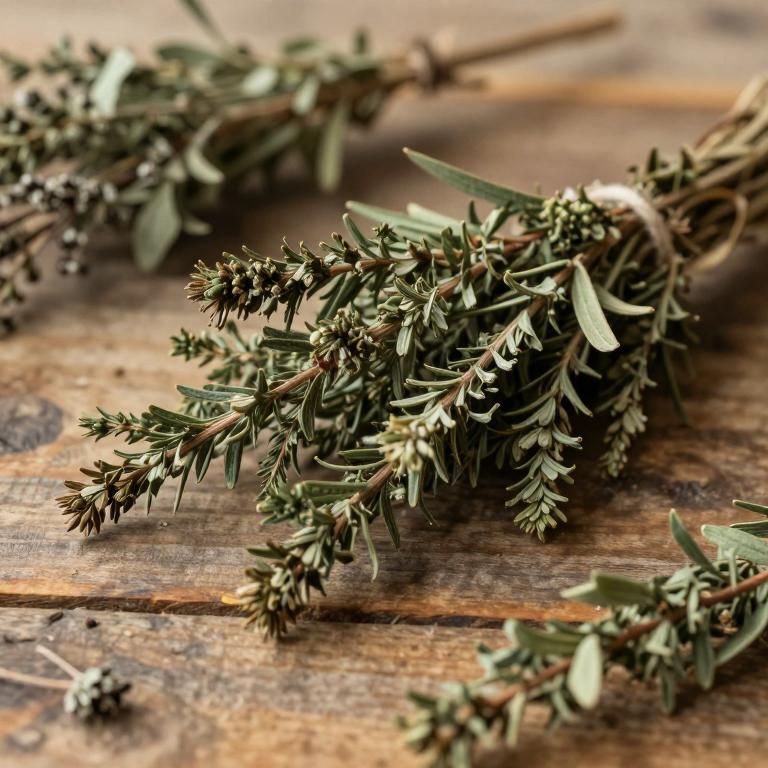
Alligator juniper, scientifically known as Juniperus depapeana var. depapeana, is a resilient evergreen shrub native to the arid landscapes of the American Southwest. Renowned for its rugged, alligator-like bark, this hardy plant plays a vital role in desert ecosystems, offering medicinal potential and providing essential habitat for wildlife.
Names and Synonyms
Common Names
- alligator juniper
- checker-bark juniper
- western juniper
Scientific Names
Accepted name
Juniperus deppeana var. deppeanaSynonyms
- Juniperus deppeana subsp. sperryi
- Juniperus deppeana f. sperryi
- Juniperus deppeana var. pachyphlaea
- Sabina pachyphlaea
- Sabina gigantea
- Juniperus deppeana subsp. pachyphlaea
- Juniperus deppeana var. sperryi
- Juniperus deppeana f. elongata
- Juniperus foetida
- Juniperus pachyphlaea
- Juniperus gigantea
- Juniperus foetida var. multicaulis
- Juniperus pachyphlaea f. ericoides
Regional and Traditional Names
Spanish:
- cedro chino
- Táscate
Sources: Wikidata, Catalogue of Life
Taxonomical Classification
This plant belongs to the kingdom Plantae and is classified within the phylum Streptophyta and class Equisetopsida. It falls under the subclass Pinidae and order Pinales, eventually reaching the family Cupressaceae. Within this lineage, it is specifically identified by the genus Juniperus.
| Rank | Classification |
|---|---|
| Kingdom | Plantae |
| Phylum | Streptophyta |
| Class | Equisetopsida |
| Subclass | Pinidae |
| Order | Pinales |
| Family | Cupressaceae |
| Genus | Juniperus |
Sources: The World Checklist of Vascular Plants (WCVP)
Distribution
This plant exhibits a specific range across the North American landscape. In the Southwestern United States, it can be found within the state of Arizona. Moving toward the South-Central United States, its distribution extends through New Mexico and Texas. The species also reaches into Mexico, specifically covering the central regions of the country. Finally, its presence is noted throughout the northeastern part of Mexico as well.
| Region | Area |
|---|---|
| Southwestern U.S.A. | Arizona |
| South-Central U.S.A. | New Mexico |
| South-Central U.S.A. | Texas |
| Mexico | Mexico Central |
| Mexico | Mexico Northeast |
| Mexico | Mexico Gulf |
| Mexico | Mexico Northwest |
| Mexico | Mexico Southwest |
Sources: The World Checklist of Vascular Plants (WCVP)
Chemicals
Juniperus deppeana var. deppeana has 4 reported phytochemicals identified across 0 scientific publications and several other databases. The most consistently reported chemicals include 2,2'-Thiobis(6-tert-butyl-p-cresol), ellagic acid, kaempferol, quercetin.
| Chemical | Supporting sources | Consensus |
|---|---|---|
| 2,2'-Thiobis(6-tert-butyl-p-cresol) | 1 supporting sources | ★☆☆☆☆ |
| ellagic acid | 1 supporting sources | ★☆☆☆☆ |
| kaempferol | 1 supporting sources | ★☆☆☆☆ |
| quercetin | 1 supporting sources | ★☆☆☆☆ |
2,2'-Thiobis(6-tert-butyl-p-cresol)
- Chemistry & biodiversity
ellagic acid
- Journal of ethnopharmacology
kaempferol
- Journal of ethnopharmacology
quercetin
- Journal of ethnopharmacology
Activities
Juniperus deppeana var. deppeana has 2 reported activities identified across 0 scientific publications and several other databases. The most consistently reported activities include Analgesic, Antinociceptive.
| Activity | Supporting sources | Consensus |
|---|---|---|
| Analgesic | 1 supporting sources | ★☆☆☆☆ |
| Antinociceptive | 1 supporting sources | ★☆☆☆☆ |
Analgesic
- Journal of ethnopharmacology
Antinociceptive
- Journal of ethnopharmacology