Juniperus chinensis var. sargentii
Juniperus chinensis var. sargentii · Accepted scientific name
Scientific literature: Very Sparse (0 studies) · ★☆☆☆☆
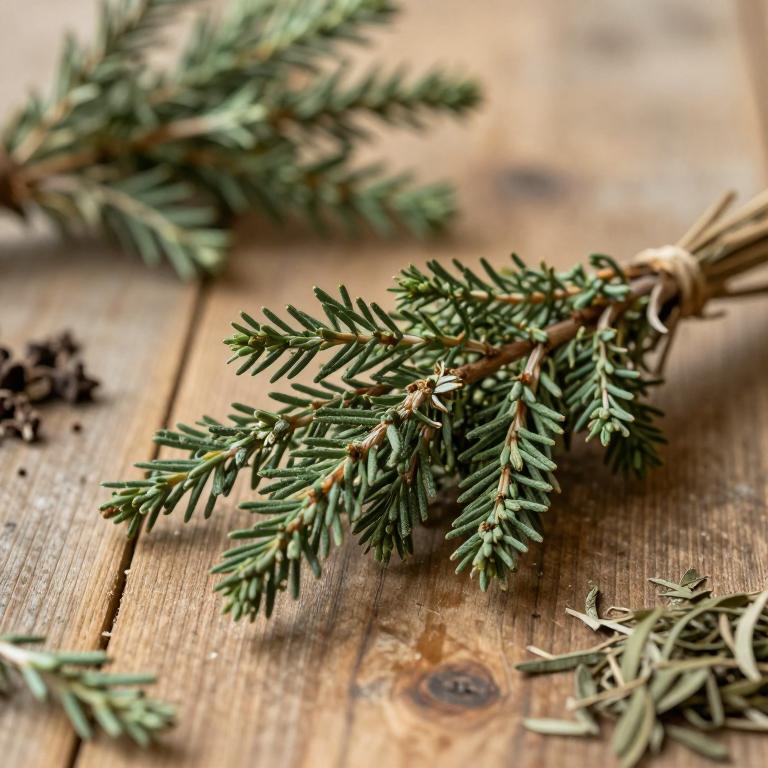
Juniperus chinensis var. sargentii is a distinctive evergreen cultivar celebrated for its unique architectural form and hardy nature. Often utilized in ornamental landscaping, this plant adds texture and year-round color to various garden environments. Beyond its aesthetic appeal, it holds significant value in the realm of botanical extractions. Specifically, it is a prized source for the production of specialized essential oils used in various applications. These aromatic oils capture the essence of the plant, offering unique properties for both therapeutic and fragrance purposes.
- Synonyms
- Juniperus Sargentii · Sabina Chinensis Var. Sargentii · 3 more
- Common names
- Not available
- Family
- Cupressaceae
- Distribution
- Southern America
- Plant Parts
- Not available
Classification
Common Names
Juniperus chinensis var. sargentii is a versatile evergreen known by several different names across various cultures. In English-speaking regions, it is most frequently referred to as the Sargent Juniper or Sargent's Juniper. Those familiar with Korean nomenclature may recognize the plant as Nun-hyang-na-mu. Meanwhile, it is identified as Miyama-byakushin within Japanese botanical contexts. Finally, the variety is also known as Sargenti kadakas in certain linguistic traditions.
Sources: Catalogue of Life (COL)
Synonyms
Juniperus chinensis var. sargentii is a complex botanical subject that is recognized by several different scientific names. Within taxonomic literature, it is frequently identified by the synonyms Juniperus chinensis subsp. sargentii and Juniperus sargentii. Researchers also encounter this plant under the names Sabina chinensis var. sargentii and Sabina sargentii. Furthermore, the designation Sabina pacifica is often used interchangeably in various botanical contexts. Navigating these overlapping synonyms is essential for ensuring accurate identification and classification of the species.
Sources: The World Checklist of Vascular Plants (WCVP)
Taxonomy
Juniperus chinensis var. sargentii belongs to the vast kingdom Plantae, representing a diverse group of multicellular organisms. Within this kingdom, the plant is classified under the class Equisetopsida, which distinguishes its fundamental biological structure. It further falls into the order Pinales, a group known for its significant coniferous members. As a member of the family Cupressaceae, it shares characteristics with many other cypress-like species. Finally, this specific variety is nested within the genus Juniperus, defining its unique botanical identity.
| Rank | Classification |
|---|---|
| Kingdom | Plantae |
| Phylum | Streptophyta |
| Class | Equisetopsida |
| Subclass | Pinidae |
| Order | Pinales |
| Family | Cupressaceae |
| Genus | Juniperus |
Sources: The World Checklist of Vascular Plants (WCVP)
Distribution
Geographic Regions
Juniperus chinensis var. sargentii is a resilient species with a broad distribution across the Asia-Temperate region. Its natural range extends through various parts of China, including the Manchuria area, and reaches into Eastern Asia via Japan and Korea. The plant is also well-established in the Russian Far East, specifically within the Khabarovsk territory. Furthermore, its presence can be traced to the Kuril Islands, demonstrating its ability to thrive in diverse coastal and inland environments. This wide geographic spread highlights the adaptability of the variety across the diverse landscapes of East Asia.
Sources: The World Checklist of Vascular Plants (WCVP)
Identification
Biological Activities
Compounds
Conditions
Juniperus chinensis var. sargentii essential oils demonstrate significant potential as anti-oxidative agents for skin health. These oils effectively treat skin aging by acting as anti-wrinkling agents through the upregulation of extracellular matrix proteins. Research indicates that the plant helps treat cell proliferation and migration, which is essential for tissue repair. Furthermore, the oil treats the contractile activity of skin cells as evidenced in a three-dimensional gel contraction assay. Finally, the application of this plant is shown to treat and significantly enhance fibroblast viability.
Preparations
Juniperus chinensis var. sargentii is prepared as essential oils to serve as major ingredients in the medical and cosmetic industries. These specific oils have been shown to significantly enhance fibroblast viability and increase cell proliferation and migration. Furthermore, the oil derived from this plant upregulates the expression of key extracellular matrix proteins such as collagen 1, collagen 3, and elastin. Its ability to enhance the contractile activity of skin cells suggests it is a potent candidate for dermatological applications. Consequently, the essential oil of Juniperus chinensis var. sargentii holds great potential as an anti-wrinkling and anti-oxidative agent.