compact rush
Juncus conglomeratus · Accepted scientific name
Scientific literature: Very Sparse (2 studies) · ★☆☆☆☆
Compact rush, scientifically known as Juncus conglomeratus, is a resilient perennial herb found in various wetland habitats. Valued in traditional medicine, this plant possesses unique bioactive properties used to treat diverse ailments. Understanding its botanical characteristics and therapeutic potential offers vital insights into its role in natural pharmacology.
- Family
- Juncaceae
- Native range
- Europe
- Parts used
- Not available
- Common names
- Compact Rush
- Scientific synonyms
- Juncus Conglomeratus Subsp. Subuliflorus · Juncus Leersii F. Subuliflorus · 30 more
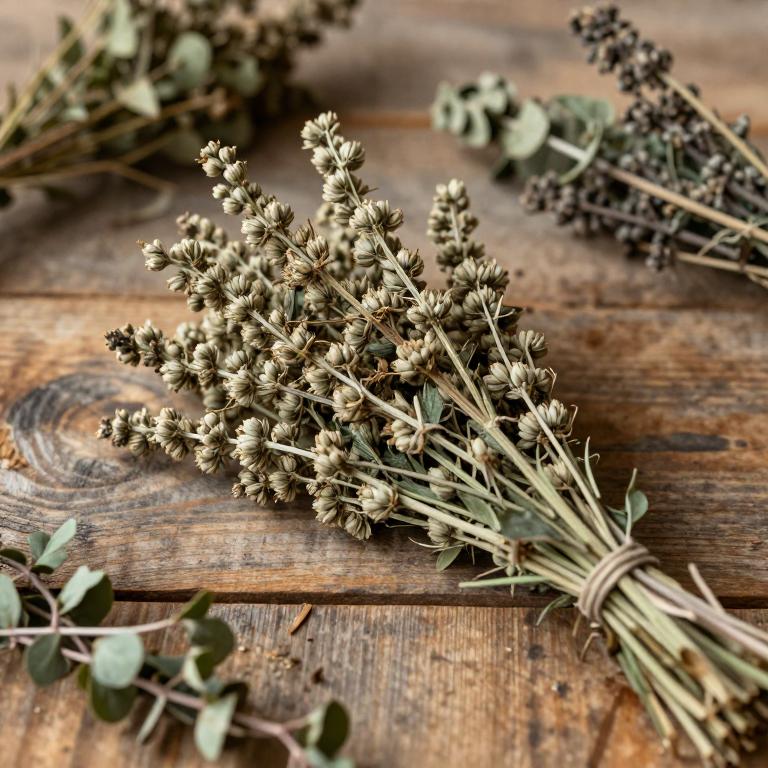
Names and Synonyms
Common Names
- compact rush
Scientific Names
Accepted name
Juncus conglomeratusSynonyms
- Juncus conglomeratus subsp. subuliflorus
- Juncus leersii f. subuliflorus
- Agathryon conglomeratum
- Tristemon conglomeratus
- Juncus subuliflorus
- Tristemon glomeratus
- Juncus effusus subsp. subuliflorus
- Juncus laevis var. conglomeratus
- Juncus subuliflorus f. laxus
- Juncus effusus var. subuliflorus
- Juncus leersii
- Juncus subuliflorus f. leersii
- Juncus leersii var. laxus
- Juncus subuliflorus f. praeflorens
- Juncus leersii var. praeflorens
- Juncus leersii var. subuliflorus
- Juncus leersii var. viridiflorus
- Juncus leersii f. viridiflorus
- Juncus conglomeratus subuliflorus
- Juncus conglomeratus umbrosus
- Juncus conglomeratus var. umbrosus
- Juncus conglomeratus viridiflorus
- Juncus effusus var. conglomeratus
- Juncus effusus f. conglomeratus
- Juncus effusus subsp. conglomeratus
- Juncus communis subvar. viridiflorus
- Juncus communis var. conglomeratus
- Juncus communis subsp. conglomeratus
- Juncus communis proles conglomeratus
- Juncus conglomeratus var. altissimus
- Juncus effusus f. conglomeratus
- Juncus conglomeratus var. ingens
Regional and Traditional Names
German:
- Knäuel-Binse
- Jonc Aggloméré
- Knäuel-Binse
- Knaeuel-Binse
- Knäuelbinse
French:
- jonc aggloméré
- jonc aggloméré
- Jonc agglomere
Sources: Wikidata, Catalogue of Life
Taxonomical Classification
This plant belongs to the kingdom Plantae and is classified within the phylum Streptophyta. It falls under the class Equisetopsida and the subclass Magnoliidae, following the order Poales. Finally, it is categorized under the family Juncaceae and the genus Juncus.
| Rank | Classification |
|---|---|
| Kingdom | Plantae |
| Phylum | Streptophyta |
| Class | Equisetopsida |
| Subclass | Magnoliidae |
| Order | Poales |
| Family | Juncaceae |
| Genus | Juncus |
Sources: The World Checklist of Vascular Plants (WCVP)
Distribution
This plant exhibits a specific geographical distribution concentrated within the regions of Northern Europe. It can be found growing in the coastal and terrestrial habitats of Denmark and Finland. Its presence extends further west to the islands of Føroyar. Additionally, the species is documented across the landscape of Great Britain. Finally, its range includes the emerald terrains of Ireland.
| Region | Area |
|---|---|
| Northern Europe | Denmark |
| Northern Europe | Finland |
| Northern Europe | Føroyar |
| Northern Europe | Great Britain |
| Northern Europe | Ireland |
| Northern Europe | Norway |
| Northern Europe | Sweden |
| Middle Europe | Austria |
| Middle Europe | Belgium |
| Middle Europe | Czechia-Slovakia |
Sources: The World Checklist of Vascular Plants (WCVP)
Botanical Identification
Ecology
The ecology of Juncus conglomeratus is characterized by its specific preference for the "Campo Limpo" habitat, a type of open grassland or clean field environment. In these ecosystems, the plant thrives in open, sun-exposed areas where there is minimal canopy cover, allowing for high light availability necessary for its growth cycles. This habitat typically provides a specific balance of soil moisture and nutrient availability that supports its structural development within the grassy landscape. By occupying these open fields, Juncus conglomeratus plays a role in the local vegetative architecture, contributing to the biodiversity of the grassland community through its presence in these specialized ecological niches.
- Habitat :
- Campo Limpo
Life history
The life history of Juncus conglomeratus is characterized by a perennial lifecycle, allowing the plant to persist across multiple growing seasons. It functions as a hemicryptophyte, a life form where the perennating buds are located at or just below the soil surface, protected by leaf litter or ground cover. Furthermore, this species exhibits a deciduous nature, shedding its foliage during unfavorable seasonal periods as part of its survival strategy.
- Deciduousness :
- deciduous
- Life form :
- hemicryptophyte
- Lifecycle :
- perennial
Morphology
The morphology of Juncus conglomeratus is characterized by a graminoid growth form, functioning as a non-woody herb. This plant is terrestrial in its habitat and does not exhibit epiphytic or parasitic behavior, growing as an independent organism. In terms of stature, it is a relatively low-growing species with a plant height that ranges from a minimum of 0.2 m to a maximum of 1 m, maintaining an average height of approximately 0.61 m. Furthermore, the plant is self-supporting in its structure, lacking the climbing characteristics of vines or lianas.
- Aquatic :
- terrestrial
- Climber :
- self-supporting
- Epiphyte :
- terrestrial
- Growth form :
- herb
- Growth form :
- graminoid
- Parasite :
- independent
- Plant height max:
- 1 m
- Plant height mean:
- 0.61 m
- Plant height min:
- 0.2 m
- Woodiness :
- non-woody
Physiology
The physiology of Juncus conglomeratus is characterized by a C3 photosynthetic pathway, indicating a standard carbon fixation process typical of many temperate wetland species. Morphologically, its foliage exhibits highly specialized dimensions, with a mean leaf size of 23.93 cm² and a remarkably narrow profile, maintaining a consistent mean, minimum, and maximum leaf width of 0.3 cm. The plant's resource acquisition strategy is strictly non-carnivorous, relying on traditional nutrient uptake through its root system rather than the digestion of organic matter. This is further supported by the fact that it is not a nitrogen fixer, meaning it lacks the biological mechanisms to convert atmospheric nitrogen into usable forms. Additionally, its Specific Leaf Area (SLA) has a mean value of 49 cm²/g, reflecting the structural density and efficiency of its leaf tissue in relation to its biomass.
- Carnivory :
- non-carnivorous
- Leaf size mean:
- 23.93 cm²
- Leaf width mean:
- 0.3 cm
- Nitrogen fixer :
- no
- Photosynthetic pathway :
- C3
- Specific Leaf Area (SLA) mean:
- 49 cm²/g
Reproduction
The reproduction of Juncus conglomeratus is primarily sexual, characterized by bisexual flowers that facilitate genetic diversity. The flowering period typically begins in May and concludes in July. The plant utilizes an abiotic pollination syndrome, specifically relying on wind for the transfer of pollen. Self-fertilization is absent in this species, necessitating cross-pollination. Following successful fertilization, the plant produces fruit in the form of a capsule, which is dehiscent, meaning it splits open at maturity to release its contents. The fruit is relatively small, with a mean length of 0.2 cm, and each fruit is prolific, containing more than 1,000 seeds. These seeds are extremely minute, with a mean mass of $2.04 \times 10^{-5}$ g, ranging from a minimum of $1 \times 10^{-5}$ g to a maximum of $6 \times 10^{-5}$ g. Regarding seed dispersal, the species exhibits an unspecialized syndrome, though it also demonstrates epizoochorous traits, allowing seeds to be transported via animals. Asexual reproduction is absent in this plant.
- Dehiscence :
- dehiscent
- Dispersal syndrome :
- unspecialized
- Dispersal syndrome :
- epizoochorous
- Flowering time :
- May
- Flowering time :
- Jul
- Fruit length mean:
- 0.2 cm
- Fruit type :
- capsule
- Pollination syndrome :
- wind
- Pollination syndrome :
- abiotic
- Reproduction asexual :
- absent
- Reproduction sexual :
- bisexual
- Seed mass max:
- 6e-05 g
- Seed mass mean:
- 2.04e-05 g
- Seed mass min:
- 1e-05 g
- Seeds_per_fruit :
- >1000
- Self fertilization :
- absent
Sources: Global Inventory of Floras and Traits (GIFT)
Chemicals
Juncus conglomeratus has 1 reported phytochemicals identified across 0 scientific publications and several other databases. The most consistently reported chemicals include Flavonoid.
| Chemical | Supporting sources | Consensus |
|---|---|---|
| Flavonoid | 1 supporting sources | ★☆☆☆☆ |
Flavonoid
- BMC chemistry
Conditions
Juncus conglomeratus has 1 reported investigations on conditions identified across 0 scientific publications and several other databases. The most consistently reported conditions include infectious disease.
| Condition | Supporting sources | Consensus |
|---|---|---|
| Infectious disease | 1 supporting sources | ★☆☆☆☆ |
Infectious disease
- BMC chemistry
Preparations
Juncus conglomeratus has 2 reported preparations identified across 0 scientific publications and several other databases. The most consistently reported preparations include chloroformic extracts, methanolic extracts.
| Preparation | Supporting sources | Consensus |
|---|---|---|
| Chloroformic extracts | 1 supporting sources | ★☆☆☆☆ |
| Methanolic extracts | 1 supporting sources | ★☆☆☆☆ |
Chloroformic extracts
- BMC chemistry
Methanolic extracts
- BMC chemistry