Jatropha vernicosa
Jatropha vernicosa · Accepted scientific name
Scientific literature: Very Sparse (7 studies) · ★☆☆☆☆
scientifically known as Jatrophas vernicosa, is a versatile medicinal shrub renowned for its diverse therapeutic properties. Often found in tropical regions, this plant is traditionally utilized in various cultures to treat skin ailments, inflammation, and digestive issues. Its bioactive compounds offer significant potential for modern pharmacological research and development.
- Family
- Euphorbiaceae
- Native range
- Northern America
- Parts used
- Stem
- Common names
- Not available
- Scientific synonyms
- Not available
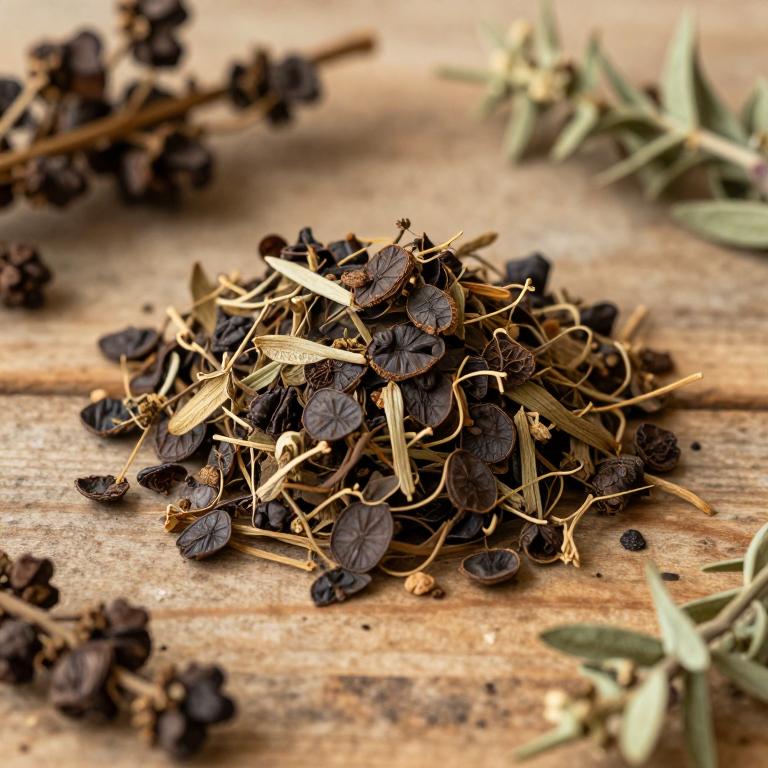
Names and Synonyms
Scientific Names
Accepted name
Jatropha vernicosaRegional and Traditional Names
Spanish:
- Lomboi Colorado
- Lombol
- Sangre de Agudo
- Sangregrado
- limboy colorado
Sources: Wikidata, Catalogue of Life
Taxonomical Classification
This plant belongs to the kingdom Plantae and is classified under the phylum Streptophyta and class Equisetopsida. Within the subclass Magnoliidae, it is organized under the order Malpighiales and the family Euphorbiaceae. Finally, it is identified by its specific genus, Jatropha.
| Rank | Classification |
|---|---|
| Kingdom | Plantae |
| Phylum | Streptophyta |
| Class | Equisetopsida |
| Subclass | Magnoliidae |
| Order | Malpighiales |
| Family | Euphorbiaceae |
| Genus | Jatropha |
Sources: The World Checklist of Vascular Plants (WCVP)
Distribution
This plant is primarily found within the specific geographical regions of Mexico. Its documented distribution is concentrated in the northwestern part of the country. Within this area, it thrives in the unique environmental conditions offered by the Mexican landscape. Researchers and botanists focus their studies on these particular northwestern territories to locate the species. Consequently, the Northwest Mexican region serves as a key habitat for this medicinal plant.
| Region | Area |
|---|---|
| Mexico | Mexico Northwest |
Sources: The World Checklist of Vascular Plants (WCVP)
Botanical Identification
Life history
The life history of Jatropha vernicosa is characterized by its growth strategy as a phanerophyte, maintaining its perennial vegetative structures well above the ground level. Within its ecological niche, the species exhibits a life form classification that includes elements of both phanerophyte and nanophanerophyte traits, depending on its developmental stage and environmental conditions. As a phanerophyte, it establishes a robust, woody framework that allows it to endure seasonal fluctuations, while its growth habit can occasionally reflect nanophanerophytic characteristics in more stunted or shrub-like presentations. This life history enables the plant to persist through various climatic cycles, utilizing its elevated buds and stems to navigate competitive light environments and survive periodic stressors.
- Life form :
- nanophanerophyte
- Life form :
- phanerophyte
Morphology
The morphology of Jatropha vernicosa is characterized by its distinct growth habit and structural composition. It functions as a terrestrial plant, existing outside of aquatic or semiaquatic environments. The plant exhibits a self-supporting growth form, lacking the climbing mechanisms found in obligatory or facultative climbers. As an independent organism, it does not exhibit parasitic behavior, maintaining its own metabolic processes without relying on a host. Furthermore, it is not an epiphyte, as it remains firmly rooted in terrestrial substrates rather than growing upon other plants. Structurally, the plant is defined by its woody nature, possessing a firm, lignified stem that provides the necessary rigidity for its upright development.
- Aquatic :
- terrestrial
- Climber :
- self-supporting
- Epiphyte :
- terrestrial
- Parasite :
- independent
- Woodiness :
- woody
Sources: Global Inventory of Floras and Traits (GIFT)
Plant Parts
Jatropha vernicosa has 1 reported plant parts identified across 1 scientific publications and several other databases that are studied for medicinal purposes. The most consistently reported plant part include stem.
| Plant part | Supporting sources | Consensus |
|---|---|---|
| Stem | 1 supporting sources | ★☆☆☆☆ |
Stem
- Fish & shellfish immunology
Chemicals
Jatropha vernicosa has 4 reported phytochemicals identified across 1 scientific publications and several other databases. The most consistently reported chemicals include Flavonoid, SAPONIN, coumarin, phenol.
| Chemical | Supporting sources | Consensus |
|---|---|---|
| Flavonoid | 1 supporting sources | ★☆☆☆☆ |
| SAPONIN | 1 supporting sources | ★☆☆☆☆ |
| coumarin | 1 supporting sources | ★☆☆☆☆ |
| phenol | 1 supporting sources | ★☆☆☆☆ |
Flavonoid
- Fish & shellfish immunology
SAPONIN
- Fish & shellfish immunology
coumarin
- Fish & shellfish immunology
phenol
- Fish & shellfish immunology
Conditions
Jatropha vernicosa has 2 reported investigations on conditions identified across 1 scientific publications and several other databases. The most consistently reported conditions include Vibrio parahaemolyticus, vibriosis.
| Condition | Supporting sources | Consensus |
|---|---|---|
| Vibrio parahaemolyticus | 1 supporting sources | ★☆☆☆☆ |
| Vibriosis | 1 supporting sources | ★☆☆☆☆ |
Vibrio parahaemolyticus
- Fish & shellfish immunology
Vibriosis
- Fish & shellfish immunology