Jatropha spinosa
Jatropha spinosa · Accepted scientific name
Scientific literature: Very Sparse (5 studies) · ★☆☆☆☆
, scientifically known as Jatrophas pinosa, is a versatile medicinal shrub native to tropical regions. Renowned for its potent therapeutic properties, it is widely used in traditional medicine to treat skin ailments, inflammation, and gastrointestinal issues. This resilient plant offers significant pharmacological potential for modern drug development and healing.
- Family
- Euphorbiaceae
- Native range
- Africa
- Parts used
- Not available
- Common names
- Not available
- Scientific synonyms
- Adenoropium Spinosum · Jatropha Aculeata · 2 more
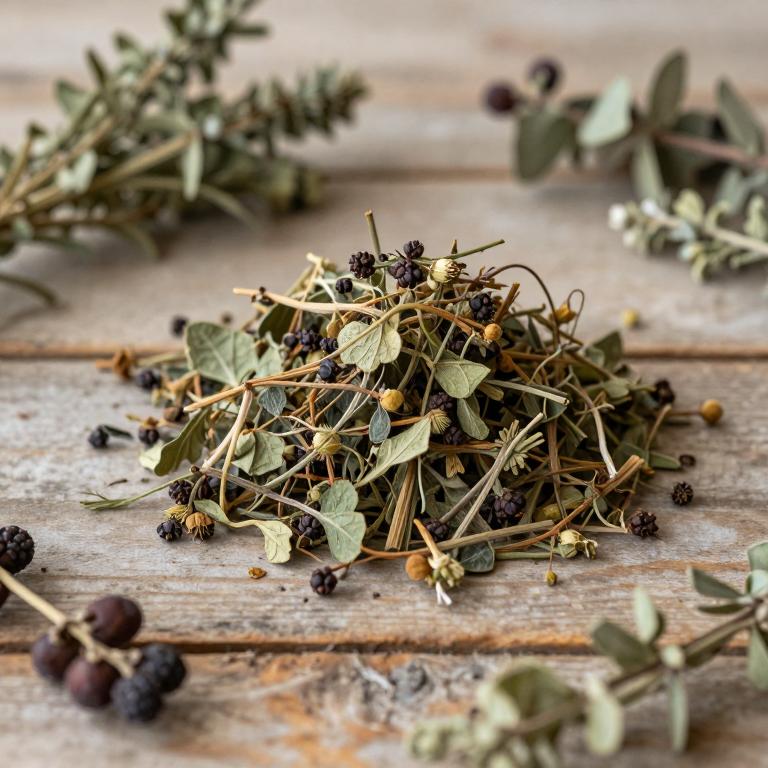
Names and Synonyms
Scientific Names
Accepted name
Jatropha spinosaSynonyms
- Adenoropium spinosum
- Jatropha aculeata
- Jatropha spinosa var. crenulata
- Jatropha spinosa var. somalensis
Sources: Wikidata
Taxonomical Classification
This plant belongs to the kingdom Plantae and is classified under the phylum Streptophyta and class Equisetopsida. Within the subclass Magnoliidae, it falls under the order Malpighiales and the family Euphorbiaceae. Finally, its specific taxonomic identity is defined by the genus Jatropha.
| Rank | Classification |
|---|---|
| Kingdom | Plantae |
| Phylum | Streptophyta |
| Class | Equisetopsida |
| Subclass | Magnoliidae |
| Order | Malpighiales |
| Family | Euphorbiaceae |
| Genus | Jatropha |
Sources: The World Checklist of Vascular Plants (WCVP)
Distribution
This plant exhibits a specific distribution across several key regions in Northeast Tropical Africa and the Arabian Peninsula. Within Northeast Tropical Africa, its presence is documented in the countries of Djibouti and Somalia. Moving toward the Arabian Peninsula, the species can also be found growing in Saudi Arabia. Furthermore, its range extends into the territory of Yemen. Collectively, these locations define the primary geographical footprint of Jatrophia spinosa.
| Region | Area |
|---|---|
| Northeast Tropical Africa | Djibouti |
| Northeast Tropical Africa | Somalia |
| Arabian Peninsula | Saudi Arabia |
| Arabian Peninsula | Yemen |
Sources: The World Checklist of Vascular Plants (WCVP)
Botanical Identification
Life history
The life history of Jatropha spinosa is characterized by a perennial growth habit that allows it to persist through varying environmental conditions. In terms of its structural life form, the species is primarily classified as a phanerophyte, as its buds and growing points are elevated well above the ground surface on woody stems or branches. However, depending on specific environmental stressors or localized growth patterns, its life form may also be described within the context of a nanophanerophyte, reflecting a shorter, more compact shrubby stature in certain habitats. This perennial nature enables the plant to establish a robust presence in its ecosystem, utilizing its woody architecture to survive seasonal fluctuations.
- Life form :
- nanophanerophyte
- Life form :
- phanerophyte
Morphology
The morphology of Jatropha spinosa is characterized by its growth habit as a woody plant, possessing a sturdy and durable structure. It is a terrestrial species, growing directly in the soil rather than as an epiphyte. The plant functions as an independent organism, showing no parasitic tendencies, and maintains a self-supporting stature without the need for climbing mechanisms or external support structures.
- Climber :
- self-supporting
- Epiphyte :
- terrestrial
- Parasite :
- independent
- Woodiness :
- woody
Sources: Global Inventory of Floras and Traits (GIFT)
Chemicals
Jatropha spinosa has 3 reported phytochemicals identified across 0 scientific publications and several other databases. The most consistently reported chemicals include Coumarins, Flavonoids, Sesquiterpenes.
| Chemical | Supporting sources | Consensus |
|---|---|---|
| Coumarins | 1 supporting sources | ★☆☆☆☆ |
| Flavonoids | 1 supporting sources | ★☆☆☆☆ |
| Sesquiterpenes | 1 supporting sources | ★☆☆☆☆ |
Coumarins
- Scientific reports
Flavonoids
- Scientific reports
Sesquiterpenes
- Scientific reports
Conditions
Jatropha spinosa has 2 reported investigations on conditions identified across 0 scientific publications and several other databases. The most consistently reported conditions include respiratory tract infection, wound healing.
| Condition | Supporting sources | Consensus |
|---|---|---|
| Respiratory tract infection | 1 supporting sources | ★☆☆☆☆ |
| Wound healing | 1 supporting sources | ★☆☆☆☆ |
Respiratory tract infection
- Scientific reports
Wound healing
- Scientific reports