Jatropha mollissima
Jatropha mollissima · Accepted scientific name
Scientific literature: Very Sparse (16 studies) · ★☆☆☆☆
Jatropha mollisima, scientifically known as Jatropha mollisima, is a remarkable medicinal plant valued in traditional healing practices. Native to specific tropical regions, this species is recognized for its diverse therapeutic properties. Researchers continue to explore its bioactive compounds, aiming to unlock its potential for treating various ailments naturally.
- Family
- Euphorbiaceae
- Native range
- Southern America
- Parts used
- Leaf
- Common names
- Not available
- Scientific synonyms
- Adenoropium Mollissimum · Jatropha Pohliana Var. Mollissima
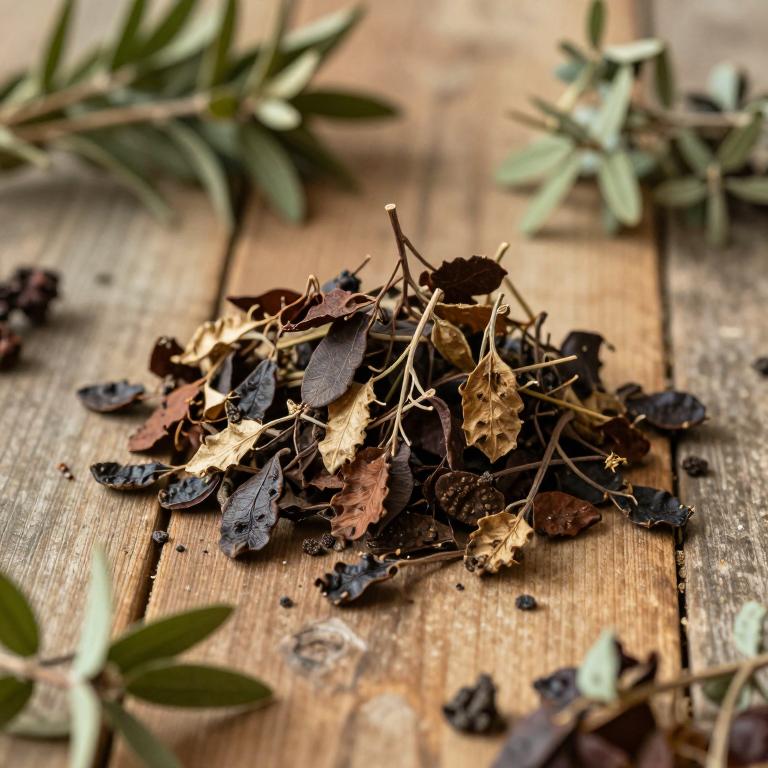
Names and Synonyms
Scientific Names
Accepted name
Jatropha mollissimaSynonyms
- Adenoropium mollissimum
- Jatropha pohliana var. mollissima
Sources: Wikidata, Catalogue of Life
Taxonomical Classification
This plant belongs to the kingdom Plantae within the phylum Streptophyta and the class Equisetopsida. It is further classified under the subclass Magnoliidae and the order Malpighiales. Finally, it is a member of the family Euphorbiaceae and falls under the genus Jatropha.
| Rank | Classification |
|---|---|
| Kingdom | Plantae |
| Phylum | Streptophyta |
| Class | Equisetopsida |
| Subclass | Magnoliidae |
| Order | Malpighiales |
| Family | Euphorbiaceae |
| Genus | Jatropha |
Sources: The World Checklist of Vascular Plants (WCVP)
Distribution
This plant exhibits a broad distribution across several key regions of the South American continent. In Northern South America, its presence is specifically noted within the borders of Venezuela. Moving toward the western portion of the continent, the species can also be found in Bolivia. Within Brazil, its range is quite extensive, covering the West-Central territories. Additionally, the plant is widely distributed throughout the Northeast and Southeast regions of Brazil.
| Region | Area |
|---|---|
| Northern South America | Venezuela |
| Western South America | Bolivia |
| Brazil | Brazil West-Central |
| Brazil | Brazil Northeast |
| Brazil | Brazil Southeast |
Sources: The World Checklist of Vascular Plants (WCVP)
Botanical Identification
Ecology
The ecology of Jatropha mollisima is characterized by its adaptability to diverse environmental conditions within specific Brazilian biomes, primarily occupying the Caatinga (strictu sensu) and the Cerrado (lato sensu). It thrives in these semi-arid and seasonal landscapes, where it has demonstrated a significant capacity to colonize anthropogenic areas (Área Antrópica), often appearing in disturbed soils or landscapes modified by human activity. Its presence in these ecosystems suggests a resilience to varying soil types and periodic water availability, allowing it to persist both in natural wilderness and in environments shaped by human intervention.
- Habitat :
- Área Antrópica, Caatinga (stricto sensu), Cerrado (lato sensu)
Life history
The life history of Jatropha mollisima is characterized by its specialized growth strategies and structural adaptations to its environment. In terms of its biological classification regarding life forms, this species primarily functions as a phanerophyte, maintaining its persistent buds and reproductive structures well above the soil surface to endure seasonal fluctuations. Depending on the specific environmental pressures and the maturity of the individual plants within its habitat, its growth habit can also be described through the lens of a nanophanerophyte, reflecting a compact structural form where the woody parts remain relatively low but still above the ground level. This combination of life forms allows the plant to navigate its ecological niche by balancing the stability of perennial woody growth with the resilience required to survive varying climatic conditions.
- Life form :
- nanophanerophyte
- Life form :
- phanerophyte
Morphology
The morphology of Jatropha mollisima is characterized by a woody growth form, specifically developing as a tree that can reach a maximum plant height of 5 meters. This species is strictly terrestrial in its habitat, showing no aquatic or semiaquatic tendencies, and it functions as an independent organism without parasitic behavior. As a self-supporting structure, it does not exhibit climbing habits or epiphytic lifestyles, remaining firmly rooted in the soil as a non-epiphytic terrestrial plant.
- Aquatic :
- terrestrial
- Climber :
- self-supporting
- Epiphyte :
- terrestrial
- Growth form :
- tree
- Parasite :
- independent
- Plant height max:
- 5 m
- Woodiness :
- woody
Reproduction
The reproduction of Jatropha mollisima is characterized by the development of a capsule-type fruit, which typically reaches a consistent length of approximately 2.5 cm, as both the minimum, maximum, and mean measurements are recorded at this value. This fruit is dehiscent, meaning it functions to split open at maturity to facilitate the release of seeds. The dispersal of the offspring follows a zoochorous syndrome, relying on animal vectors to aid in the movement and distribution of the seeds throughout its habitat.
- Dehiscence :
- dehiscent
- Dispersal syndrome :
- zoochorous
- Fruit length max:
- 2.5 cm
- Fruit type :
- capsule
Sources: Global Inventory of Floras and Traits (GIFT)
Plant Parts
Jatropha mollissima has 1 reported plant parts identified across 2 scientific publications and several other databases that are studied for medicinal purposes. The most consistently reported plant part include leaf.
| Plant part | Supporting sources | Consensus |
|---|---|---|
| Leaf | 2 supporting sources | ★☆☆☆☆ |
Leaf
- Saudi journal of biological sciences
- BioMed research international
Chemicals
Jatropha mollissima has 6 reported phytochemicals identified across 2 scientific publications and several other databases. The most consistently reported chemicals include Gallic acid, MANDELIC ACID, RUTIN, polyphenols, pyrogallol.
| Chemical | Supporting sources | Consensus |
|---|---|---|
| Gallic acid | 1 supporting sources | ★☆☆☆☆ |
| MANDELIC ACID | 1 supporting sources | ★☆☆☆☆ |
| RUTIN | 1 supporting sources | ★☆☆☆☆ |
| polyphenols | 1 supporting sources | ★☆☆☆☆ |
| pyrogallol | 1 supporting sources | ★☆☆☆☆ |
| quercetin | 1 supporting sources | ★☆☆☆☆ |
Gallic acid
- Frontiers in pharmacology
MANDELIC ACID
- Frontiers in pharmacology
RUTIN
- Frontiers in pharmacology
polyphenols
- American journal of translational research
pyrogallol
- Frontiers in pharmacology
quercetin
- Frontiers in pharmacology
Conditions
Jatropha mollissima has 7 reported investigations on conditions identified across 2 scientific publications and several other databases. The most consistently reported conditions include anticoagulant, antioxidant, cardiotoxicity, myotoxicity, oxidative stress.
| Condition | Supporting sources | Consensus |
|---|---|---|
| Anticoagulant | 1 supporting sources | ★☆☆☆☆ |
| Antioxidant | 1 supporting sources | ★☆☆☆☆ |
| Cardiotoxicity | 1 supporting sources | ★☆☆☆☆ |
| Myotoxicity | 1 supporting sources | ★☆☆☆☆ |
| Oxidative stress | 1 supporting sources | ★☆☆☆☆ |
| Snakebites | 1 supporting sources | ★☆☆☆☆ |
| Vasorelaxant | 1 supporting sources | ★☆☆☆☆ |
Anticoagulant
- Frontiers in pharmacology
Antioxidant
- Frontiers in pharmacology
Cardiotoxicity
- Frontiers in pharmacology
Myotoxicity
- BioMed research international
Oxidative stress
- Frontiers in pharmacology
Snakebites
- BioMed research international
Vasorelaxant
- Frontiers in pharmacology
Preparations
Jatropha mollissima has 6 reported preparations identified across 2 scientific publications and several other databases. The most consistently reported preparations include Aqueous Leaf Extract, Jm extract, Jm hydroalcoholic extract, crude extract, ethanolic crude extract.
| Preparation | Supporting sources | Consensus |
|---|---|---|
| Aqueous leaf extract | 1 supporting sources | ★☆☆☆☆ |
| Jm extract | 1 supporting sources | ★☆☆☆☆ |
| Jm hydroalcoholic extract | 1 supporting sources | ★☆☆☆☆ |
| Crude extract | 1 supporting sources | ★☆☆☆☆ |
| Ethanolic crude extract | 1 supporting sources | ★☆☆☆☆ |
| Extract of jatropha mollissima | 1 supporting sources | ★☆☆☆☆ |
Aqueous leaf extract
- BioMed research international
Jm extract
- American journal of translational research
Jm hydroalcoholic extract
- American journal of translational research
Crude extract
- Saudi journal of biological sciences
Ethanolic crude extract
- Tissue & cell
Extract of jatropha mollissima
- American journal of translational research