Wild Oil Nut
Jatropha divaricata · Accepted scientific name
Scientific literature: Very Sparse (3 studies) · ★☆☆☆☆
Wild Oil Nut, scientifically known as Jatrophas divaricata, is a resilient shrub native to tropical regions. Renowned for its medicinal properties, it is used in traditional healing to treat skin ailments, inflammation, and digestive issues. This versatile plant offers significant bioactive potential for modern pharmacological research and therapeutic applications.
- Family
- Euphorbiaceae
- Native range
- Southern America
- Parts used
- Stem
- Common names
- Wild Oil Nut
- Scientific synonyms
- Adenoropium Divaricatum
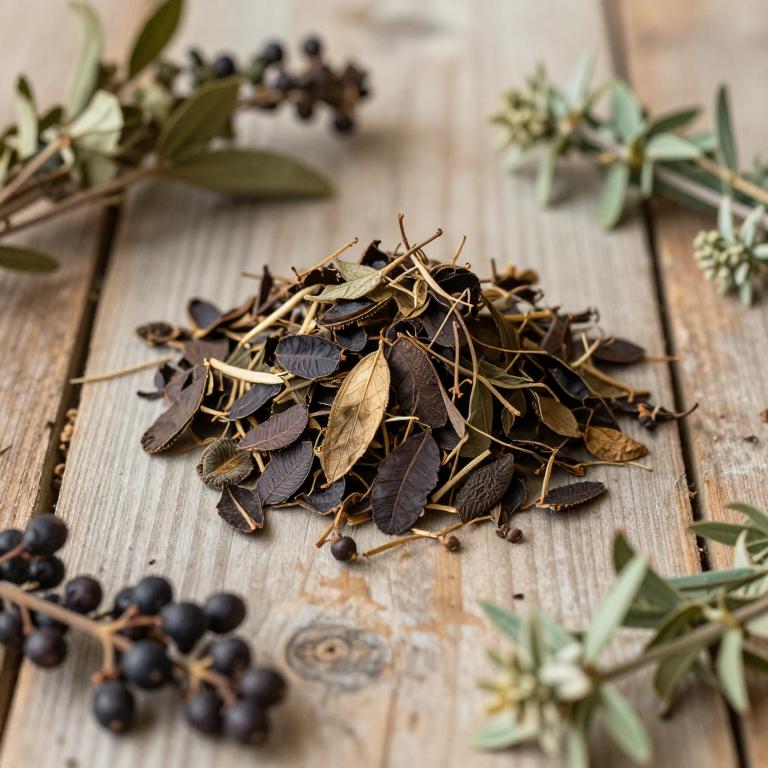
Names and Synonyms
Common Names
- Wild Oil Nut
Scientific Names
Accepted name
Jatropha divaricataSynonyms
- Adenoropium divaricatum
Sources: Wikidata, Catalogue of Life
Taxonomical Classification
This plant belongs to the kingdom Plantae and is classified under the phylum Streptophyta and class Equisetopsida. Within the subclass Magnoliidae, it is categorized under the order Malpighiales and the family Euphorbiaceae. Finally, its specific taxonomic identity is defined by the genus Jatropha.
| Rank | Classification |
|---|---|
| Kingdom | Plantae |
| Phylum | Streptophyta |
| Class | Equisetopsida |
| Subclass | Magnoliidae |
| Order | Malpighiales |
| Family | Euphorbiaceae |
| Genus | Jatropha |
Sources: The World Checklist of Vascular Plants (WCVP)
Distribution
This plant, known as Jatropha divaricata, exhibits a specific distribution within the Caribbean region. It can be found growing naturally in the islands of Jamaica. Additionally, its presence is documented within the Cayman Islands. These locations represent the primary geographical range for this medicinal species. Therefore, its habitat is currently limited to these specific Caribbean territories.
| Region | Area |
|---|---|
| Caribbean | Cayman Is. |
| Caribbean | Jamaica |
Sources: The World Checklist of Vascular Plants (WCVP)
Botanical Identification
Life history
The life history of Jatropha divaricata is characterized by its distinct structural adaptations to its environment, primarily functioning as a phanerophyte, where its regenerative buds are located on aerial branches well above the soil surface. Depending on the specific environmental pressures and the degree of woody development in different populations, its growth habit may also manifest as a nanophanerophyte, reflecting a more stunted or shrubby architecture. This life form allows the plant to navigate varying levels of exposure, utilizing its elevated stem structure to access light and endure seasonal shifts. Through these growth strategies, the plant maintains a perennial presence, balancing the robust structural support of a phanerophyte with the more compact, resilient tendencies of a nanophanerophyte.
- Life form :
- nanophanerophyte
- Life form :
- phanerophyte
Morphology
The morphology of Jatropha divaricata is characterized by its growth form as a woody tree, displaying a robust and self-supporting structure. Unlike climbing plants such as lianas or vines, it does not function as a climber, maintaining a self-supporting habit throughout its development. As an independent organism, it does not exhibit parasitic behavior, nor does it function as an epiphyte, maintaining a strictly terrestrial existence rather than an aquatic or semiaquatic one. The plant's physical architecture is defined by its significant woodiness, which provides the necessary stability for its arborescent stature.
- Aquatic :
- terrestrial
- Climber :
- self-supporting
- Epiphyte :
- terrestrial
- Growth form :
- tree
- Parasite :
- independent
- Woodiness :
- woody
Sources: Global Inventory of Floras and Traits (GIFT)
Plant Parts
Jatropha divaricata has 1 reported plant parts identified across 1 scientific publications and several other databases that are studied for medicinal purposes. The most consistently reported plant part include stem.
| Plant part | Supporting sources | Consensus |
|---|---|---|
| Stem | 1 supporting sources | ★☆☆☆☆ |
Stem
- Journal of natural products
Chemicals
Jatropha divaricata has 2 reported phytochemicals identified across 1 scientific publications and several other databases. The most consistently reported chemicals include Cleistanthol, Spruceanol.
| Chemical | Supporting sources | Consensus |
|---|---|---|
| Cleistanthol | 1 supporting sources | ★☆☆☆☆ |
| Spruceanol | 1 supporting sources | ★☆☆☆☆ |
Cleistanthol
- Journal of natural products
Spruceanol
- Journal of natural products
Preparations
Jatropha divaricata has 1 reported preparations identified across 1 scientific publications and several other databases. The most consistently reported preparations include Extracts of the stems.
| Preparation | Supporting sources | Consensus |
|---|---|---|
| Extracts of the stems | 1 supporting sources | ★☆☆☆☆ |
Extracts of the stems
- Journal of natural products