leatherstem
Jatropha dioica · Accepted scientific name
Scientific literature: Very Sparse (18 studies) · ★☆☆☆☆
Leatherstem, scientifically known as Jatropha dioica, is a resilient succulent shrub native to arid regions. Valued in traditional medicine, it is frequently utilized for its antioxidant and anti-inflammatory properties. This hardy plant serves as a vital resource for treating various ailments, offering significant therapeutic potential in herbal pharmacology.
- Family
- Euphorbiaceae
- Native range
- Northern America
- Parts used
- Root
- Common names
- Leatherwood
- Scientific synonyms
- Not available
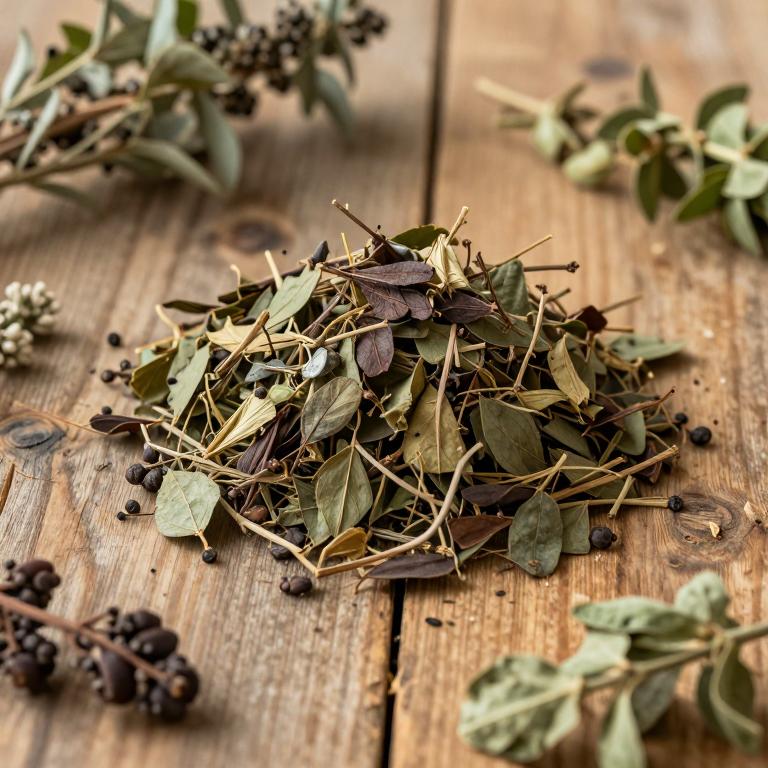
Names and Synonyms
Common Names
- leatherwood
Scientific Names
Accepted name
Jatropha dioicaRegional and Traditional Names
Spanish:
- sangre de drago
- sangre de drago
- Sangre de grado
- Sangregrada
- Sangregrao
- Telondilla
Sources: Wikidata, Catalogue of Life
Taxonomical Classification
This plant belongs to the kingdom Plantae and the phylum Streptophyta, falling under the class Equisetopsida and subclass Magnoliidae. It is classified within the order Malpighiales and the family Euphorbiaceae. Ultimately, its taxonomic identity is defined by the genus Jatropha.
| Rank | Classification |
|---|---|
| Kingdom | Plantae |
| Phylum | Streptophyta |
| Class | Equisetopsida |
| Subclass | Magnoliidae |
| Order | Malpighiales |
| Family | Euphorbiaceae |
| Genus | Jatropha |
Sources: The World Checklist of Vascular Plants (WCVP)
Distribution
This plant exhibits a specific distribution pattern across North America. In the South-Central United States, its presence is documented within the state of Texas. Its range extends significantly into Mexico, where it is found in the central regions. Furthermore, the species is located throughout Northeast Mexico. Finally, its geographical footprint includes the Southwest region of Mexico.
| Region | Area |
|---|---|
| South-Central U.S.A. | Texas |
| Mexico | Mexico Central |
| Mexico | Mexico Northeast |
| Mexico | Mexico Southwest |
Sources: The World Checklist of Vascular Plants (WCVP)
Botanical Identification
Life history
The life history of Jatropha dioica is characterized by its status as a perennial species, allowing it to persist in its environment through multiple growing seasons. Structurally, the plant is classified as a chamaephyte, a life form in which the permanent buds are located close to the soil surface, typically just above the ground level. This botanical growth habit, specifically identified through its chamaephyte classification, enables the plant to maintain its life cycle and structural integrity within its ecological niche over an extended period.
- Life form :
- chamaephyte
- Lifecycle :
- perennial
Morphology
The morphology of Jatropha dioica is characterized by a growth form that ranges from a subshrub to a woody shrub. As a terrestrial species, it does not exhibit aquatic or epiphytic tendencies, functioning instead as an independent organism rather than a parasite. Structurally, the plant is self-supporting, lacking the climbing or vining habits of lianas or facultative climbers, and maintains a stable, woody stature.
- Aquatic :
- terrestrial
- Climber :
- self-supporting
- Epiphyte :
- terrestrial
- Growth form :
- shrub
- Growth form :
- subshrub
- Parasite :
- independent
- Woodiness :
- woody
Reproduction
Reproduction in Jatropha dioica is facilitated through the production of seeds that exhibit notable variations in weight. The seed mass within a population shows a significant range, with a minimum recorded weight of 0.127 g and a maximum weight reaching up to 0.54549 g. On average, the seed mass is approximately 0.266496667 g, reflecting the diversity in resource allocation and developmental consistency during the reproductive cycle of the plant.
- Seed mass max:
- 0.54549 g
- Seed mass mean:
- 0.266496667 g
- Seed mass min:
- 0.127 g
Sources: Global Inventory of Floras and Traits (GIFT)
Plant Parts
Jatropha dioica has 1 reported plant parts identified across 3 scientific publications and several other databases that are studied for medicinal purposes. The most consistently reported plant part include root.
| Plant part | Supporting sources | Consensus |
|---|---|---|
| Root | 3 supporting sources | ★★☆☆☆ |
Root
- Journal of chromatographic science
- Journal of natural products
- Pakistan journal of biological sciences : PJBS
Chemicals
Jatropha dioica has 7 reported phytochemicals identified across 3 scientific publications and several other databases. The most consistently reported chemicals include 6-epi-Riolozatrione, Citlalitrione, Jatrophatrione, RIOLOZATRIONE, BETA-SITOSTEROL.
| Chemical | Supporting sources | Consensus |
|---|---|---|
| 6-epi-Riolozatrione | 2 supporting sources | ★☆☆☆☆ |
| Citlalitrione | 2 supporting sources | ★☆☆☆☆ |
| Jatrophatrione | 2 supporting sources | ★☆☆☆☆ |
| RIOLOZATRIONE | 2 supporting sources | ★☆☆☆☆ |
| BETA-SITOSTEROL | 1 supporting sources | ★☆☆☆☆ |
| glucose | 1 supporting sources | ★☆☆☆☆ |
| jatropholone B | 1 supporting sources | ★☆☆☆☆ |
6-epi-Riolozatrione
- Journal of chromatographic science
- Journal of natural products
Citlalitrione
- Journal of chromatographic science
- Journal of natural products
Jatrophatrione
- Journal of chromatographic science
- Journal of natural products
RIOLOZATRIONE
- Journal of chromatographic science
- Journal of natural products
BETA-SITOSTEROL
- Journal of natural products
glucose
- Cellular and molecular biology (Noisy-le-Grand, France)
jatropholone B
- Journal of natural products
Conditions
Jatropha dioica has 1 reported investigations on conditions identified across 3 scientific publications and several other databases. The most consistently reported conditions include Trichinella spiralis.
| Condition | Supporting sources | Consensus |
|---|---|---|
| Trichinella spiralis | 1 supporting sources | ★☆☆☆☆ |
Trichinella spiralis
- Plants (Basel, Switzerland)
Preparations
Jatropha dioica has 8 reported preparations identified across 3 scientific publications and several other databases. The most consistently reported preparations include Ethyl acetate and hydroalcoholic extracts, MeOH root extracts, acetone extract, dichloromethane extract of the roots, ethanol extracts.
| Preparation | Supporting sources | Consensus |
|---|---|---|
| Ethyl acetate and hydroalcoholic extracts | 1 supporting sources | ★☆☆☆☆ |
| Meoh root extracts | 1 supporting sources | ★☆☆☆☆ |
| Acetone extract | 1 supporting sources | ★☆☆☆☆ |
| Dichloromethane extract of the roots | 1 supporting sources | ★☆☆☆☆ |
| Ethanol extracts | 1 supporting sources | ★☆☆☆☆ |
| Extracts obtained from 15 medicinal plants using water (at 25 and 90 °c) or ethanol (at 25 °c) | 1 supporting sources | ★☆☆☆☆ |
| Hexane extract | 1 supporting sources | ★☆☆☆☆ |
| Root extracts | 1 supporting sources | ★☆☆☆☆ |
Ethyl acetate and hydroalcoholic extracts
- Cellular and molecular biology (Noisy-le-Grand, France)
Meoh root extracts
- Journal of natural products
Acetone extract
- Pakistan journal of biological sciences : PJBS
Dichloromethane extract of the roots
- Journal of natural products
Ethanol extracts
- Pakistan journal of biological sciences : PJBS
Extracts obtained from 15 medicinal plants using water (at 25 and 90 °c) or ethanol (at 25 °c)
- Natural product research
Hexane extract
- Pakistan journal of biological sciences : PJBS
Root extracts
- Journal of chromatographic science