Jateorhiza macrantha
Jateorhiza macrantha · Accepted scientific name
Scientific literature: Very Sparse (9 studies) · ★☆☆☆☆
Jateorhiza macrantha, scientifically known as Jateorhiza macrantha, is a potent medicinal plant widely used in traditional African medicine. Often referred to as "Devil's Claw" in certain regions, its roots contain bioactive compounds valued for their anti-inflammatory, analgesic, and digestive properties, making it essential for treating various ailments.
- Family
- Menispermaceae
- Native range
- Africa
- Parts used
- Leaf
- Common names
- Not available
- Scientific synonyms
- Jateorhiza Strigosa · Cocculus Macranthus
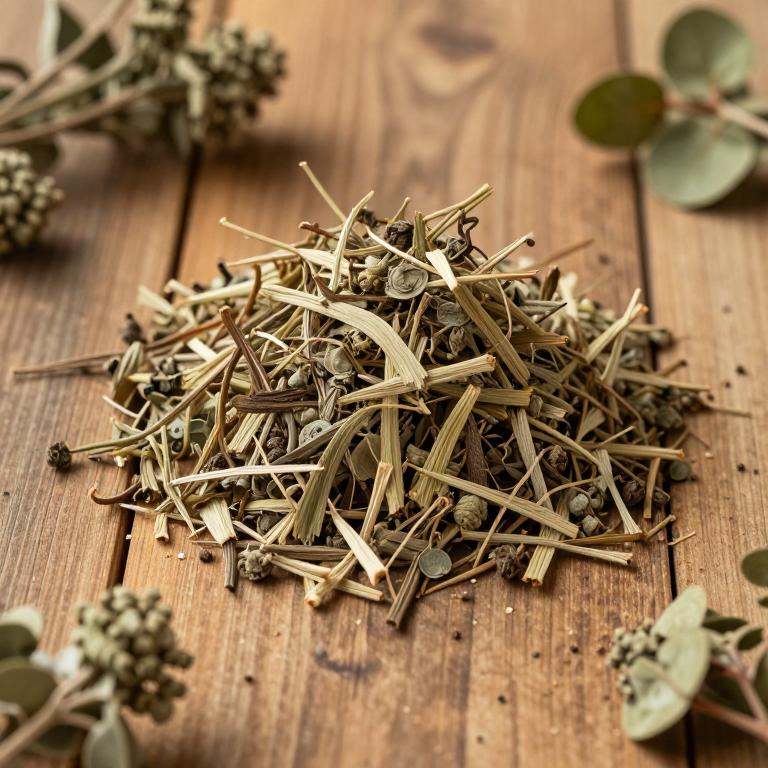
Names and Synonyms
Scientific Names
Accepted name
Jateorhiza macranthaSynonyms
- Jateorhiza strigosa
- Cocculus macranthus
Sources: Wikidata
Taxonomical Classification
This plant belongs to the kingdom Plantae within the phylum Streptophyta and the class Equisetopsida. It is further classified under the subclass Magnoliidae and the order Ranunculales, falling within the family Menispermaceae. Ultimately, its taxonomic identity is defined by the genus Jateorhiza.
| Rank | Classification |
|---|---|
| Kingdom | Plantae |
| Phylum | Streptophyta |
| Class | Equisetopsida |
| Subclass | Magnoliidae |
| Order | Ranunculales |
| Family | Menispermaceae |
| Genus | Jateorhiza |
Sources: The World Checklist of Vascular Plants (WCVP)
Distribution
This plant exhibits a specific distribution across several regions of the African continent. In West Tropical Africa, it can be found growing in Nigeria. Its presence extends into West-Central Tropical Africa, where it inhabits the territory of Cabinda. Furthermore, the species is documented within the Central African Republic and Cameroon. Finally, its geographical range includes the nation of Congo within the West-Central Tropical Africa zone.
| Region | Area |
|---|---|
| West Tropical Africa | Nigeria |
| West-Central Tropical Africa | Cabinda |
| West-Central Tropical Africa | Central African Republic |
| West-Central Tropical Africa | Cameroon |
| West-Central Tropical Africa | Congo |
| West-Central Tropical Africa | Gabon |
| West-Central Tropical Africa | Gulf of Guinea Is. |
| West-Central Tropical Africa | DR Congo |
Sources: The World Checklist of Vascular Plants (WCVP)
Botanical Identification
Life history
The life history of Jateoriza macrantha is characterized by a growth pattern that exhibits significant plasticity in its foliage retention, ranging from deciduous to evergreen, or even variable depending on environmental conditions. As a perennial species, its lifecycle is governed by seasonal shifts that influence its physiological state and leaf shedding patterns. The plant transitions through various stages of development, where the presence of deciduousness allows it to respond to specific climatic stressors or seasonal cycles by shedding leaves to conserve moisture or energy. This variability in its deciduousness trait ensures adaptability across different ecological niches, allowing the plant to maintain its life cycle through both stable periods of evergreen growth and periods of dormancy associated with its deciduous phases.
- Deciduousness :
- deciduous
Morphology
The morphology of Jateorhiza macrantha is characterized by its growth habit as a liana, functioning as an obligatory climber that relies on external support to ascend. It is a terrestrial plant that grows independently, showing no parasitic tendencies, and it is not an epiphyte. The plant exhibits variable woodiness in its structure and can reach significant dimensions, with a mean height of approximately 9 m and a maximum recorded height of 9.14 m.
- Aquatic :
- terrestrial
- Climber :
- liana
- Climber :
- obligatory
- Epiphyte :
- terrestrial
- Parasite :
- independent
- Plant height max:
- 9.144111192 m
- Plant height mean:
- 9 m
- Woodiness :
- variable
Physiology
The physiology of Jateorhiza macrantha is characterized by a C3 photosynthetic pathway, which dictates its carbon fixation process through the direct carboxylation of CO2 by the enzyme RuBisCO within the mesophyll cells. This metabolic strategy influences its water-use efficiency and environmental adaptation, typically favoring environments where moisture is sufficiently available to support gas exchange. Additionally, the plant does not function as a nitrogen fixer, meaning it lacks the symbiotic relationship with nitrogen-fixing bacteria necessary to convert atmospheric nitrogen into usable forms, and instead relies on the uptake of nitrates and ammonium from the soil to satisfy its nutritional requirements for growth and development.
- Nitrogen fixer :
- no
- Photosynthetic pathway :
- C3
Reproduction
The reproduction of Jateorhiza macrantha is characterized by a distinct seasonal cycle and a reliance on cross-pollination. The flowering period is concentrated in the month of May, which serves as both the flowering start and end period for the species. Notably, self-fertilization is absent in this plant, indicating that it requires external agents for pollination to ensure genetic diversity. Following the flowering stage, the plant undergoes a fruiting cycle that begins in December and concludes in December, marking a specific window for fruit development and maturation.
- Flowering time :
- May
- Fruiting time :
- Dec
- Self fertilization :
- absent
Sources: Global Inventory of Floras and Traits (GIFT)
Plant Parts
Jateorhiza macrantha has 1 reported plant parts identified across 2 scientific publications and several other databases that are studied for medicinal purposes. The most consistently reported plant part include leaf.
| Plant part | Supporting sources | Consensus |
|---|---|---|
| Leaf | 2 supporting sources | ★☆☆☆☆ |
Leaf
- Journal of ethnopharmacology
- BMC complementary medicine and therapies
Chemicals
Jateorhiza macrantha has 7 reported phytochemicals identified across 2 scientific publications and several other databases. The most consistently reported chemicals include CA, CU, FE, MG, MN.
| Chemical | Supporting sources | Consensus |
|---|---|---|
| CA | 1 supporting sources | ★☆☆☆☆ |
| CU | 1 supporting sources | ★☆☆☆☆ |
| FE | 1 supporting sources | ★☆☆☆☆ |
| MG | 1 supporting sources | ★☆☆☆☆ |
| MN | 1 supporting sources | ★☆☆☆☆ |
| ZN | 1 supporting sources | ★☆☆☆☆ |
| na | 1 supporting sources | ★☆☆☆☆ |
CA
- Journal of ethnopharmacology
CU
- Journal of ethnopharmacology
FE
- Journal of ethnopharmacology
MG
- Journal of ethnopharmacology
MN
- Journal of ethnopharmacology
ZN
- Journal of ethnopharmacology
na
- Journal of ethnopharmacology
Preparations
Jateorhiza macrantha has 1 reported preparations identified across 2 scientific publications and several other databases. The most consistently reported preparations include leaf aqueous extract.
| Preparation | Supporting sources | Consensus |
|---|---|---|
| Leaf aqueous extract | 1 supporting sources | ★☆☆☆☆ |
Leaf aqueous extract
- Journal of ethnopharmacology