Jasminum azoricum
Jasminum azoricum · Accepted scientific name
Scientific literature: Very Sparse (0 studies) · ★☆☆☆☆
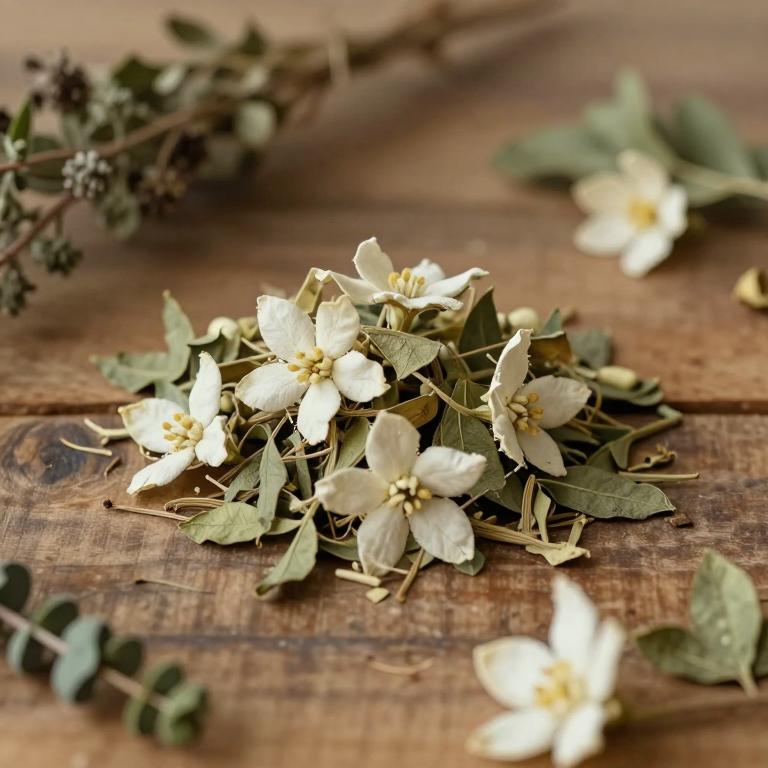
Jasminum azoricum is a fragrant climbing shrub native to the Macaronesian islands, prized for its delicate white blossoms. This species is highly valued in botanical studies due to its intense, sweet aroma that fills the air during its blooming season. Beyond its aesthetic appeal, the plant serves as a vital source for various medicinal and aromatic preparations. Scientists and herbalists frequently utilize the plant to create potent extracts that capture its unique chemical profile. These concentrated extracts are widely used in both therapeutic applications and the production of high-quality fragrances.
- Synonyms
- Jasminum Azoricum Var. Aureovariegatum
- Common names
- Not available
- Family
- Oleaceae
- Distribution
- Not available
- Plant Parts
- Not available
Classification
Common Names
Jasminum azoricum is a versatile plant known by a variety of distinct names across different cultures and languages. Often referred to as Azoren-Jasmin or Gelsomino trifogliato, it carries a unique botanical identity that resonates globally. In some regions, it is affectionately called Jasmineiro-branco, highlighting its elegant presence. English speakers frequently identify the species as Lemon-scented jasmine due to its refreshing aromatic profile. Additionally, it is recognized in other locales by names such as jazmín azorský, illustrating its widespread linguistic diversity.
Sources: Catalogue of Life (COL)
Synonyms
Jasminum azoricum is a distinctive species that is sometimes identified by its botanical synonym, Jasminum azoricum var. aureovariegatum. This specific variation is recognized for its unique aesthetic qualities, often displaying striking variegated foliage. Understanding these taxonomic relationships is essential for gardeners and botanists seeking to accurately categorize the plant. While the names may differ in certain scientific texts, they both refer to this fragrant climbing jasmine. Recognizing these connections ensures that collectors can find exactly the cultivar they desire for their landscapes.
Sources: The World Checklist of Vascular Plants (WCVP)
Taxonomy
Jasminum azoricum belongs to the vast kingdom Plantae, marking its place among the diverse world of living plants. Within this kingdom, it is classified under the class Equisetopsida, providing a foundation for its biological structure. The species is a member of the order Lamiales, a group that connects it to many other significant flowering plants. Further specialization is found within the family Oleaceae, where it shares evolutionary traits with other well-known fragrant species. Ultimately, this plant is defined by its membership in the genus Jasminum, which characterizes its unique identity and growth habits.
| Rank | Classification |
|---|---|
| Kingdom | Plantae |
| Phylum | Streptophyta |
| Class | Equisetopsida |
| Subclass | Magnoliidae |
| Order | Lamiales |
| Family | Oleaceae |
| Genus | Jasminum |
Sources: The World Checklist of Vascular Plants (WCVP)
Distribution
Geographic Regions
Jasminum azoricum is a distinctive species with a highly specific geographical footprint. Its natural distribution is primarily centered within the diverse landscapes of Africa. Furthermore, this plant is a characteristic element of the Macaronesia region. It holds a particularly significant presence on the island of Madeira, where it flourishes in local habitats. Understanding these specific locations is essential for studying its ecological role within these unique environments.
Sources: The World Checklist of Vascular Plants (WCVP)
Identification
Morphology
Jasminum azoricum is characterized by its distinct shrub-like growth form. This plant is entirely self-supporting, allowing it to maintain its structure without the need for external climbing aids.
Sources: Global Inventory of Floras and Traits (GIFT)
Biological Activities
Compounds
Conditions
Jasminum azoricum contains specific compounds that function as inhibitors of the angiotensin converting enzyme (ACE). Through bioactivity-guided fractionation of its aerial parts, researchers successfully isolated three unique oligomeric, iridoid-type compounds known as sambacein I-III. These identified sambaceins demonstrate measurable inhibitory activity against ACE during in vitro assays. The potency of these plant-derived inhibitors is characterized by IC50 values ranging between 26 and 36 microM. Ultimately, these chemical constituents represent the active mechanism by which the plant species treats ACE.
Preparations
Jasminum azoricum is prepared as extracts from its aerial parts to facilitate bioactivity-guided fractionation. These specific extracts are utilized to isolate unique oligomeric, iridoid-type compounds known as sambacein I-III. The processing of the plant material into these extracts allows for the formation of these compounds from genuine iridoid glucosides. Furthermore, these extracts serve as a foundation for studying angiotensin converting enzyme (ACE) inhibition. Scientific analysis, such as NMR spectroscopy, is applied to measure the effectiveness of these prepared extracts in traditional medicines.