Jacobaea vulgaris
Jacobaea vulgaris · Accepted scientific name
Scientific literature: Very Sparse (0 studies) · ★☆☆☆☆
Jacobaea vulgaris, commonly known as common ragwort, is a perennial herbaceous plant recognized by its distinctive yellow daisy-like flowers. While it is often viewed as a nuisance in pastures, it holds significant interest in botanical research due to its complex chemical profile. Scientists frequently utilize whole plant extracts to study the diverse array of pyrrolizidine alkaloids contained within its tissues. These preparations serve as essential tools for understanding the plant's biological activity and its ecological interactions. Consequently, investigating the full spectrum of the plant through complete extracts provides a comprehensive view of its chemical potency.
- Synonyms
- Not available
- Common names
- Not available
- Family
- Asteraceae
- Distribution
- Not available
- Plant Parts
- Not available
Classification
Common Names
Jacobaea vulgaris is known by a diverse array of regional and traditional names that reflect its cultural presence. In certain areas, it is commonly referred to as Cowmon Bach Melyn, a name that highlights its distinct characteristics. The plant also carries the moniker Afrentaquinteros, adding to its linguistic variety. Among other local designations, it is identified as Buachalán buí and Buaghallan. Finally, the name Carnedd Felen Wryw serves as another unique way to identify this specific species.
Sources: Catalogue of Life (COL)
Synonyms
Jacobaea vulgaris is a common herbaceous plant frequently recognized by its bright yellow, daisy-like flowers. In various botanical texts and historical records, this species is also widely identified by its synonym, Senecio jacobaea. While modern taxonomy has shifted its classification, many gardeners and researchers still use the older name to discuss its characteristics. Understanding these dual identities is essential for anyone studying the plant's ecological role or medicinal history. Consequently, recognizing both names ensures clarity when navigating scientific literature regarding this distinctive wildflower.
Sources: The World Checklist of Vascular Plants (WCVP)
Taxonomy
Jacobaea vulgaris is a fascinating member of the kingdom Plantae that showcases the intricate complexity of biological classification. Belonging to the class Equisetopsida, this species follows a distinct evolutionary path within the natural world. It is categorized under the order Asterales, which highlights its structural connections to other flowering plants. Furthermore, it is nested within the expansive family Asteraceae, a group known for its diverse and vibrant floral patterns. Ultimately, this plant is defined by its placement in the genus Jacobaea, marking its unique identity among its botanical relatives.
| Rank | Classification |
|---|---|
| Kingdom | Plantae |
| Phylum | Streptophyta |
| Class | Equisetopsida |
| Subclass | Magnoliidae |
| Order | Asterales |
| Family | Asteraceae |
| Genus | Jacobaea |
Sources: The World Checklist of Vascular Plants (WCVP)
Distribution
Geographic Regions
Jacobaea vulgaris exhibits a broad geographic range that spans across several diverse continents and regions. In Africa, the species can be found throughout the northern reaches, specifically within Morocco. Its presence extends significantly into the Asia-Temperate zone, where it thrives in the Caucasus and Transcaucasus regions. Furthermore, the plant is well-established in Central Asia, appearing in countries such as Kazakhstan and Kirgizstan. This wide distribution highlights the plant's ability to adapt to various temperate climates across the Old World.
Sources: The World Checklist of Vascular Plants (WCVP)
Identification
Morphology
Jacobaea vulgaris is a self-supporting herb characterized by its distinct growth form. This plant typically reaches a maximum height of 1.5 meters as it matures in its natural habitat. Depending on environmental conditions, its stature can vary significantly throughout its life cycle. Most specimens maintain a minimum height of 0.75 meters, though smaller individuals may be found. In certain circumstances, the plant can be as short as 0.2 meters.
Sources: Global Inventory of Floras and Traits (GIFT)
Biological Activities
Compounds
Conditions
Preparations
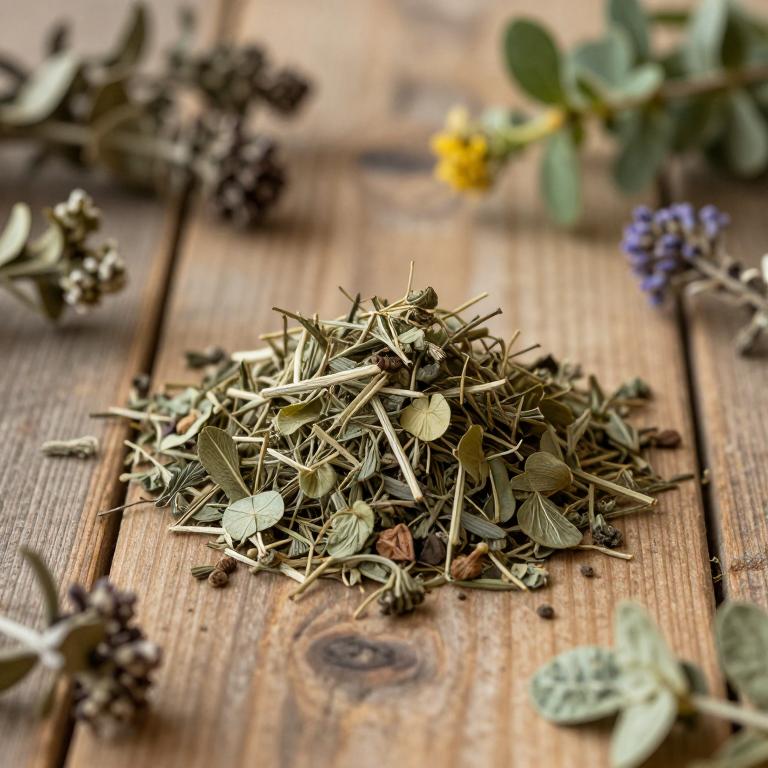
Jacobaea vulgaris is prepared as whole plant extracts to facilitate the isolation of various chemical compounds. These extracts served as the source for identifying four undescribed pyrrolizidine alkaloids known as seneciojanine A-D. Additionally, researchers utilized these whole plant preparations to discover two enantiomeric pairs of unusual alkaloids called millingtojanine A-B. The extraction process also yielded nine previously known pyrrolizidine alkaloids from the plant material. Through this method, the unique tricyclic cores and complex structures of these constituents were successfully established.