Blackflower Teacost
Isodon trichocarpus · Accepted scientific name
Scientific literature: Very Sparse (13 studies) · ★☆☆☆☆
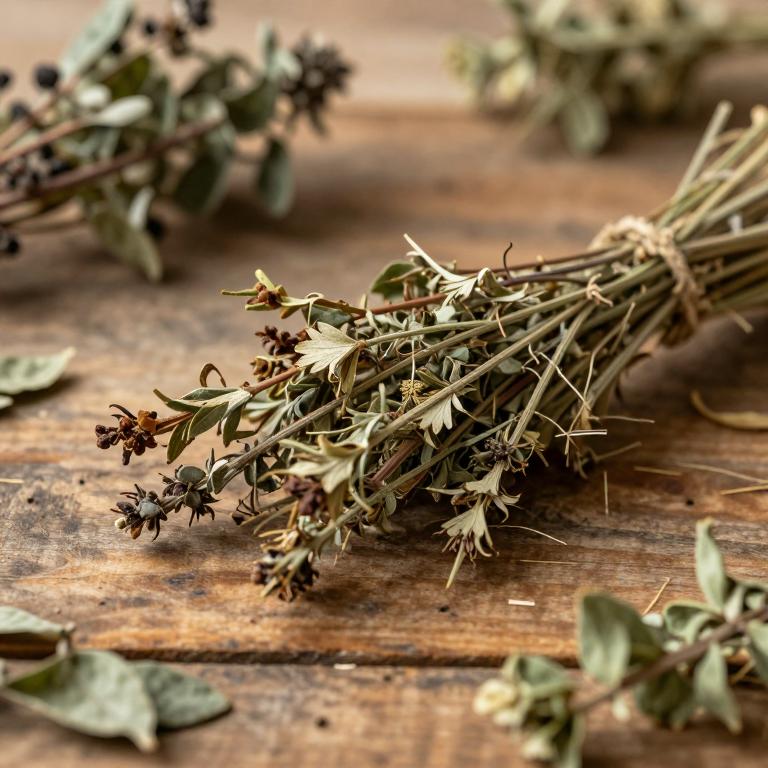
Blackflower Teacost, scientifically known as Isodon trichocarpus, is a remarkable medicinal plant native to Southeast Asia. Renowned for its therapeutic properties, it is frequently utilized in traditional medicine to treat various ailments. This versatile shrub offers significant botanical interest due to its unique chemical compounds and potential health benefits.
- Family
- Lamiaceae
- Native range
- Asia-Temperate
- Parts used
- Not available
- Common names
- Blackflower Teacost
- Scientific synonyms
- Rabdosia Trichocarpa · Plectranthus Trichocarpus · 5 more
Names and Synonyms
Common Names
- Blackflower Teacost
Scientific Names
Accepted name
Isodon trichocarpusSynonyms
- Rabdosia trichocarpa
- Plectranthus trichocarpus
- Amethystanthus trichocarpus
- Rabdosia trichocarpa f. erythrantha
- Rabdosia trichocarpa f. leucantha
- Isodon trichocarpus f. erythranthus
- Isodon trichocarpus f. leucanthus
Sources: Wikidata, Catalogue of Life
Taxonomical Classification
This plant, Isodon trichocarpus, belongs to the kingdom Plantae within the phylum Streptophyta and the class Equisetopsida. It is further classified under the subclass Magnoliidae and the order Lamiales. Finally, it is a member of the family Lamiaceae and falls under the genus Isodon.
| Rank | Classification |
|---|---|
| Kingdom | Plantae |
| Phylum | Streptophyta |
| Class | Equisetopsida |
| Subclass | Magnoliidae |
| Order | Lamiales |
| Family | Lamiaceae |
| Genus | Isodon |
Sources: The World Checklist of Vascular Plants (WCVP)
Distribution
This plant, known scientifically as Isodon trichocarpus, possesses a very specific and limited geographical range. Its natural occurrence is strictly confined to the region of Eastern Asia. Within this vast continent, the species is documented to grow specifically in Japan. Because of this restricted habitat, it is considered an endemic feature of the local Japanese landscape. Consequently, understanding its precise distribution is essential for the conservation of this medicinal species.
| Region | Area |
|---|---|
| Eastern Asia | Japan |
Sources: The World Checklist of Vascular Plants (WCVP)
Botanical Identification
Life history
The life history of Isodon trichocarpus is characterized by a perennial growth habit where its survival strategy is defined by its specific life form classification. Categorized as a hemicryptophyte, the plant ensures its persistence through seasonal changes by protecting its perennating buds at the soil surface or just below it. This biological framework allows the species to transition between various developmental stages, functioning within a structural range that encompasses characteristics of both nanophanophytes and phanerophytes. As a hemicryptophyte, it maintains a robust life cycle capable of enduring environmental fluctuations, utilizing its protected bud structures to regenerate and sustain its presence in its natural habitat.
- Life form :
- hemicryptophyte
Morphology
The morphology of Isodon trichocarpus is characterized by its growth form as a herb, exhibiting a non-woody structure throughout its development. It functions as an independent organism, showing no parasitic behavior, and maintains a terrestrial lifestyle rather than growing as an epiphyte. In terms of its climbing habit, the plant is classified as self-supporting.
- Climber :
- self-supporting
- Epiphyte :
- terrestrial
- Growth form :
- herb
- Parasite :
- independent
- Woodiness :
- non-woody
Sources: Global Inventory of Floras and Traits (GIFT)
Chemicals
Isodon trichocarpus has 3 reported phytochemicals identified across 0 scientific publications and several other databases. The most consistently reported chemicals include Enmein, Oridonin, Ponicidin.
| Chemical | Supporting sources | Consensus |
|---|---|---|
| Enmein | 2 supporting sources | ★☆☆☆☆ |
| Oridonin | 1 supporting sources | ★☆☆☆☆ |
| Ponicidin | 1 supporting sources | ★☆☆☆☆ |
Enmein
- Dr. Duke
- Chemical & pharmaceutical bulletin
Oridonin
- Chemical & pharmaceutical bulletin
Ponicidin
- Chemical & pharmaceutical bulletin
Activities
Isodon trichocarpus has 4 reported activities identified across 0 scientific publications and several other databases. The most consistently reported activities include Antibacterial, Antimutagenic, Antitumor, Pesticide.
| Activity | Supporting sources | Consensus |
|---|---|---|
| Antibacterial | 1 supporting sources | ★☆☆☆☆ |
| Antimutagenic | 1 supporting sources | ★☆☆☆☆ |
| Antitumor | 1 supporting sources | ★☆☆☆☆ |
| Pesticide | 1 supporting sources | ★☆☆☆☆ |
Antibacterial
- Dr. Duke
Antimutagenic
- Dr. Duke
Antitumor
- Dr. Duke
Pesticide
- Dr. Duke