Isodon scoparius
Isodon scoparius · Accepted scientific name
Scientific literature: Very Sparse (16 studies) · ★☆☆☆☆
, scientifically known as Isodon scoparius, is a deciduous shrub native to North America, commonly called False Dogwood. Renowned for its striking white blooms and ornamental value, this resilient species holds historical significance in traditional herbalism, offering potential therapeutic properties through its unique chemical composition and medicinal botanical characteristics.
- Family
- Lamiaceae
- Native range
- Asia-Temperate
- Parts used
- Leaf
- Common names
- Not available
- Scientific synonyms
- Rabdosia Scoparia
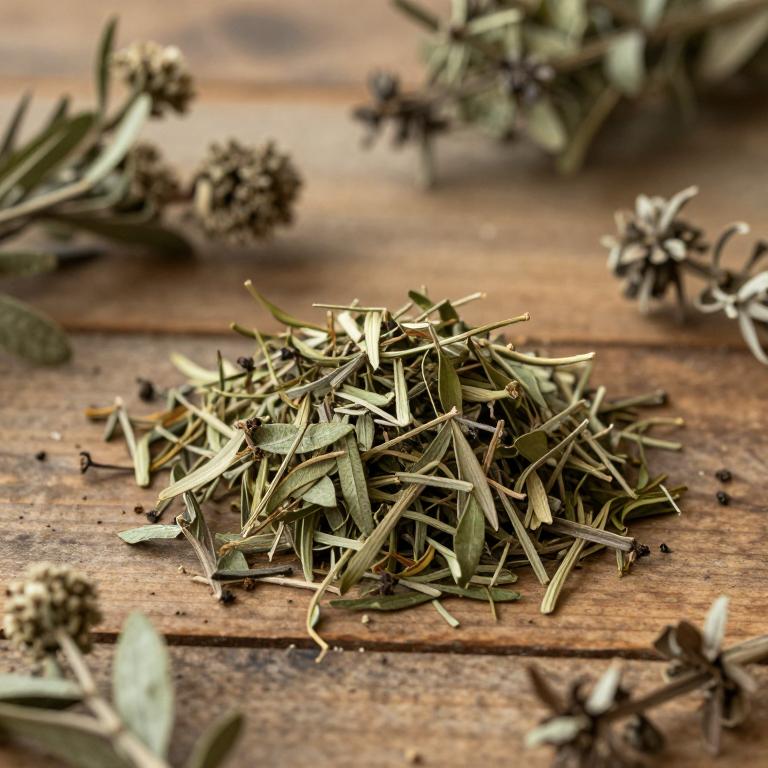
Names and Synonyms
Scientific Names
Accepted name
Isodon scopariusSynonyms
- Rabdosia scoparia
Sources: Wikidata
Taxonomical Classification
This plant belongs to the kingdom Plantae and the phylum Streptophyta, falling under the class Equisetopsida and subclass Magnoliidae. Within the order Lamiales and the family Lamiaceae, it is classified under the genus Isodon. Specifically, this medicinal species is known as Isodon scoparius.
| Rank | Classification |
|---|---|
| Kingdom | Plantae |
| Phylum | Streptophyta |
| Class | Equisetopsida |
| Subclass | Magnoliidae |
| Order | Lamiales |
| Family | Lamiaceae |
| Genus | Isodon |
Sources: The World Checklist of Vascular Plants (WCVP)
Distribution
This plant is specifically native to a certain region within the Asian continent. Its natural habitat is primarily located in China. More specifically, the species is found throughout the South-Central part of the country. This localized range suggests that it thrives under the particular environmental conditions of that area. Consequently, its geographical distribution is quite concentrated within this single province.
| Region | Area |
|---|---|
| China | China South-Central |
Sources: The World Checklist of Vascular Plants (WCVP)
Botanical Identification
Life history
The life history of Isodon scoparius is characterized by its classification as a chamaephyte, a growth form where the permanent buds are located close to or just above the soil surface, allowing the plant to withstand various environmental stresses. As a deciduous shrub, its lifecycle involves seasonal shifts in vegetative vigor, transitioning from a period of active growth and flowering in the warmer months to a dormant phase during colder periods. The plant establishes itself through seed dispersal, typically relying on seasonal moisture to facilitate germination in suitable habitats. Throughout its lifespan, it develops a woody structure that supports its canopy, while its life strategy of maintaining buds near the ground level provides a survival advantage against herbivory and fluctuating climatic conditions. The progression from seedling to mature shrub involves significant investment in structural biomass and reproductive organs, ensuring the continuation of its lineage through periodic flowering and seed production cycles.
- Life form :
- chamaephyte
Morphology
The morphology of Isodon scoparius is characterized by its growth habit as a self-supporting climber, utilizing its structural form to ascend without being an obligate or facultative dependency on other structures for its primary verticality. It functions as an independent organism, showing no parasitic tendencies, and maintains a terrestrial existence rather than living as an epiphyte.
- Climber :
- self-supporting
- Epiphyte :
- terrestrial
- Parasite :
- independent
Sources: Global Inventory of Floras and Traits (GIFT)
Plant Parts
Isodon scoparius has 1 reported plant parts identified across 1 scientific publications and several other databases that are studied for medicinal purposes. The most consistently reported plant part include leaf.
| Plant part | Supporting sources | Consensus |
|---|---|---|
| Leaf | 1 supporting sources | ★☆☆☆☆ |
Leaf
- Journal of natural products
Chemicals
Isodon scoparius has 9 reported phytochemicals identified across 1 scientific publications and several other databases. The most consistently reported chemicals include Compound 2, ISOSCOPARIN F, ISOSCOPARIN I, ISOSCOPARIN L, Isoscoparin D.
| Chemical | Supporting sources | Consensus |
|---|---|---|
| Compound 2 | 1 supporting sources | ★☆☆☆☆ |
| ISOSCOPARIN F | 1 supporting sources | ★☆☆☆☆ |
| ISOSCOPARIN I | 1 supporting sources | ★☆☆☆☆ |
| ISOSCOPARIN L | 1 supporting sources | ★☆☆☆☆ |
| Isoscoparin D | 1 supporting sources | ★☆☆☆☆ |
| Isoscoparin E | 1 supporting sources | ★☆☆☆☆ |
| Isoscoparin G | 1 supporting sources | ★☆☆☆☆ |
| Isoscoparin H | 1 supporting sources | ★☆☆☆☆ |
| Scopariusicide A | 1 supporting sources | ★☆☆☆☆ |
Compound 2
- Journal of natural products
ISOSCOPARIN F
- Journal of natural products
ISOSCOPARIN I
- Journal of natural products
ISOSCOPARIN L
- Journal of natural products
Isoscoparin D
- Journal of natural products
Isoscoparin E
- Journal of natural products
Isoscoparin G
- Journal of natural products
Isoscoparin H
- Journal of natural products
Scopariusicide A
- Organic letters