Isodon melissoides
Isodon melissoides · Accepted scientific name
Scientific literature: Very Sparse (15 studies) · ★☆☆☆☆
, scientifically known as Isodon melissoides, is a deciduous shrub or small tree native to North American wetlands. Commonly called honeybark or honeybush, it is valued for its aromatic properties and ecological significance. This resilient species plays a vital role in riparian habitats, offering potential medicinal and environmental benefits.
- Family
- Lamiaceae
- Native range
- Asia-Temperate
- Parts used
- Not available
- Common names
- Not available
- Scientific synonyms
- Plectranthus Melissoides · Isodon Melissiformis · 2 more
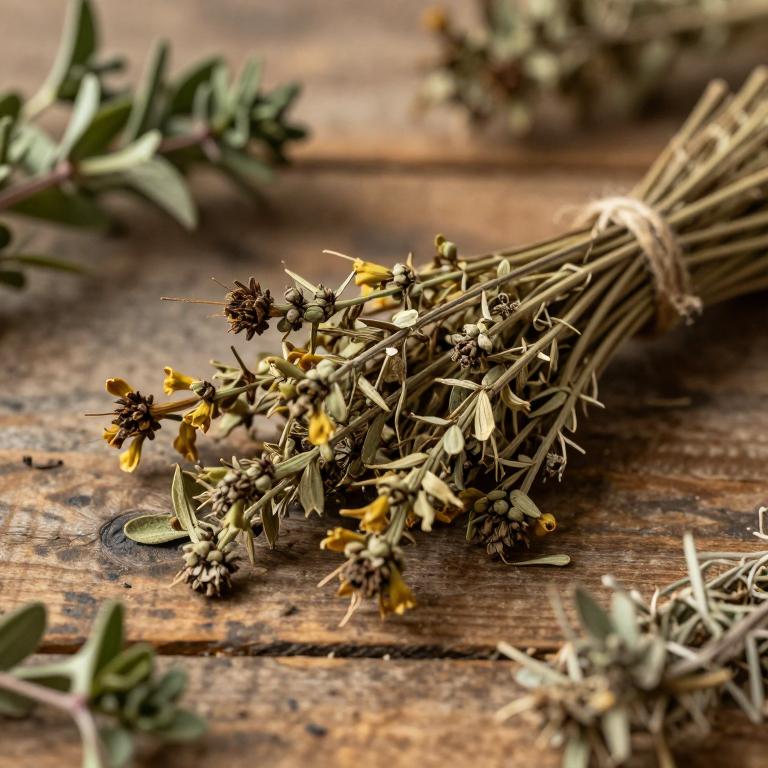
Names and Synonyms
Scientific Names
Accepted name
Isodon melissoidesSynonyms
- Plectranthus melissoides
- Isodon melissiformis
- Rabdosia melissiformis
- Rabdosia melissoides
Sources: Wikidata
Taxonomical Classification
This plant, known scientifically as Isodon melissoides, belongs to the kingdom Plantae and the phylum Streptophyta. It is classified under the class Equisetopsida and the subclass Magnoliidae, falling within the order Lamiales. Furthermore, it is a member of the family Lamiaceae and is categorized under the genus Isodon.
| Rank | Classification |
|---|---|
| Kingdom | Plantae |
| Phylum | Streptophyta |
| Class | Equisetopsida |
| Subclass | Magnoliidae |
| Order | Lamiales |
| Family | Lamiaceae |
| Genus | Isodon |
Sources: The World Checklist of Vascular Plants (WCVP)
Distribution
This plant exhibits a specific geographical distribution across parts of Asia. In China, it can be found primarily within the South-Central region. Its presence extends into the Indian Subcontinent, specifically inhabiting the state of Assam. Additionally, the species is located within the borders of Bangladesh. Finally, it is also distributed throughout the East Himalaya region.
| Region | Area |
|---|---|
| China | China South-Central |
| Indian Subcontinent | Assam |
| Indian Subcontinent | Bangladesh |
| Indian Subcontinent | East Himalaya |
Sources: The World Checklist of Vascular Plants (WCVP)
Botanical Identification
Life history
The life history of Isodon melissoides is characterized by its specific growth habit and survival strategy, classified primarily as a hemicryptophyte. This life form indicates that the plant's perennating buds are located at or just below the soil surface, allowing it to endure seasonal environmental shifts by protecting its regenerative tissues near the ground level. Within the broader spectrum of botanical life forms, it is categorized under the hemicryptophyte classification, distinguishing it from phanerophytes, chamaephytes, cryptophytes, or therophytes. This physiological arrangement supports its perennial nature, enabling the plant to emerge and resume growth following periods of dormancy, effectively managing its life cycle through the seasonal cycles of its habitat.
- Life form :
- hemicryptophyte
Morphology
The morphology of Isodon melissoides is characterized by its growth habit as a terrestrial plant, meaning it does not function as an epiphyte. It maintains an independent existence, as it is not classified as a parasite. In terms of its structural climbing mechanisms, the plant functions as a self-supporting climber, relying on its own structural integrity rather than being an obligatory or facultative climber that depends on external hosts for vertical support.
- Climber :
- self-supporting
- Epiphyte :
- terrestrial
- Parasite :
- independent
Sources: Global Inventory of Floras and Traits (GIFT)
Chemicals
Isodon melissoides has 10 reported phytochemicals identified across 0 scientific publications and several other databases. The most consistently reported chemicals include Melissoidesin E, Melissoidesin F, Melissoidesin G, CARVACROL, Compound 7.
| Chemical | Supporting sources | Consensus |
|---|---|---|
| Melissoidesin E | 2 supporting sources | ★☆☆☆☆ |
| Melissoidesin F | 2 supporting sources | ★☆☆☆☆ |
| Melissoidesin G | 2 supporting sources | ★☆☆☆☆ |
| CARVACROL | 1 supporting sources | ★☆☆☆☆ |
| Compound 7 | 1 supporting sources | ★☆☆☆☆ |
| Dawoensin A | 1 supporting sources | ★☆☆☆☆ |
| P-CYMENE | 1 supporting sources | ★☆☆☆☆ |
| THYMOL | 1 supporting sources | ★☆☆☆☆ |
| Xindongnin B | 1 supporting sources | ★☆☆☆☆ |
| compound 8 | 1 supporting sources | ★☆☆☆☆ |
Melissoidesin E
- Journal of Asian natural products research
- Journal of natural products
Melissoidesin F
- Journal of Asian natural products research
- Journal of natural products
Melissoidesin G
- Journal of Asian natural products research
- Journal of natural products
CARVACROL
- Natural product research
Compound 7
- Journal of Asian natural products research
Dawoensin A
- Journal of natural products
P-CYMENE
- Natural product research
THYMOL
- Natural product research
Xindongnin B
- Journal of natural products
compound 8
- Journal of Asian natural products research
Preparations
Isodon melissoides has 1 reported preparations identified across 0 scientific publications and several other databases. The most consistently reported preparations include aerial parts.
| Preparation | Supporting sources | Consensus |
|---|---|---|
| Aerial parts | 1 supporting sources | ★☆☆☆☆ |
Aerial parts
- Journal of natural products