Tonic Teacost
Isodon japonicus · Accepted scientific name
Scientific literature: Very Sparse (34 studies) · ★☆☆☆☆
Tonic Teacost, scientifically known as Isodon japonicus, is a versatile medicinal plant prized in traditional herbalism. Renowned for its potent therapeutic properties, it is frequently utilized to support digestive health and alleviate inflammation. This resilient species serves as a vital natural resource for holistic wellness and herbal remedies.
- Family
- Lamiaceae
- Native range
- Asia-Temperate
- Parts used
- Leaf
- Common names
- Tonic Teacost
- Scientific synonyms
- Isodon Japonicus F. Albiflorus · Amethystanthus Japonicus F. Albidus · 8 more
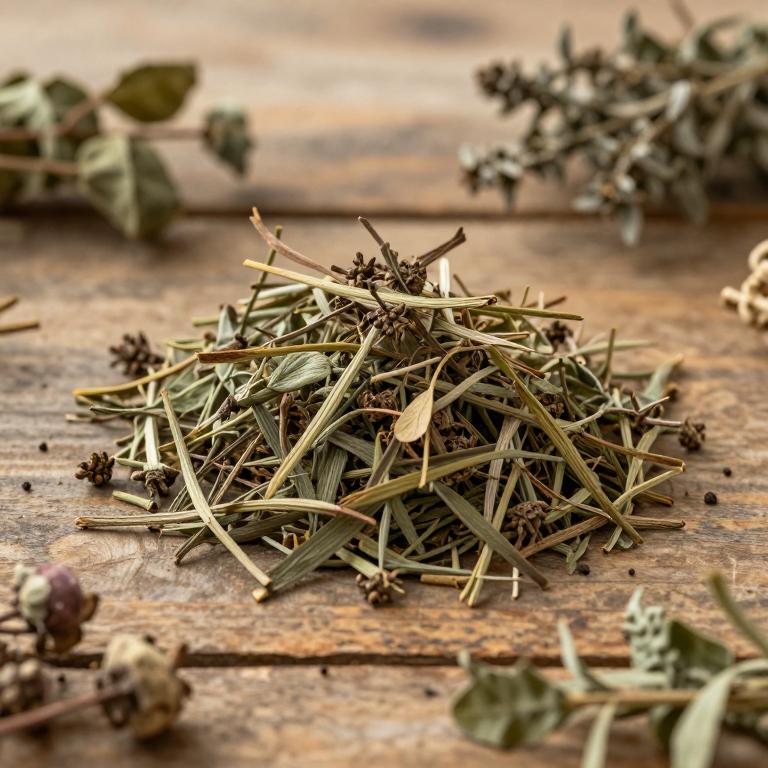
Names and Synonyms
Common Names
- Tonic Teacost
Scientific Names
Accepted name
Isodon japonicusSynonyms
- Isodon japonicus f. albiflorus
- Amethystanthus japonicus f. albidus
- Amethystanthus japonicus var. albiflorus
- Amethystanthus japonicus f. glabricalyx
- Plectranthus japonicus
- Plectranthus glaucocalyx f. glabricalyx
- Amethystanthus japonicus
- Rabdosia japonica
- Rabdosia japonica f. albida
- Rabdosia japonica f. albiflora
Sources: Wikidata, Catalogue of Life
Taxonomical Classification
This plant belongs to the kingdom Plantae and the phylum Streptophyta, falling under the class Equisetopsida and subclass Magnoliidae. Within the order Lamiales and the family Lamiaceae, it is further classified under the genus Isodon. Its specific species designation is Isodon japonicus.
| Rank | Classification |
|---|---|
| Kingdom | Plantae |
| Phylum | Streptophyta |
| Class | Equisetopsida |
| Subclass | Magnoliidae |
| Order | Lamiales |
| Family | Lamiaceae |
| Genus | Isodon |
Sources: The World Checklist of Vascular Plants (WCVP)
Distribution
This plant exhibits a broad geographical distribution across several regions in East Asia. In China, it can be found spanning from the North-Central provinces to the South-Central regions. Additionally, its presence extends into the Manchuria region of the country. Beyond mainland China, the species is also widely distributed throughout the Korean Peninsula. Finally, it is naturally occurring within the islands of Japan.
| Region | Area |
|---|---|
| China | China South-Central |
| China | Manchuria |
| China | China North-Central |
| Eastern Asia | Japan |
| Eastern Asia | Korea |
Sources: The World Checklist of Vascular Plants (WCVP)
Botanical Identification
Ecology
The ecology of Isodon japonicus is characterized by its preference for specific montane environments, typically flourishing within forest ecosystems, mountain landscapes, and shrubberies. This species occupies a distinct altitudinal niche, with its distribution spanning a significant vertical gradient. It is found at elevations starting from a minimum of 1200 m AMSL, reaching an upper limit of 3000 m AMSL. This ability to inhabit diverse sub-alpine and montane terrains allows it to integrate into varied forest structures and thickets within these high-altitude zones.
- Elevational range max:
- 3000 m AMSL
- Elevational range min:
- 1200 m AMSL
- Habitat :
- forest, mountains, shrubberies
Life history
The life history of Isodon japonicus is characterized by its status as a perennial organism, meaning it maintains its presence in the ecosystem through multiple growing seasons. In terms of its structural growth strategy and survival mechanism, the plant is classified as a hemicryptophyte, a life form where the perennating buds are located at the soil surface or just below it, allowing it to withstand varying environmental conditions. This specific life form designation, identified through both its hemicryptophyte classification and its positioning within the broader botanical framework of life forms, ensures its ability to persist and regenerate across successive years.
- Life form :
- hemicryptophyte
- Lifecycle :
- perennial
Morphology
The morphology of Isodon japonicus is characterized by a growth form primarily classified as a herb, manifesting as a non-woody, terrestrial plant. It typically maintains a plant height ranging from a minimum of 0.5 m to a maximum of 1.5 m. The plant exhibits an erect shoot orientation and functions as a self-supporting structure, rather than acting as a climber, vine, or liana. As an independent organism, it does not exhibit parasitic behavior and is strictly terrestrial in its epiphytic classification, avoiding aquatic or semiaquatic habitats.
- Aquatic :
- terrestrial
- Climber :
- self-supporting
- Epiphyte :
- terrestrial
- Growth form :
- herb
- Parasite :
- independent
- Plant height max:
- 1.5 m
- Plant height min:
- 0.5 m
- Shoot orientation :
- erect
- Woodiness :
- non-woody
Reproduction
The reproduction of Isodon japonicus is characterized by a specific seasonal flowering period that occurs during the height of summer. The flowering process typically begins in July and continues through the month of August. This reproductive cycle is concentrated within this two-month window, marking the primary period for floral development and subsequent seed production.
- Flowering time :
- Jul
- Flowering time :
- Aug
Sources: Global Inventory of Floras and Traits (GIFT)
Plant Parts
Isodon japonicus has 1 reported plant parts identified across 1 scientific publications and several other databases that are studied for medicinal purposes. The most consistently reported plant part include leaf.
| Plant part | Supporting sources | Consensus |
|---|---|---|
| Leaf | 1 supporting sources | ★☆☆☆☆ |
Leaf
- Phytochemistry
Chemicals
Isodon japonicus has 23 reported phytochemicals identified across 1 scientific publications and several other databases. The most consistently reported chemicals include 19-hydroxy-1alpha,6-diacetoxy-6,7-seco-ent-kaur-16-en-15-one-7,20-olide, Daucosterol, Effusanin C, Effusanin D, Enmein.
| Chemical | Supporting sources | Consensus |
|---|---|---|
| 19-hydroxy-1alpha,6-diacetoxy-6,7-seco-ent-kaur-16-en-15-one-7,20-olide | 1 supporting sources | ★☆☆☆☆ |
| Daucosterol | 1 supporting sources | ★☆☆☆☆ |
| Effusanin C | 1 supporting sources | ★☆☆☆☆ |
| Effusanin D | 1 supporting sources | ★☆☆☆☆ |
| Enmein | 1 supporting sources | ★☆☆☆☆ |
| Excisanin A | 1 supporting sources | ★☆☆☆☆ |
| Excisanin B | 1 supporting sources | ★☆☆☆☆ |
| Glaucocalyxin A | 1 supporting sources | ★☆☆☆☆ |
| Hikiokoshin A | 1 supporting sources | ★☆☆☆☆ |
| Kamebacetal A | 1 supporting sources | ★☆☆☆☆ |
19-hydroxy-1alpha,6-diacetoxy-6,7-seco-ent-kaur-16-en-15-one-7,20-olide
- Journal of natural products
Daucosterol
- Zhongguo Zhong yao za zhi = Zhongguo zhongyao zazhi = China journal of Chinese materia medica
Effusanin C
- Journal of natural products
Effusanin D
- Journal of natural products
Enmein
- Chemical & pharmaceutical bulletin
Excisanin A
- Planta medica
Excisanin B
- Journal of natural products
Glaucocalyxin A
- Advanced biology
Hikiokoshin A
- Phytochemistry
Kamebacetal A
- Planta medica
Activities
Isodon japonicus has 3 reported activities identified across 1 scientific publications and several other databases. The most consistently reported activities include Antibacterial, Anticancer, Antimicrobial.
| Activity | Supporting sources | Consensus |
|---|---|---|
| Antibacterial | 1 supporting sources | ★☆☆☆☆ |
| Anticancer | 1 supporting sources | ★☆☆☆☆ |
| Antimicrobial | 1 supporting sources | ★☆☆☆☆ |
Antibacterial
- Biomolecules
Anticancer
- Biomolecules
Antimicrobial
- Phytochemistry
Conditions
Isodon japonicus has 1 reported investigations on conditions identified across 1 scientific publications and several other databases. The most consistently reported conditions include inflammation.
| Condition | Supporting sources | Consensus |
|---|---|---|
| Inflammation | 1 supporting sources | ★☆☆☆☆ |
Inflammation
- Planta medica
Preparations
Isodon japonicus has 1 reported preparations identified across 1 scientific publications and several other databases. The most consistently reported preparations include methanolic extract of the whole plant.
| Preparation | Supporting sources | Consensus |
|---|---|---|
| Methanolic extract of the whole plant | 1 supporting sources | ★☆☆☆☆ |
Methanolic extract of the whole plant
- Planta medica