Tailed-leaf Teacost
Isodon excisus · Accepted scientific name
Scientific literature: Very Sparse (13 studies) · ★☆☆☆☆
Tail-leaf Teacost, scientifically known as Isodon excisuus, is a remarkable medicinal plant valued for its therapeutic properties. Often utilized in traditional healing practices, this species is recognized for its unique phytochemical profile. Understanding its botanical characteristics and bioactive compounds is essential for exploring its potential in modern herbal pharmacology.
- Family
- Lamiaceae
- Native range
- Asia-Temperate
- Parts used
- Stem
- Common names
- Tailed-Leaf Teacost · Tailed-Leaf Isodon
- Scientific synonyms
- Amethystanthus Excisus · Rabdosia Umbrosa Var. Coreana · 9 more
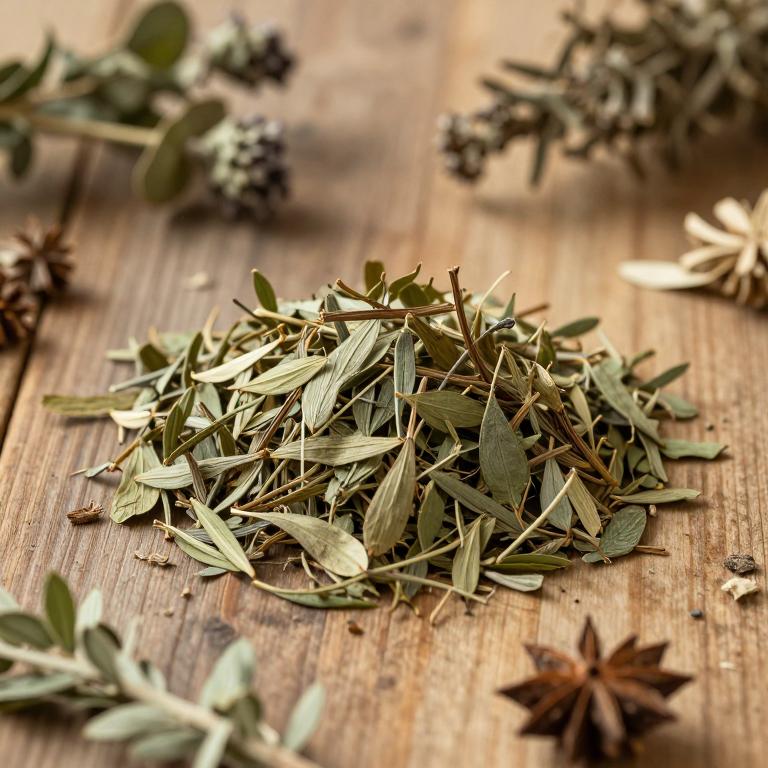
Names and Synonyms
Common Names
- Tailed-leaf Teacost
- Tailed-leaf isodon
Scientific Names
Accepted name
Isodon excisusSynonyms
- Amethystanthus excisus
- Rabdosia umbrosa var. coreana
- Amethystanthus excisus f. albiflorus
- Amethystanthus excisus var. chiisanensis
- Stachys polygonatum
- Plectranthus excisus
- Isodon excisus f. albiflorus
- Rabdosia excisa
- Amethystanthus excisus var. coreanus
- Rabdosia excisa f. albiflora
- Rabdosia excisa var. chiisanensis
Sources: Wikidata, Catalogue of Life
Taxonomical Classification
This plant belongs to the kingdom Plantae and is classified within the phylum Streptophyta and the class Equisetopsida. As a member of the subclass Magnoliidae and the order Lamiales, it falls under the family Lamiaceae. Specifically, its taxonomic identity is defined by the genus Isodon.
| Rank | Classification |
|---|---|
| Kingdom | Plantae |
| Phylum | Streptophyta |
| Class | Equisetopsida |
| Subclass | Magnoliidae |
| Order | Lamiales |
| Family | Lamiaceae |
| Genus | Isodon |
Sources: The World Checklist of Vascular Plants (WCVP)
Distribution
This plant is native to several specific regions across East Asia. In the Russian Far East, it can be found growing in the Amur, Khabarovsk, and Primorye territories. Its range also extends significantly into China. Specifically, it is distributed throughout the Manchuria region and China North-Central. This combination of locations defines its natural geographical footprint.
| Region | Area |
|---|---|
| Russian Far East | Amur |
| Russian Far East | Khabarovsk |
| Russian Far East | Primorye |
| China | Manchuria |
| China | China North-Central |
| Eastern Asia | Korea |
Sources: The World Checklist of Vascular Plants (WCVP)
Botanical Identification
Ecology
The ecology of Isodon excisuus is characterized by its specialized preference for moist, well-drained environments typically found within forest ecosystems and in close proximity to rivers. It thrives in the transitional zones of riparian corridors, where the availability of consistent moisture meets the shaded, stable microclimates provided by woodland canopies. By occupying these riverine and forested habitats, the species benefits from the nutrient-rich alluvial soils and the complex structural diversity of the landscape, which supports its growth patterns and long-term survival within its natural range.
- Habitat :
- forest, rivers
Life history
The life history of Isodon excisuus is characterized by its status as a perennial organism, allowing it to persist through multiple growing seasons. In terms of its structural life form, the species is classified as a hemicryptophyte, a designation that describes its specific strategy for overwintering and growth patterns within its ecological niche.
- Life form :
- hemicryptophyte
- Lifecycle :
- perennial
Morphology
The morphology of Isodon excisus is characterized by its growth form as a herb, displaying a non-woody structure. This plant is a self-supporting species that does not function as a climber, maintaining an independent lifestyle without being a parasite. As a terrestrial plant, it grows in soil rather than as an epiphyte. In terms of stature, the plant is relatively small, with a height ranging from a minimum of 0.8 m to a maximum of 1 m.
- Climber :
- self-supporting
- Epiphyte :
- terrestrial
- Growth form :
- herb
- Parasite :
- independent
- Plant height max:
- 1 m
- Plant height min:
- 0.8 m
- Woodiness :
- non-woody
Reproduction
The reproduction of Isodon excisus is characterized by a specific seasonal flowering period that occurs during the mid-to-late summer months. The flowering process typically begins in July and reaches its conclusion in August. This relatively brief reproductive window suggests a synchronized blooming pattern within its natural habitat.
- Flowering time :
- Jul
- Flowering time :
- Aug
Sources: Global Inventory of Floras and Traits (GIFT)
Plant Parts
Isodon excisus has 1 reported plant parts identified across 1 scientific publications and several other databases that are studied for medicinal purposes. The most consistently reported plant part include stem.
| Plant part | Supporting sources | Consensus |
|---|---|---|
| Stem | 1 supporting sources | ★☆☆☆☆ |
Stem
- Zhongguo Zhong yao za zhi = Zhongguo zhongyao zazhi = China journal of Chinese materia medica
Chemicals
Isodon excisus has 9 reported phytochemicals identified across 1 scientific publications and several other databases. The most consistently reported chemicals include EXCISANIN H, Inflexin, inflexanin A, inflexanin B, inflexarabdonin A.
| Chemical | Supporting sources | Consensus |
|---|---|---|
| EXCISANIN H | 1 supporting sources | ★☆☆☆☆ |
| Inflexin | 1 supporting sources | ★☆☆☆☆ |
| inflexanin A | 1 supporting sources | ★☆☆☆☆ |
| inflexanin B | 1 supporting sources | ★☆☆☆☆ |
| inflexarabdonin A | 1 supporting sources | ★☆☆☆☆ |
| inflexarabdonin G | 1 supporting sources | ★☆☆☆☆ |
| inflexarabdonin I | 1 supporting sources | ★☆☆☆☆ |
| inflexinol | 1 supporting sources | ★☆☆☆☆ |
| kamebakaurin | 1 supporting sources | ★☆☆☆☆ |
EXCISANIN H
- Journal of natural products
Inflexin
- Journal of natural products
inflexanin A
- Journal of natural products
inflexanin B
- Journal of natural products
inflexarabdonin A
- Journal of natural products
inflexarabdonin G
- Journal of natural products
inflexarabdonin I
- Journal of natural products
inflexinol
- Journal of natural products
kamebakaurin
- Journal of natural products
Preparations
Isodon excisus has 2 reported preparations identified across 1 scientific publications and several other databases. The most consistently reported preparations include Rabdosia excisa decoction, methanol extract of the aerial parts.
| Preparation | Supporting sources | Consensus |
|---|---|---|
| Rabdosia excisa decoction | 1 supporting sources | ★☆☆☆☆ |
| Methanol extract of the aerial parts | 1 supporting sources | ★☆☆☆☆ |
Rabdosia excisa decoction
- Zhong yao cai = Zhongyaocai = Journal of Chinese medicinal materials
Methanol extract of the aerial parts
- Journal of natural products