Iris postii
Iris postii · Accepted scientific name
Scientific literature: Very Sparse (9 studies) · ★☆☆☆☆
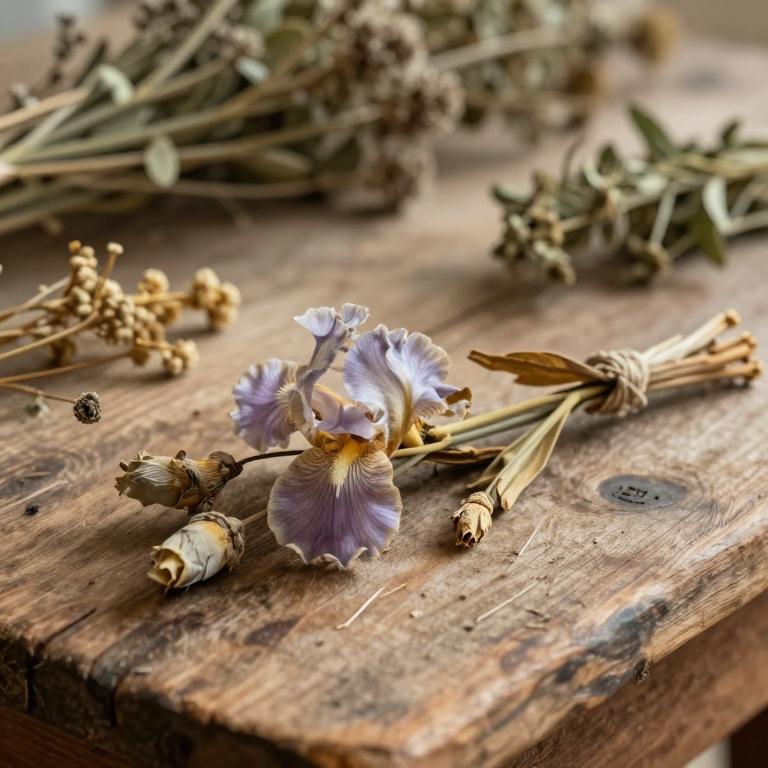
Scientifically known as Iris postii, is a rare and distinctive medicinal plant belonging to the Iridaceae family. Found in specific ecological niches, this species is valued for its unique phytochemical properties. Traditional healers often utilize its rhizomes, exploring its potential therapeutic applications in treating various inflammatory conditions and ailments.
- Family
- Iridaceae
- Native range
- Asia-Temperate
- Parts used
- Rhizome
- Common names
- Not available
- Scientific synonyms
- Iris Palaestina Var. Caerulea · Juno Postii
Names and Synonyms
Scientific Names
Accepted name
Iris postiiSynonyms
- Iris palaestina var. caerulea
- Juno postii
Sources: Wikidata, Catalogue of Life
Taxonomical Classification
This plant belongs to the kingdom Plantae and the phylum Streptophyta within the class Equisetopsida. It is further classified under the subclass Magnoliidae and the order Asparagales, falling into the family Iridaceae. Finally, Iris postii is identified under the genus Iris.
| Rank | Classification |
|---|---|
| Kingdom | Plantae |
| Phylum | Streptophyta |
| Class | Equisetopsida |
| Subclass | Magnoliidae |
| Order | Asparagales |
| Family | Iridaceae |
| Genus | Iris |
Sources: The World Checklist of Vascular Plants (WCVP)
Distribution
This plant exhibits a specific geographical distribution across several key regions in the Middle East. In Western Asia, it can be found growing within the borders of Iraq. Its range also extends through the Levant, specifically covering the areas of Lebanon and Syria. Additionally, the species is present in the territory of Palestine. Finally, its habitat reaches into the Arabian Peninsula, where it is located in Saudi Arabia.
| Region | Area |
|---|---|
| Western Asia | Iraq |
| Western Asia | Lebanon-Syria |
| Western Asia | Palestine |
| Arabian Peninsula | Saudi Arabia |
Sources: The World Checklist of Vascular Plants (WCVP)
Botanical Identification
Life history
The life history of Iris postii is characterized by its specialized survival strategies, functioning primarily as a geophyte and a cryptophyte. As a geophyte, the plant relies on underground storage organs to endure unfavorable environmental conditions, allowing it to remain dormant during periods of stress before emerging to complete its reproductive cycle. Its classification as a cryptophyte further defines its life history, indicating that its perennating buds are located safely beneath the soil surface, protected from seasonal fluctuations and herbivory. This combination of traits enables the species to maintain a perennial existence, utilizing its subterranean reserves to support rapid growth and flowering when optimal conditions return to its habitat.
- Life form :
- geophyte
- Life form :
- cryptophyte
Morphology
The morphology of Iris postii is characterized by a non-woody structure, lacking any woody tissue development. It functions as a terrestrial plant, growing directly within the soil rather than as an epiphyte. The species is entirely independent, showing no parasitic tendencies or reliance on a host organism for survival. Furthermore, it does not exhibit climbing behavior, as it lacks the specialized mechanisms required to be an obligatory, facultative, or self-supporting climber.
- Climber :
- self-supporting
- Epiphyte :
- terrestrial
- Parasite :
- independent
- Woodiness :
- non-woody
Sources: Global Inventory of Floras and Traits (GIFT)
Plant Parts
Iris postii has 1 reported plant parts identified across 1 scientific publications and several other databases that are studied for medicinal purposes. The most consistently reported plant part include rhizome.
| Plant part | Supporting sources | Consensus |
|---|---|---|
| Rhizome | 1 supporting sources | ★☆☆☆☆ |
Rhizome
- Molecules (Basel, Switzerland)
Chemicals
Iris postii has 5 reported phytochemicals identified across 1 scientific publications and several other databases. The most consistently reported chemicals include Androsin, Isotectorigenin, Isovitexin, L-tryptophan, Swertisin.
| Chemical | Supporting sources | Consensus |
|---|---|---|
| Androsin | 1 supporting sources | ★☆☆☆☆ |
| Isotectorigenin | 1 supporting sources | ★☆☆☆☆ |
| Isovitexin | 1 supporting sources | ★☆☆☆☆ |
| L-tryptophan | 1 supporting sources | ★☆☆☆☆ |
| Swertisin | 1 supporting sources | ★☆☆☆☆ |
Androsin
- Molecules (Basel, Switzerland)
Isotectorigenin
- Molecules (Basel, Switzerland)
Isovitexin
- Molecules (Basel, Switzerland)
L-tryptophan
- Molecules (Basel, Switzerland)
Swertisin
- Molecules (Basel, Switzerland)
Activities
Iris postii has 1 reported activities identified across 1 scientific publications and several other databases. The most consistently reported activities include Free-Radical Scavenging.
| Activity | Supporting sources | Consensus |
|---|---|---|
| Free-Radical Scavenging | 1 supporting sources | ★☆☆☆☆ |
Free-Radical Scavenging
- Molecules (Basel, Switzerland)
Conditions
Iris postii has 1 reported investigations on conditions identified across 1 scientific publications and several other databases. The most consistently reported conditions include inflammations.
| Condition | Supporting sources | Consensus |
|---|---|---|
| Inflammations | 1 supporting sources | ★☆☆☆☆ |
Inflammations
- Molecules (Basel, Switzerland)
Preparations
Iris postii has 2 reported preparations identified across 1 scientific publications and several other databases. The most consistently reported preparations include methanolic extracts of Iris postii aerial parts, methanolic extracts of Iris postii rhizomes.
| Preparation | Supporting sources | Consensus |
|---|---|---|
| Methanolic extracts of iris postii aerial parts | 1 supporting sources | ★☆☆☆☆ |
| Methanolic extracts of iris postii rhizomes | 1 supporting sources | ★☆☆☆☆ |
Methanolic extracts of iris postii aerial parts
- Molecules (Basel, Switzerland)
Methanolic extracts of iris postii rhizomes
- Molecules (Basel, Switzerland)